



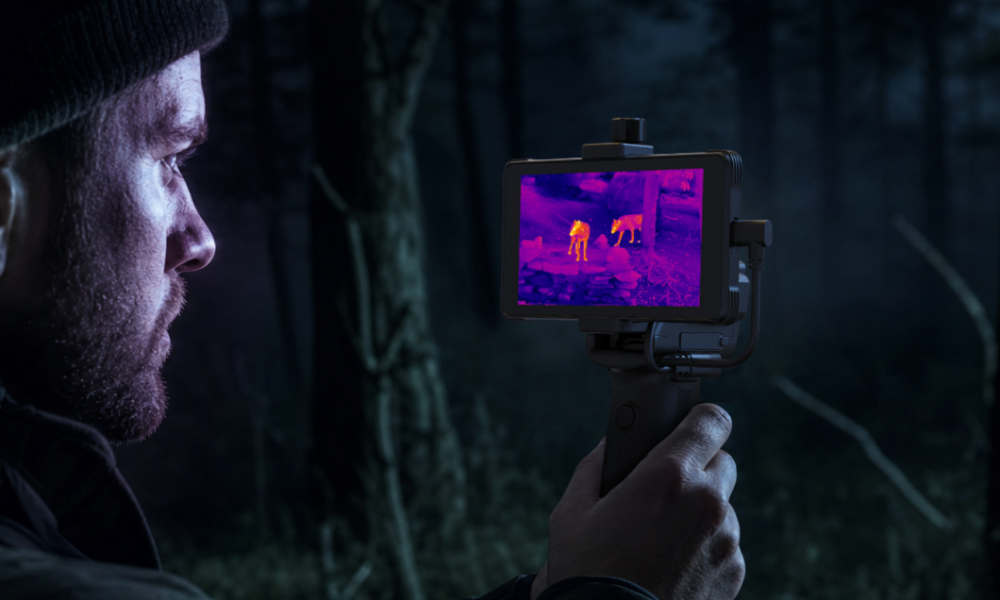
By combining thermal imaging technology with proper techniques and suitable outdoor conditions, you can more effectively search for birds at night with birding binoculars.
Read on to learn how to utilize birding binoculars after dark—enhancing both your success rate in locating birds and your overall viewing experience—and to discover two specific *Thermal Master* binocular models ideally suited for nocturnal birdwatching.
Why Are Birdwatching Binoculars Useful at Night?
When birdwatching at night, specialized binoculars allow for clear observation of birds even in dark, heavily fogged, or densely vegetated wilderness environments. Many avian species are more active in low-light conditions—settings where standard binoculars often struggle to capture their movements with sufficient clarity.
Nighttime birdwatching is particularly advantageous for observing owls, waterfowl, and migratory birds that typically remain elusive during the day. Furthermore, thermal imaging binoculars can significantly enhance long-range observation capabilities, enabling you to precisely pinpoint the movements of birds concealed within dense foliage, grasslands, wetlands, or rugged rocky terrain.

How Can You Use Birdwatching Binoculars at Night?
Step 1: Choose the Right Observation Area
The primary step is to choose an area where birds are frequently active at night—such as wetlands, forests, lake shores, riverbanks, or along bird migration routes. Locations with minimal artificial lighting offer stronger thermal contrast, allowing thermal imaging binoculars to capture heat signatures more clearly and making birds easier to identify during nocturnal observations.
Step 2: Use Thermal Scanning Before Zooming In
Before utilizing the digital zoom function, you should first slowly scan a wide area. Thermal imagers equipped with wide-angle lenses allow you to more rapidly pinpoint the movement trajectories of heat sources before switching to a detailed observation mode. Furthermore, smooth and fluid scanning movements can enhance the clarity of thermal tracking during night birdwatching.
Step 3: Adjust the Viewing Palette
Switching the thermal imaging display color palette can improve bird visibility by adapting to varying outdoor environmental conditions and background temperatures. During cooler seasons, "White Hot" and "Black Hot" modes often yield superior results; conversely, on warm nights, high-contrast palettes can enhance the distinction between the target and its background. By adjusting the color palette, the silhouettes of birds become sharper against backgrounds such as trees, tall grass, water surfaces, or rocks.
Step 4: Control Your Distance and Movement
Maintaining a safe observation distance and avoiding sudden movements minimizes disturbance to birds during night birdwatching. With the aid of thermal imaging binoculars, you can monitor birds from a slightly greater distance, thereby avoiding the need to approach too closely and startle the wildlife. Maintaining a steady stance and moving slowly typically improves the clarity of the thermal image and facilitates smoother target tracking.
Step 5: Record Images and Compare Thermal Patterns
You can record thermal images and video footage to allow for a more detailed review after the observation session concludes—examining bird movement trajectories, physical characteristics, and thermal distribution patterns. Many thermal imaging devices designed for birdwatching support both photo and video recording functions, making them highly convenient for long-term wildlife tracking. Additionally, combining thermal imaging observations with traditional optical binoculars allows for more accurate bird species identification in nocturnal environments where natural light is scarce.

What Features Matter Most for Night Birdwatching Binoculars?
When selecting binoculars for nighttime birdwatching, it is essential to consider thermal imaging performance, image stability, and adaptability to outdoor environments. The following features significantly impact performance during nocturnal birdwatching sessions:
- Thermal Sensitivity (NETD): A low NETD value enables the detection of subtle temperature differences between birds and their surrounding background. This allows you to spot birds concealed within bushes, grasslands, or wetlands, producing sharper and clearer images during nighttime observation.
- Frame Rate: A high refresh rate (e.g., 25Hz or 50Hz) ensures a smoother thermal tracking experience as birds move rapidly across forests, riverbanks, or open outdoor areas. This helps minimize motion blur that might otherwise occur during prolonged observation periods.
- Detection Range: A longer detection range allows you to observe birds from a greater distance, thereby avoiding disturbance to surrounding wildlife. This feature is particularly well-suited for birdwatching in wetlands, along avian migration corridors, and in expansive open environments.
- Lens and Image Clarity: High-quality lens configurations combined with high thermal imaging resolution enhance the separation between the subject and the background, rendering bird outlines more distinct and defined—even in dark or foggy conditions.
- Battery Life: Extended outdoor birdwatching activities—such as wilderness camping trips, wildlife expeditions, or prolonged nocturnal observation sessions—place extremely high demands on battery performance and stability.
- Weather Resistance: Outdoor birdwatching often involves encountering challenging weather conditions—including dampness, heavy fog, strong winds, or sudden temperature fluctuations. Consequently, thermal birdwatching binoculars featuring superior weather resistance deliver a more stable and reliable performance in the field.

What Challenges Can You Face During Night Birdwatching?
Night birdwatching can still present several challenges even when using advanced thermal imaging equipment. One common issue is environmental heat interference because rocks, roads, and trees may continue releasing heat after sunset. This can sometimes reduce thermal contrast and make smaller birds harder to separate from surrounding backgrounds.
Weather conditions also affect thermal visibility. Heavy rain, dense fog, and strong humidity can weaken infrared performance and reduce overall image clarity during nighttime observation. In practice, cooler evenings with moderate weather conditions usually provide the best thermal viewing experience.
Another limitation is species identification. Thermal birdwatching binoculars are excellent for detecting movement and locating birds, but they mainly display heat signatures rather than detailed feather patterns or natural colors. This means that traditional binoculars may still help confirm exact species during partial moonlight or early morning observation.
Battery management is also important during extended outdoor sessions. Long-term recording, high screen brightness, and WiFi transmission can reduce operating time more quickly during nighttime birdwatching activities.

Best Thermal Birdwatching Binoculars for Night Use
To this end, Thermal Master has specially selected two of the best binoculars for birdwatching—the DV2 and X3—which are ideally suited for nocturnal birdwatching. Detailed product descriptions are provided below:
Thermal Master DV2
The Thermal Master DV2 is a thermal imaging birdwatching binocular designed for nocturnal wildlife observation and long-range outdoor detection. Featuring Super Bird 4.0 AI algorithm technology and 512×384 X³IR™ Resolution, it enables you to identify birds with exceptional clarity in forests and wetland areas. It also boasts an Ultra Night Vision detection range of 1,094 yards and a thermal sensitivity (NETD) of ≤15mK, effectively enhancing dynamic tracking and heat source detection capabilities during nighttime birdwatching.
- Super Bird 4.0: Optimized for observing birds in woodlands, dense brush, and scenes with heavy foliage.
- 1,094 Yards Ultra Night Vision: Capable of detecting targets at both close and long distances.
- ≤15mK NETD: Detects subtle thermal differences, enabling clearer target differentiation in low-light environments.
- 3-Core Image Processor: Delivers triple the processing power for sharper, more detailed thermal imagery.
- 512×384 X³IR™ Resolution: Enhances thermal image details and improves long-range observation performance.

Thermal Master X3
The Thermal Master X3 utilizes a high-performance 384×288 detector combined with a thermal sensitivity of ≤25mK, allowing you to more effectively identify and track the movements of distant birds in outdoor environments. Furthermore, its 60Hz refresh rate ensures smoother viewing when observing moving wildlife in forests, open fields, or along riverbanks.
- 1,640-Yard Detection Range: Supports long-range detection of birds and wildlife during nighttime scanning and observation.
- 384×288 Thermal Detector: Provides richer thermal imaging details for clearer outdoor target identification.
- ≤25mK Thermal Sensitivity: Enhances the visibility of subtle thermal signatures emitted by birds in complex environments.
- 60Hz High Frame Rate: Facilitates the tracking of moving birds through smoother, real-time thermal imagery.
- 15mm High-Performance Lens: Boosts long-range observation capabilities in both forested and open terrain.

Summary
By combining thermal imaging technology and usage methods, you can better utilize birdwatching binoculars at night. Thermal imaging birdwatching equipment can help you spot birds in outdoor environments such as darkness, fog, and forests. Choosing equipment with high thermal sensitivity, smooth frame rates, and reliable long-range detection capabilities can enhance your nighttime observation experience.
FAQ
Can thermal birdwatching binoculars work in complete darkness?
The answer is yes, because thermal birdwatching binoculars detect infrared heat instead of visible light, so you can still locate birds even in complete darkness.
Are thermal birdwatching binoculars better than traditional binoculars at night?
The answer is yes for detection purposes, because thermal imaging helps identify heat movement in low-light environments, so you can find hidden birds more easily.
What thermal sensitivity is good for birdwatching binoculars?
The answer is that lower NETD values below 25mK are usually better, because stronger thermal sensitivity improves heat separation, so small birds become easier to detect.
Can thermal binoculars work in foggy weather?
The answer is yes to some extent, because thermal imaging performs better than visible-light optics in moderate fog, so nighttime visibility usually improves outdoors.
Do thermal birdwatching binoculars work during the day?
The answer is yes, because thermal imaging detects heat signatures regardless of lighting conditions, so you can still use them for daytime wildlife observation.
Related Reading:

Hinterlasse einen Kommentar
Alle Kommentare werden vor der Veröffentlichung geprüft.
Diese Website ist durch hCaptcha geschützt und es gelten die allgemeinen Geschäftsbedingungen und Datenschutzbestimmungen von hCaptcha.