


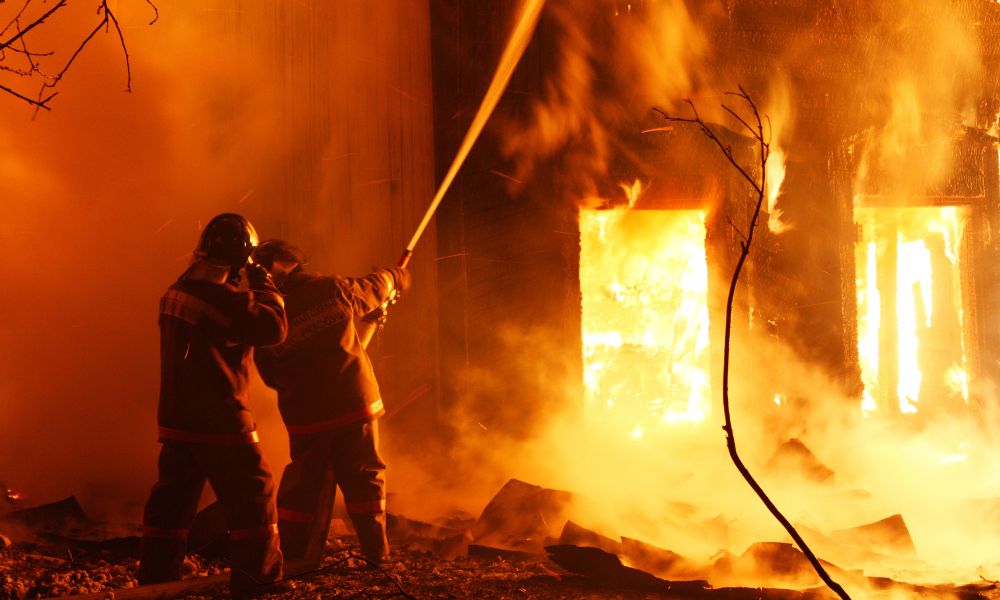
Thermal imaging cameras help firefighters detect hidden heat sources and locate trapped individuals during emergency operations, while also improving visibility in smoky environments. They also enable faster identification of dangerous hot spots, overheated structures, and hidden fire spread, thereby enhancing fire safety.
Below, we’ll explore how to properly use thermal imaging cameras during fire suppression, search and rescue, and post-fire inspection operations.
Why Are Thermal Imaging Cameras Important for Firefighting?
When visibility is limited, thermal imaging cameras help firefighters detect heat sources through smoke, darkness, and debris. During emergency operations, they enable rapid identification of fire sources, trapped individuals, overheated equipment, and hazardous areas within building structures.
After a fire is extinguished, thermal imaging technology can also detect smoldering hidden hot spots inside walls, roofs, or ventilation systems. Furthermore, modern firefighting thermal imagers can be used for inspections in hazardous environments, improving safety, speeding up inspections, and enhancing rescue efficiency.
How Do You Use a Thermal Imaging Camera During Firefighting?
Step 1: Scan the Environment Before Entering
Before entering a building, use a thermal imaging camera to scan the fire scene for hot spots, hidden fire sources, collapse risks, and safer entry routes. Start by inspecting the roof, doors, and windows, as their thermal distribution can indicate how the fire has spread inside. During emergency operations, scanning slowly from left to right provides a more accurate thermal analysis.
Step 2: Locate Victims Using Thermal Signals
Once inside the building, use the thermal imager to penetrate smoke or darkness and locate victims. Compared to surrounding objects, the human body emits a distinct thermal signal, allowing for faster identification of trapped individuals. Therefore, during rescue operations, carefully scan floors, stairwells, corners, and areas with debris buildup.
Step 3: Identify Hidden Fire Spread
Thermal imagers can detect hidden fire spread behind walls, ceilings, insulation, and electrical systems. Even if flames are not visible from the outside, fires may continue to burn in unseen areas. Uneven heat distribution indicates hidden combustion zones that require further inspection.
Step 4: Monitor Firefighter Safety and Structural Integrity
Thermal imagers also help monitor dangerous structural temperatures during firefighting operations. For example, high-temperature walls, ceilings, or load-bearing beams indicate weakening or potential collapse zones. This allows rescue personnel to make safer decisions more quickly when navigating hazardous environments.
Step 5: Conduct Post-Fire Hot Spot Inspections
After the fire is extinguished, firefighters can use thermal imagers to check for hidden hot spots. For example, even after the smoke has cleared, residual heat may remain inside walls, insulation, or ventilation systems. Post-fire thermal inspections help prevent reignition and improve overall safety at the fire scene.

What Can Firefighters Detect with a Thermal Imaging Camera?
In emergency rescue operations, thermal imaging cameras help firefighters identify various hazards and targets. The following are some of the hazards that can be detected:
- Hidden Fire Sources: Thermal cameras can reveal concealed fire spread behind walls, ceilings, floors, or ventilation systems before visible flames appear externally.
- Trapped Victims: Human body heat often remains visible through smoke-filled rooms, helping rescue teams locate unconscious or trapped individuals faster.
- Overheated Electrical Systems: Electrical panels, overloaded circuits, and industrial machinery may continue generating dangerous heat after suppression operations.
- Structural Weakness: Extremely hot support beams, ceilings, or walls can indicate areas at higher risk of collapse during prolonged fires.
- Gas or Mechanical Equipment Risks: Boilers, HVAC systems, generators, and industrial pipes may retain dangerous temperatures even after nearby flames are extinguished.
- Wildfire Hotspots: During forest or wildfire response, thermal imaging cameras help crews identify underground embers, tree roots, and hidden hotspots that may reignite later.
These capabilities make thermal imaging cameras valuable not only for active firefighting but also for rescue operations, industrial safety inspections, and disaster recovery tasks.
What Are the Best Practices When Using Thermal Cameras in Firefighting?
Using a thermal imager correctly is just as important as owning one. Incorrect scanning habits or misinterpretations can reduce its effectiveness during emergency operations. Here are some points to keep in mind.
- Move the camera slowly: Rapid movement may blur thermal interpretation and cause you to miss important heat signatures.
- Check multiple angles: Heat can transfer through materials unevenly, so scanning from only one direction may produce misleading readings.
- Avoid relying only on thermal images: Thermal cameras assist decision-making, but firefighters should still combine visual inspection, structural awareness, and communication protocols.
- Watch for reflective surfaces: Metal, water, and glass can sometimes reflect heat signatures instead of showing actual temperatures accurately.
- Monitor temperature trends: Sudden increases in ceiling or wall temperatures may indicate dangerous fire growth or flashover conditions.
- Perform continuous rescanning: Fire behavior changes rapidly, especially inside enclosed buildings, so repeated scanning improves operational awareness.
In practice, experienced firefighters treat thermal imaging as a situational awareness tool rather than a replacement for traditional firefighting procedures.
What Limitations Do Thermal Imaging Cameras Have During Firefighting?
Although thermal imaging cameras can effectively identify hazards, they still have certain operational limitations, and firefighters need to be aware of these limitations.
A thermal camera cannot see directly through solid walls or thick structural barriers. Instead, it detects surface temperature differences caused by heat transfer. This means that hidden fire interpretation still requires experience and proper judgment. Extremely thick concrete, insulated steel structures, or layered materials may reduce thermal visibility significantly.
High ambient temperatures can also affect thermal contrast. During large industrial fires or wildfire operations, surrounding surfaces may become uniformly hot, making smaller hotspots harder to identify clearly. In simple terms, the less temperature contrast available, the more difficult target separation becomes.
Water, reflective surfaces, and steam can create misleading thermal images as well. Steam clouds sometimes appear similar to heat signatures, while reflective metal surfaces may display inaccurate temperature patterns from nearby heat sources.
Battery life is another operational factor. Long rescue operations often require spare batteries or charging systems because continuous thermal imaging consumes significant power during extended use.
Finally, firefighters still need training to interpret thermal images correctly. Reading thermal patterns accurately under stress requires practical experience, especially when evaluating structural conditions or hidden fire spread.

How Are Thermal Imaging Cameras Used in Different Firefighting Scenarios?
Different firefighting scenarios require different thermal imaging approaches, as fire conditions and rescue priorities can vary significantly. The following are common applications for thermal imagers:
Residential Structure Fires
In residential fires, thermal cameras mainly help locate victims, identify hidden fire spread, and improve navigation through smoke-filled rooms. Bedrooms, attics, basements, and electrical systems are common scanning targets during home rescue operations.
Industrial and Warehouse Fires
Industrial environments often contain machinery, electrical systems, fuel storage, and chemical hazards. Thermal imaging cameras help firefighters identify overheating equipment, pressure risks, and hidden combustion areas inside large structures.
Wildfire and Forest Fire Operations
Wildfire crews use thermal cameras to locate hidden embers, underground root fires, and spreading heat sources during nighttime operations. Thermal imaging also improves visibility in heavy smoke and low-light outdoor conditions.
Vehicle and Highway Fires
A vehicle fire can reduce visibility and cause sudden temperature changes. After extinguishing the fire, firefighters can use thermal imaging cameras to inspect the engine, battery system, fuel tank, and the surrounding roadside area.
Search and Rescue Missions
Thermal imaging technology is widely used during rescue operations involving collapsed buildings, nighttime searches, and smoke-filled environments. Human heat signatures often remain detectable even when visual visibility becomes extremely limited.
Summary
A thermal imaging camera is one of the most valuable tools used in modern firefighting because it improves visibility, speeds up rescue operations, and helps detect hidden fire hazards more efficiently. By learning how to properly scan environments, identify heat signatures, monitor structural conditions, and inspect post-fire hotspots, you can use thermal imaging technology more safely and effectively during emergency response situations. Whether you are responding to residential fires, industrial incidents, vehicle fires, or wildfire operations, thermal imaging cameras provide critical thermal information that standard visual inspection alone cannot deliver.
Related Reading:
How to Use a Thermal Camera for Home Inspection?

Leave a comment
All comments are moderated before being published.
This site is protected by hCaptcha and the hCaptcha Privacy Policy and Terms of Service apply.