



Infrared cameras allow you to see heat patterns and temperature differences that are invisible to the human eye. They are widely used in areas such as electrical inspections, building diagnostics, security monitoring, and equipment maintenance.
But how do these cameras actually work, and what types are available? In the following sections, you’ll explore the technology behind infrared cameras and their key advantages.
How Do Infrared Cameras Work?
The core principle of an infrared thermal imager is to convert heat into data, making objects invisible to the naked eye visible. Unlike traditional cameras that require light, it senses the infrared radiation naturally emitted by objects. When this energy shines on an internal sensor, it is converted into an electrical signal representing a precisely measurable temperature.
The infrared camera then "maps" an image by assigning different colors to different temperature levels. This generates a real-time thermal image, allowing you to spot glowing red hotspots or blue leaks. It is the best detection tool for revealing crucial details completely invisible to the naked eye.
Infrared Camera vs Thermal Camera: What’s the Difference?
Infrared cameras and thermal cameras are often used interchangeably, but they are not the same. The term infrared camera is a broader category that includes different technologies designed to detect infrared radiation. A thermal camera is a specific type of infrared camera that focuses on detecting heat emitted by objects.
The main difference lies in how they capture and interpret infrared energy. Thermal cameras measure temperature differences and convert them into thermal images, making them ideal for tasks like electrical inspections, building diagnostics, and equipment monitoring. Other infrared cameras, such as near-infrared cameras, typically rely on reflected infrared light and are more commonly used in night vision, surveillance, and scientific imaging.

What Types of Infrared Cameras Are There?
Infrared thermal imagers are distinguished by the technology they employ and the detection wavelength they use; different types of infrared thermal imagers are suitable for different application scenarios. Below are some common types of infrared thermal imagers.
1. Thermal Infrared Cameras
Thermal infrared cameras detect the heat naturally emitted by objects and convert it into visible thermal images. They are commonly used for electrical inspection, building fault diagnosis, HVAC maintenance, and equipment monitoring. By displaying temperature differences, they can identify faults such as overheated components or insulation problems.
2. Near-Infrared Cameras (NIR)
Near-infrared cameras operate in a wavelength range close to visible light. They are commonly used in night vision equipment, surveillance systems, and some research applications. These cameras rely on external infrared illumination to capture images in low-light environments.
3. Short-Wave Infrared Cameras (SWIR)
Short-wave infrared cameras detect wavelengths between visible light and thermal infrared. They are commonly used for industrial inspection, semiconductor analysis, and material identification. Furthermore, short-wave infrared cameras can penetrate some materials, such as thin plastics, fog, or smoke.
4. Long-Wave Infrared Cameras (LWIR)
Long-wave infrared cameras operate in the same wavelength range as thermal imaging, detecting the heat emitted by objects without external illumination. This allows them to work effectively in complete darkness and is widely used in thermal imaging inspection, security monitoring, and outdoor observation.
What Is an Infrared Camera Used For?
Building and Home Inspections
- Detecting Heat Loss: Energy bills can be reduced by identifying gaps in window seals or missing wall insulation.
- Locating Leaks: Because water evaporation has a cooling effect, thermal imagers can "see" moisture behind walls or under floors, pinpointing pipe leaks precisely without demolition.
- HVAC and Piping Mapping: Visualize the layout of radiant floor heating systems or locate blockages in pipes hidden deep within buildings.
Industrial and Electrical Maintenance
- Electrical Troubleshooting: Overloaded circuits, loose connections, or aging transformers can all cause abnormal heating. Thermal imaging cameras can instantly detect these "hot spots."
- Mechanical Wear: The wear and tear from poorly lubricated bearings or worn motors is clearly visible, allowing technicians to repair machinery before it fails.
- PCB Diagnostics: Thermal imaging technology identifies short-circuited or overheated components on circuit boards, simplifying R&D and repair processes.
Automotive and Outdoor Safety
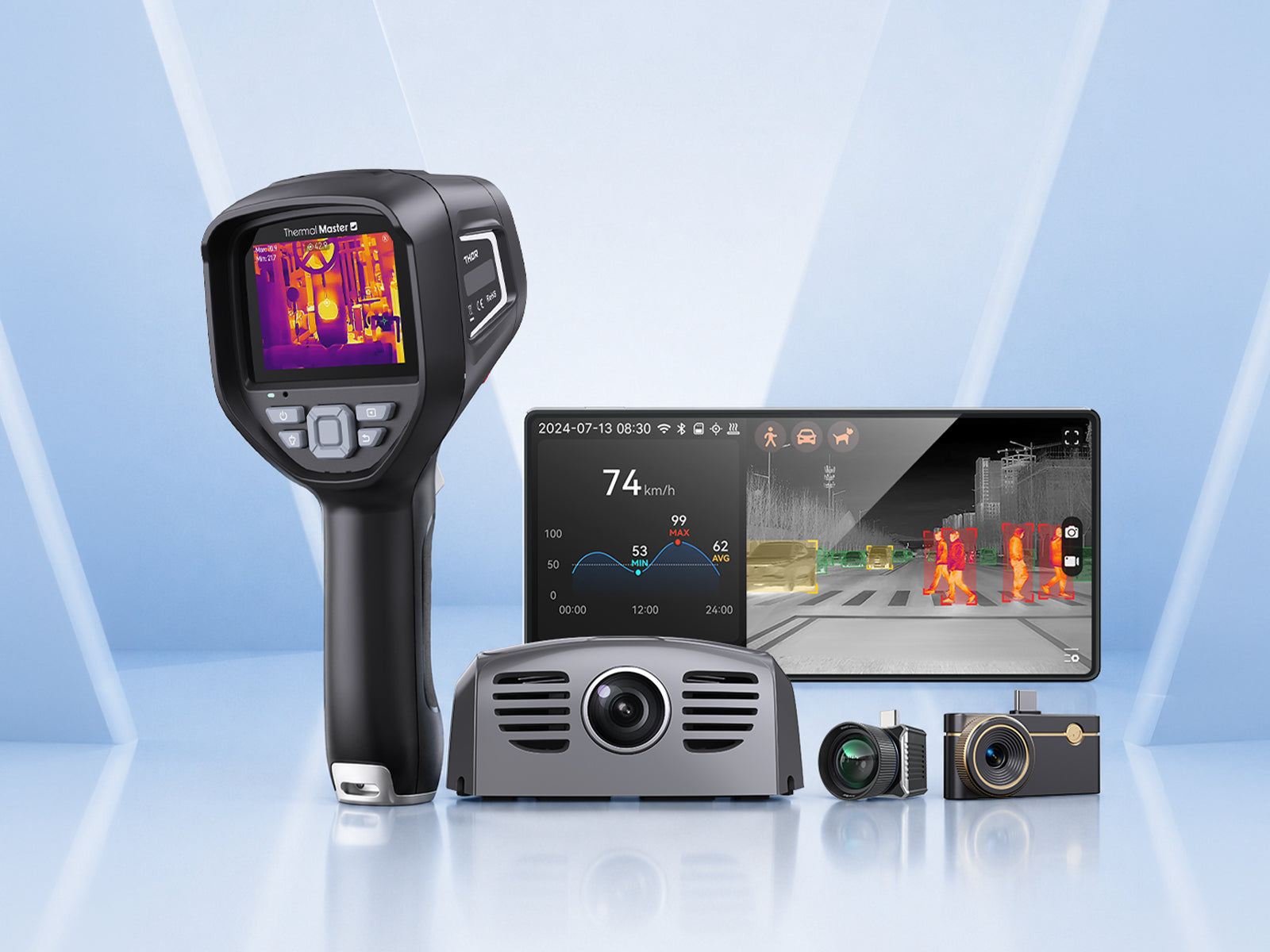
- Automotive Night Vision Systems: Systems such as the Thermal Master NV300 series can detect living beings (pedestrians and animals) in complete darkness, dense fog, or bright light, providing drivers with valuable extra reaction time.
- Search and Rescue (SAR): In dense forests or mountainous areas at night, thermal imaging technology can quickly pinpoint human body heat.
- Wildlife Observation: Researchers and outdoor enthusiasts can track and study animals at night without being disturbed by visible light.
Firefighting and Public Safety
- Smoke Navigation: Firefighters use thermal imagers to navigate through smoke-filled buildings, searching for trapped survivors and identifying the source of fires.
- Security and Border Patrol: Unlike ordinary cameras, thermal imaging surveillance is not fooled by camouflage and can monitor distant borders in complete darkness.

What Are the Advantages of Infrared Cameras?
The main advantage of infrared cameras is their ability to penetrate complete darkness, smoke, and fog without requiring an external light source. They work by detecting thermal signals and providing a high-contrast visual image of the environment. This makes them an essential tool for identifying pedestrians at night or navigating in dangerous, low-visibility scenarios.
In addition to night vision capabilities, they also serve as powerful non-contact diagnostic tools. They can locate faults invisible to the naked eye, such as electrical hotspots, energy losses, or hidden leaks, without invasive testing. By detecting these problems early, you can prevent mechanical failures and potential hazards.
Conclusion
Infrared cameras have become valuable tools in many industries because they allow you to detect heat patterns that are invisible to the naked eye. From equipment inspections to security monitoring and building diagnostics, they help you identify problems quickly and improve efficiency in many real-world situations.
By understanding how infrared cameras work, the different types available, and their key advantages, you can better choose the right device for your needs and make more effective use of this technology in practical applications.
FAQ
1. Can infrared cameras see through walls?
No, infrared cameras cannot see through walls. They only detect heat emitted from the surface of objects. However, they can sometimes reveal hidden issues such as insulation gaps, water leaks, or overheating wires behind walls by detecting temperature differences on the wall’s surface.
2. How accurate are infrared cameras?
The accuracy of an infrared camera depends on the sensor quality, resolution, and calibration. High-quality thermal cameras can measure temperature differences with high precision, making them reliable tools for professional inspections and diagnostics.
3. What factors affect the performance of an infrared camera?
Performance depends on sensor resolution, thermal sensitivity (NETD), lens quality, and environmental conditions such as fog, smoke, or reflective surfaces. Higher-quality cameras provide clearer, more accurate thermal images.
Related Reading:

Leave a comment
All comments are moderated before being published.
This site is protected by hCaptcha and the hCaptcha Privacy Policy and Terms of Service apply.