



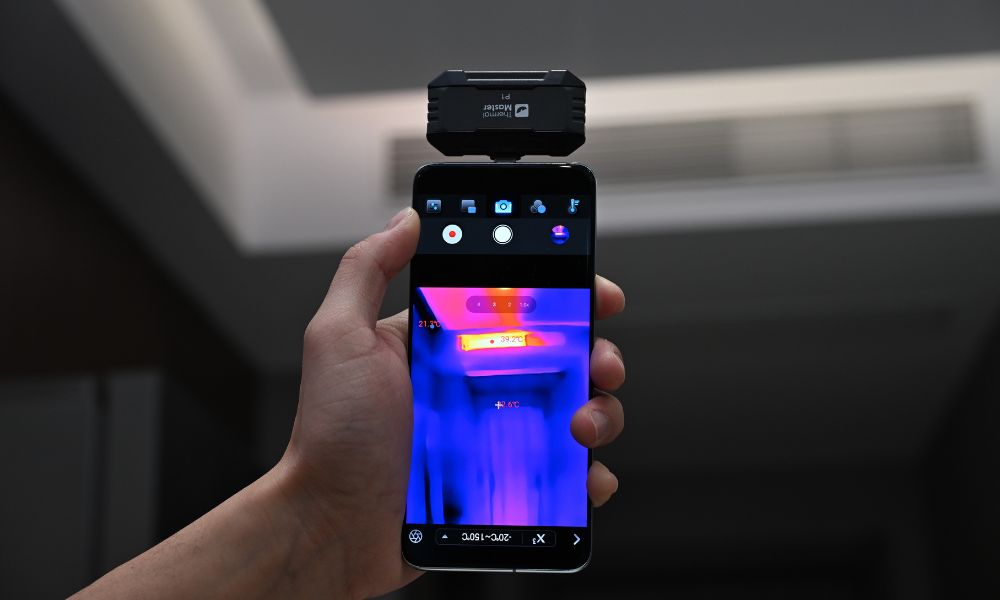
Regular maintenance of heat pumps ensures they operate efficiently, reliably, and economically throughout the year. In addition to basic maintenance, thermal imaging cameras can quickly identify hidden issues such as heat loss, abnormal airflow, or overheating components.
So, what aspects of a heat pump should be maintained? And how can thermal imaging cameras help with detection? Let’s take a closer look below.
Do Heat Pumps Need Regular Maintenance?
Yes, heat pumps require regular maintenance because they operate year-round and place a greater strain on the system than traditional HVAC equipment. Without routine maintenance, a heat pump’s energy efficiency will decline, energy costs will rise, and minor issues may escalate into costly repairs. Therefore, regular maintenance ensures the system operates efficiently and reliably and lasts for many years.
What Maintenance Should You Do on a Heat Pump?
Clean or Replace the Air Filter
You should check the air filter every 1 to 3 months. Every day, dust and debris can obstruct airflow, causing the system to work harder, increasing energy consumption, and reducing heating or cooling efficiency. Therefore, it is recommended to clean or replace the filter regularly to maintain good airflow and indoor air quality.
Clean the Outdoor Unit
The outdoor condenser requires good airflow to operate efficiently. Therefore, it is recommended to remove leaves, dirt, snow, and other debris from around the unit and maintain a clear clearance of at least 2–3 feet. Blocked airflow can reduce performance and may lead to overheating.
Clean the Coils (Evaporator and Condenser)
Over time, dirt buildup on the coils reduces their heat transfer capacity. Dirty coils reduce system efficiency and cause longer runtime cycles. Therefore, regularly cleaning the coils helps maintain optimal heat exchange and lower energy costs.
Check Thermostat Settings
Additionally, ensure the thermostat is set to the correct mode (heating or cooling) and maintains a stable temperature. Incorrect settings or calibration issues can also cause the heat pump to operate inefficiently or fail to maintain a comfortable environment.
Inspect Electrical Components
Check the wiring, connections, and terminals for signs of wear, corrosion, or overheating. Faulty electrical components can also reduce performance or cause system failure. Early detection can prevent safety hazards and costly repairs.
Check Refrigerant Levels
Refrigerant plays a crucial role in heat transfer. Low refrigerant levels indicate a leak, which can reduce system efficiency or damage the compressor. If refrigerant levels are low, it is best to have a professional inspect and recharge the system.
Inspect Ductwork and Airflow
Leaks or blockages in ductwork can cause uneven heating or cooling, leading to wasted energy. Therefore, ensure vents are unobstructed and check for leaks in the ductwork to maintain even airflow throughout the space.
Monitor System Performance
Be alert for unusual noises, weak airflow, extended runtime, or uneven temperatures. These signs indicate potential issues. Regular monitoring can help identify problems early, before they escalate into major repairs.
What Tools Are Used for Maintaining Heat Pumps?
Maintaining a heat pump requires basic tools for routine maintenance and specialized tools for in-depth diagnostics. These tools can help identify various potential issues.
- Multimeter: Use this to measure voltage, current, and electrical connections, and to troubleshoot issues such as circuit faults, loose connections, or damaged components.
- Coil Cleaning Tools and Cleaners: These include coil cleaners and soft-bristle brushes, used to remove dirt from the evaporator and condenser coils to improve heat transfer efficiency.
- Fin Straightener: Used to straighten bent fins on the outdoor unit, ensuring smooth airflow through the condenser.
- Refrigerant Pressure Gauge (Four-Way Gauge): Used to measure system pressure, diagnose refrigerant levels, and detect potential leaks.
- Vacuum Pump: Used during refrigeration system repairs and to remove air and moisture before recharging the system with refrigerant.
- Leak Detector: This device helps identify refrigerant leaks that are invisible to the naked eye.
- Thermal Camera: A thermal camera helps detect temperature differences, quickly identifying heat loss, airflow issues, refrigerant malfunctions, or overheating of electrical components.
- Basic Hand Tools: Includes screwdrivers, wrenches, and pliers, used for opening panels, tightening fittings, and performing routine maintenance tasks.

How Can a Thermal Imaging Camera Help Maintain a Heat Pump?
Thermal imagers visualize invisible temperature differences, aiding in heat pump maintenance and enabling faster, more accurate troubleshooting compared to traditional tools.
- Detect Heat Loss and Poor Insulation: Thermal imagers clearly show where heat escapes from walls, ducts, or joints. This allows you to quickly identify gaps in insulation or sealing issues that lead to reduced energy efficiency and increased energy costs.
- Identifying Airflow Issues: Uneven heat distribution can indicate blocked vents, clogged filters, or duct leaks. By visualizing airflow problems, you can quickly pinpoint areas where air distribution is obstructed or uneven.
- Identifying Refrigerant Issues: Abnormal temperatures on coils or pipes indicate insufficient refrigerant or a leak. This allows for early detection before system performance declines or the compressor is damaged.
- Detect Electrical Overheating: Overheated wires, terminals, or components appear as hotspots in thermal images. This allows you to identify issues early to prevent potential failures, short circuits, or safety hazards.
- Check Coil and Compressor Performance: You can visually assess whether coils are transferring heat properly and whether the compressor is operating within normal temperature ranges, ensuring the system runs efficiently.
- Accelerate Troubleshooting: Instead of relying on trial-and-error methods, a thermal imager allows you to instantly pinpoint problem areas, reducing inspection time and improving maintenance accuracy.
Best Thermal Imaging Cameras for Heat Pump Maintenance
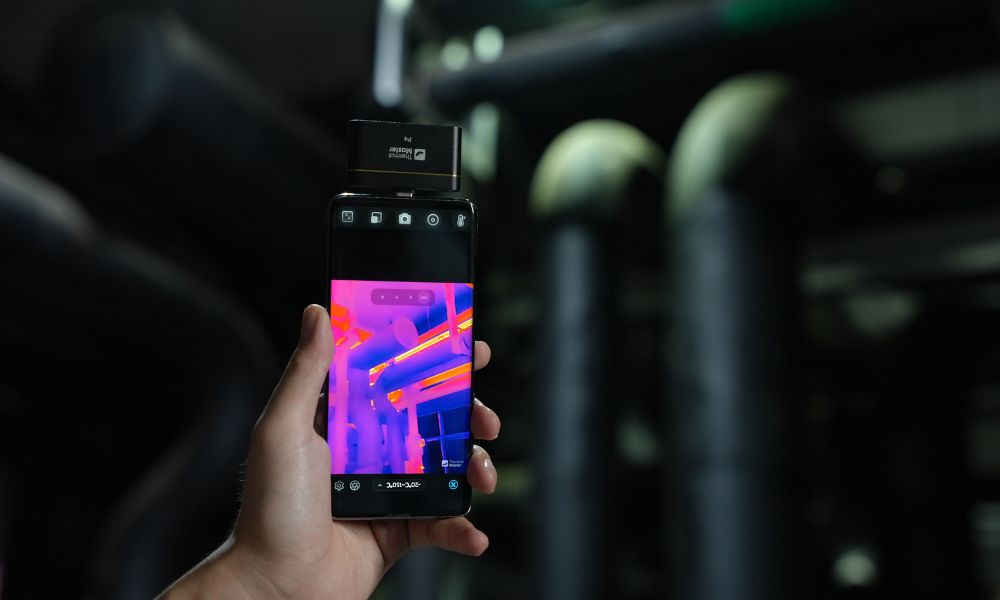
Thermal Master P1
The Thermal Master P1 is a budget-friendly thermal camera designed for quick and easy troubleshooting. With a160*120 infrared resolution (enhanced to 320*240), it delivers clear and reliable thermal images and easily identifies temperature differences on walls, pipes, and vents.
During heat pump maintenance, the P1 helps you detect heat loss, missing insulation, and uneven airflow. Its ±2°C accuracy meets routine inspection needs, helping you quickly pinpoint energy waste points, such as pipe leaks or areas with poor insulation.
Thermal Master P2 Pro
The Thermal Master P2 Pro is a smartphone-compatible thermal imager compatible with both iOS and Android systems. It combines high thermal sensitivity (≤40 mK), ±1.5°C accuracy, and a macro lens for close-up inspections. It assists in detecting subtle temperature changes and accurately measuring small components such as wires and terminals.
These features make the P2 Pro particularly adept at identifying overheated wires, loose connections, and abnormal heat distribution within compressors. Consequently, it offers enhanced electrical diagnostics and the ability to detect minute temperature differences during heat pump maintenance.
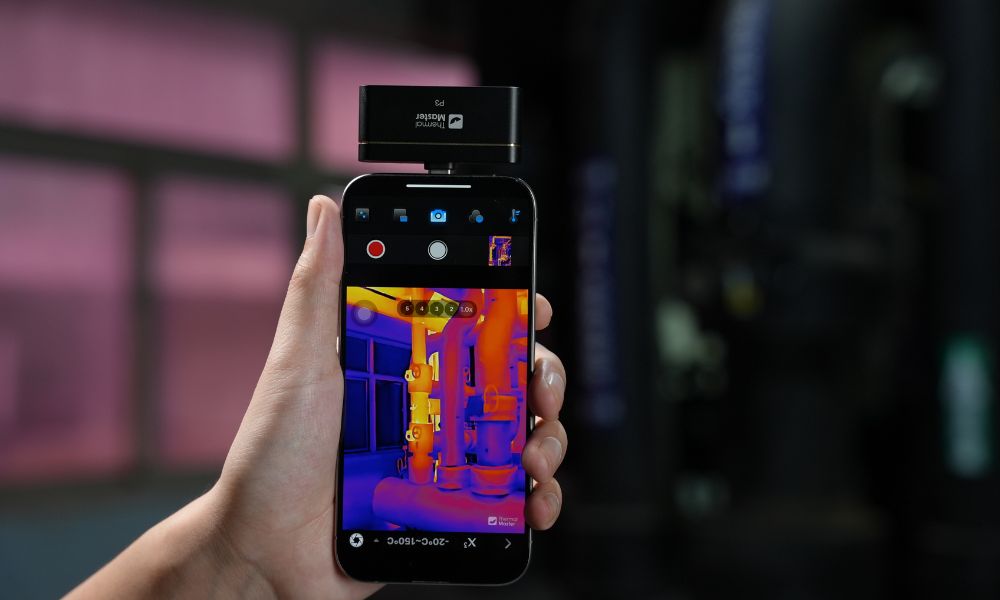
Thermal Master P3
The Thermal Master P3 is a precision diagnostic thermal imager featuring manual focus, a sensitivity of ≤40 mK, and an accuracy of ±2°C. These capabilities enable the P3 to reliably detect minute temperature differences. Additionally, it offers an enhanced resolution of 512×384, providing clear imaging for both close-up and long-range inspections.
When used to inspect heat pumps, the P3 can detect airflow imbalances, inefficient refrigerant circulation, and overall system performance. Furthermore, its focusing capabilities, combined with stable accuracy, enable system-level analysis and detailed fault detection.
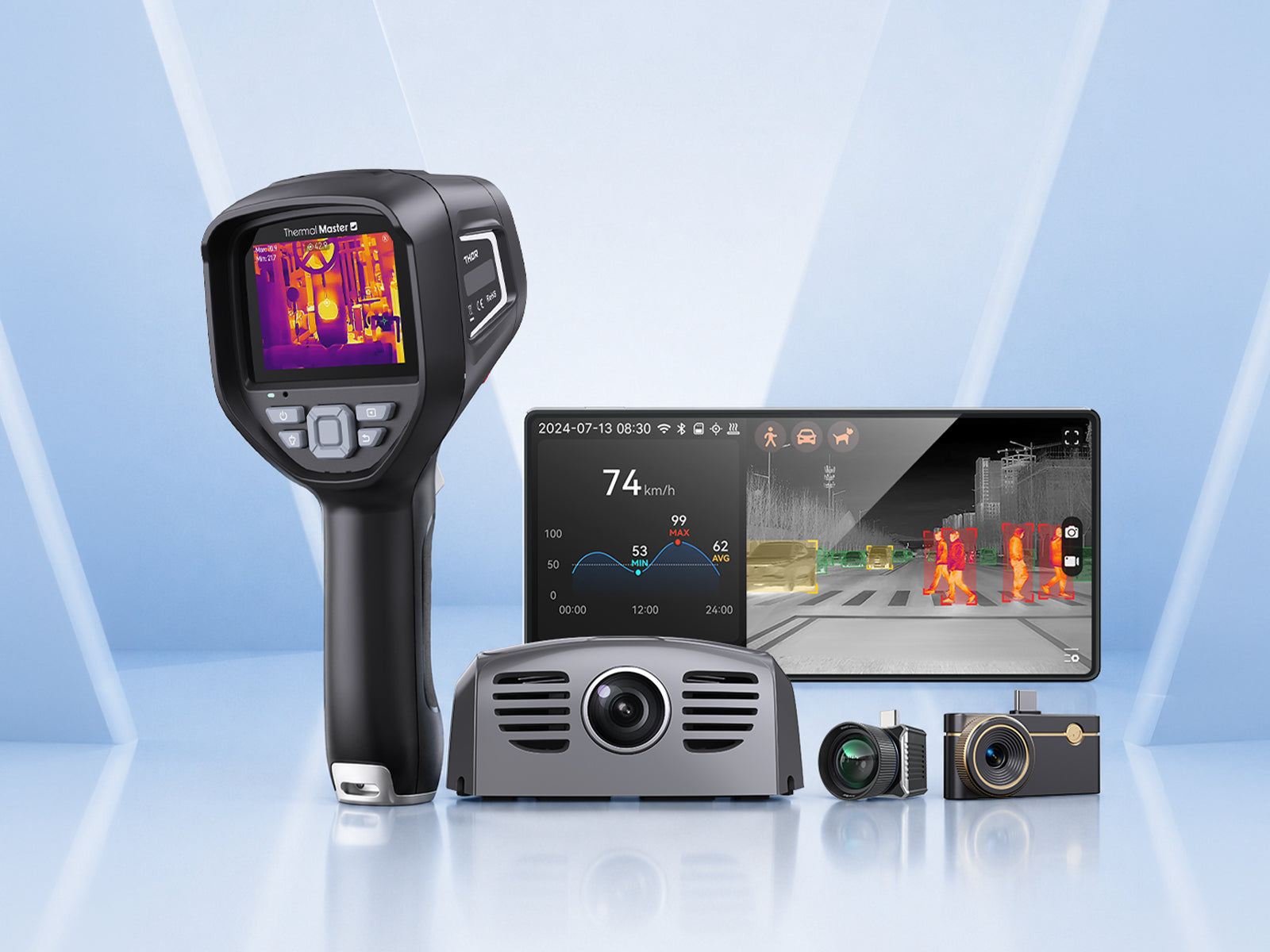
Thermal Master Thor 002
The Thermal Master Thor 002 is a professional handheld thermal imager designed for stable, full-system diagnostics. It features an enhanced resolution of 512×384, sensitivity of <40 mK, and accuracy of up to ±2°C, ensuring consistent and reliable temperature readings during extended inspections. Unlike smartphone thermal imagers, it delivers superior stability in complex environments.
In heat pump maintenance, the Thor 002 can also be used to analyze compressor performance, coil efficiency, electrical panels, and airflow distribution. Its higher precision and temperature readings enable the identification of faults and help prevent misdiagnosis during inspections.

When Should You Call a Professional?
If your heat pump exhibits obvious problems—such as refrigerant leaks, electrical malfunctions, unusual noises, or a significant drop in performance—you should contact a professional immediately. While basic maintenance can be handled on your own, issues involving internal components or system efficiency are best diagnosed and repaired by a technician to ensure safety and proper operation of the equipment.
FAQ
1. Why is my electric bill so high with a heat pump?
The heat pump system is overworked due to issues such as dirty filters, poor insulation, air leaks, or low refrigerant levels; electricity bills will remain high. Additionally, improper thermostat settings or unusually extreme outdoor temperatures can also increase energy consumption. If the system is inefficient or has underlying faults, it will run longer, consuming more electricity and driving up electricity bills.
2. Can a thermal imaging camera detect heat pump issues?
Yes, thermal imaging cameras can reveal temperature differences invisible to the naked eye, helping to identify issues with heat pumps. They can detect heat loss, airflow blockages, refrigerant abnormalities, and overheating of electrical components, allowing you to identify problems early and diagnose them more quickly and accurately.
3. Do I need professional maintenance if I use a thermal camera?
Using a thermal imaging camera can help you quickly identify issues, but it is no substitute for professional maintenance. While you can detect problems such as heat loss or overheating components on your own, repairs involving refrigerants, electrical systems, or internal components should be handled by a certified technician to ensure safety and proper equipment operation.
Related Reading:
How to Use a Thermal Camera for Home Inspection?
How to Use a Thermal Camera to Find Leaks?
Can a Thermal Imaging Camera for Water Leak Detection Really Find Leaks?

Leave a comment
All comments are moderated before being published.
This site is protected by hCaptcha and the hCaptcha Privacy Policy and Terms of Service apply.