



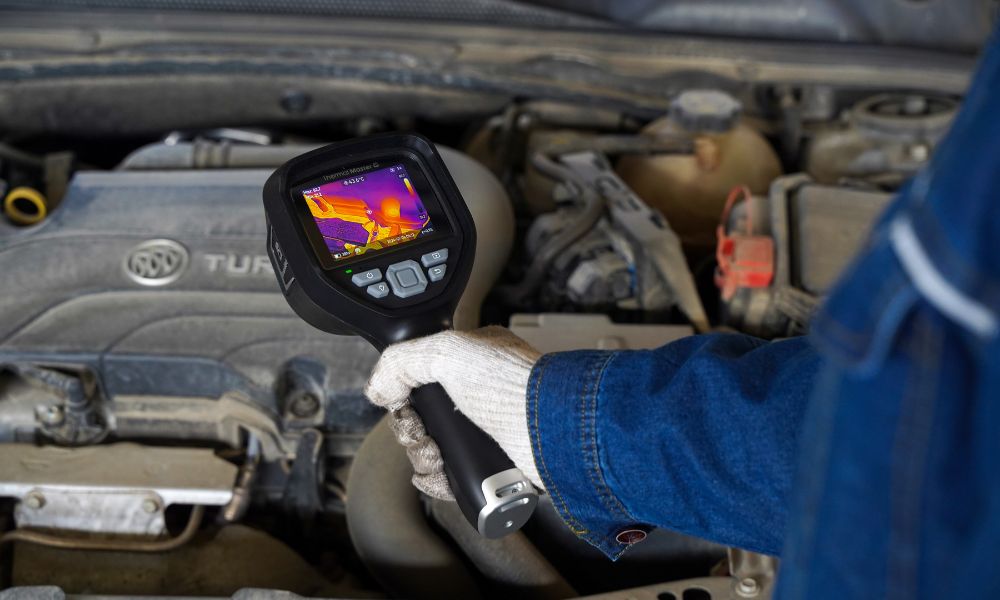
Is your car battery experiencing a persistent, unexplained power drain, leaving you baffled as to the root cause? Taking it to a repair shop for diagnostics can be both time-consuming and costly. Fortunately, a thermal imager can help you quickly detect the heat generated by abnormal electrical currents. Below, we will guide you step-by-step on how to use a thermal camera to pinpoint the source of the fault.
What Causes Car Battery Drain?
A drained car battery can be caused by a variety of factors—ranging from simple oversight to hidden electrical faults. Understanding the most common causes of battery drain allows you to narrow down the possibilities more quickly and select the appropriate diagnostic method.
- Electrical Components Left On: If headlights, infotainment systems, or other electrical components are not switched off, they will slowly drain the battery's power. This drain becomes particularly noticeable when, for instance, a car door is not fully closed, or an interior light remains on unnoticed.
- Parasitic Drain (Abnormal Current Consumption): Some vehicle systems may continue to consume electrical energy even after the engine has been switched off. For example, dashcams, faulty control modules, relays, or circuits can lead to excessive current draw—a consumption that accumulates over time.
- Aftermarket Accessories: Accessories such as dashcams, GPS trackers, or anti-theft alarm systems—if wired directly to a constant power source (one that remains active at all times)—will drain the battery. This issue is exacerbated if proper power management protocols were not followed during installation.
- Wiring Faults or Short Circuits: Furthermore, damaged wiring or short circuits can result in a continuous loss of electrical energy. If the fault creates a direct path for current flow, this abnormal electrical activity may even cause the wiring to overheat.
- Battery Issues: An aging or damaged battery may lose its ability to store electrical energy efficiently; consequently, it may suffer from frequent power loss even in the absence of any obvious external electrical load.
- Charging System Failure: If the alternator or the vehicle's charging system malfunctions, it will be unable to provide the battery with a proper charge; in some cases, this failure may even result in a reverse flow of current.
- Extreme Temperatures: Extremely high or low ambient temperatures can reduce the battery's operational efficiency or accelerate its degradation, thereby making the issue of power loss significantly more pronounced.
- Frequent Short-Distance Driving: Short trips do not provide the battery with sufficient time to recharge, resulting in a gradual depletion of the battery's power capacity over time.
Can a Thermal Camera Detect Car Battery Drain?
Thermal imagers can detect heat generated by abnormal current flow, thereby assisting in the diagnosis of parasitic battery discharge issues. When a vehicle is switched off, any component that continues to consume electrical energy will generate faint heat, which can be observed during a thermal scan.
However, since thermal imagers cannot directly measure current, a multimeter is still required to definitively confirm the fault.

What Tools Do You Need for Detection?
To effectively detect electrical leaks in a car battery, you need to utilize a combination of thermal imaging and electrical diagnostic tools:
- Thermal Camera: Used to quickly scan fuses, wiring harnesses, or control modules for signs of abnormal heat generation, helping you pinpoint areas where irregular current flow may be occurring.
- Multimeter: Used to measure actual current consumption and confirm whether a specific circuit is causing parasitic current (leakage).
- Clamp Meter (Optional): Allows for current measurement without the need to disconnect the circuit, making it ideal for rapid troubleshooting.
- OBD Diagnostic Scanner (Optional): Capable of detecting electronic faults or identifying control modules that have failed to properly enter "sleep mode."
How to Check Car Battery Drain with a Thermal Camera?
When using a thermal imager to diagnose a car battery drain issue, the objective is to identify components that continue to generate abnormal heat even when the vehicle's engine is switched off.
Step 1: Allow the Vehicle to Enter Sleep Mode
Turn off the engine, remove the ignition key, and wait approximately 20 to 30 minutes to allow all vehicle systems to enter a static "sleep" mode. At this point, perform a thermal scan; if any residual heat is detected, it may indicate an issue related to abnormal current consumption.
Step 2: Scan the Battery Area
Use a handheld thermal camer to slowly scan the battery terminals, connectors, and surrounding wiring, carefully observing for any subtle temperature differences. Pay particular attention to instances where one side appears warmer than the other, as this may signal uneven current flow or an issue involving abnormal electrical resistance.
Step 3: Inspect the Fuse Box
Open the fuse box cover and carefully scan each fuse. Observe whether the temperature of any specific fuse is slightly higher than that of its neighbors; if so, this indicates that the corresponding circuit is continuously drawing power.
Step 4: Inspect Wiring Harnesses and Control Modules
Follow the suspected faulty circuit to inspect all connected components—such as control modules, relays, or aftermarket electronic devices. Scan the entire vehicle wiring harness to identify any localized "hot spots" indicating overheating; pay particular attention to wiring connectors and bend points, as these are common areas for faults.
Step 5: Confirm the Fault Source
If a suspicious hotspot is identified, use a multimeter to measure current flow in that specific circuit. Using a multimeter for this final verification ensures that you accurately and precisely pinpoint the true source of the battery drain.
Which Thermal Cameras Are Suitable for Car Electrical Diagnostics?
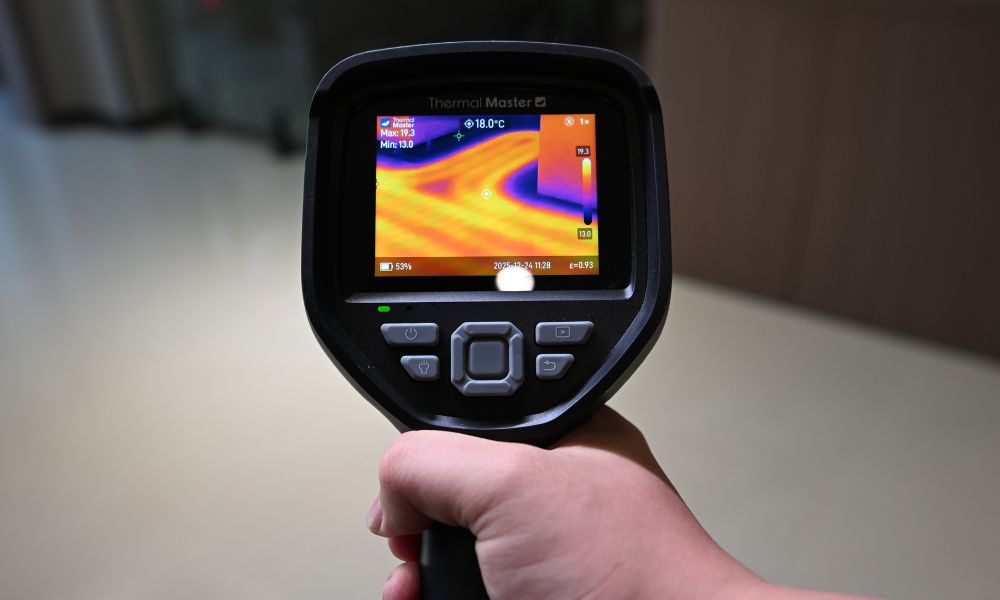
Thermal Master P2 Pro
The Thermal Master P2 Pro combines a sensitivity of ≤40 mK with a macro lens (approx. 8 mm), making it perfectly suited for detecting elusive battery leaks. It enables you to clearly observe minute temperature differences on components such as fuses and connectors, allowing you to identify fuses that are slightly warmer than their surroundings—thereby revealing the presence of parasitic currents (i.e., leaks).
With its enhanced 512×384 resolution (X³IR) and a 25Hz refresh rate, the device delivers sharp, fluid imagery while scanning fuse boxes, helping you accurately capture subtle hot spots even while moving the scanner.
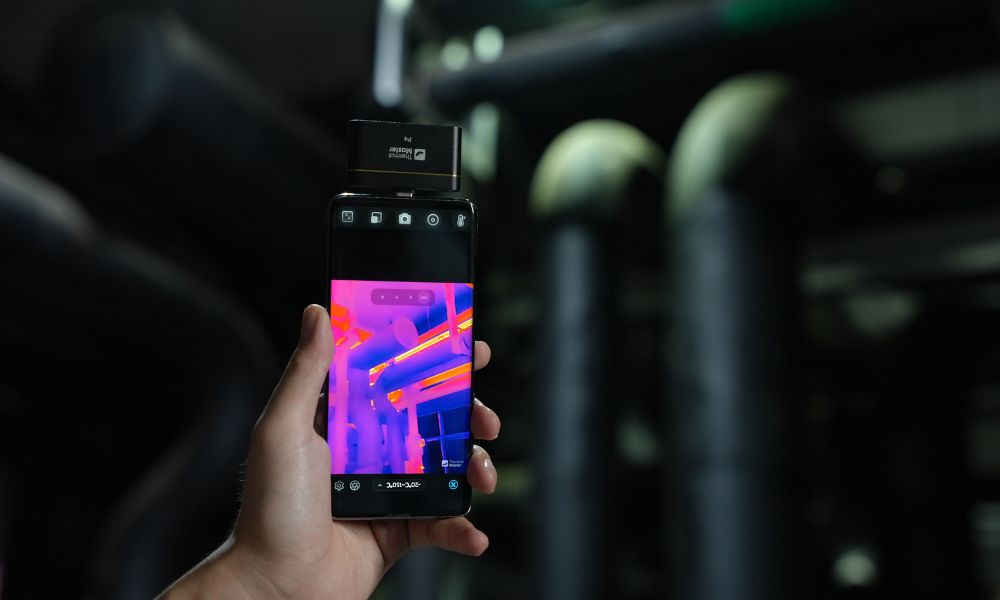
Thermal Master P3
When the source of a car battery leak is unclear—and potentially involves multiple systems—the Thermal Master P3 is the optimal choice. Equipped with manual focus capabilities and an enhanced 512×384 resolution, it allows you to scan components up close while simultaneously covering broad inspection areas, all while delivering crystal-clear images.
During the diagnostic process, you can scan various modules and compare temperature differences across different locations in real time. Combined with its 25Hz refresh rate, this allows you to effortlessly trace thermal distribution patterns across multiple circuits, effectively narrowing down the scope of your troubleshooting to pinpoint the faulty area.
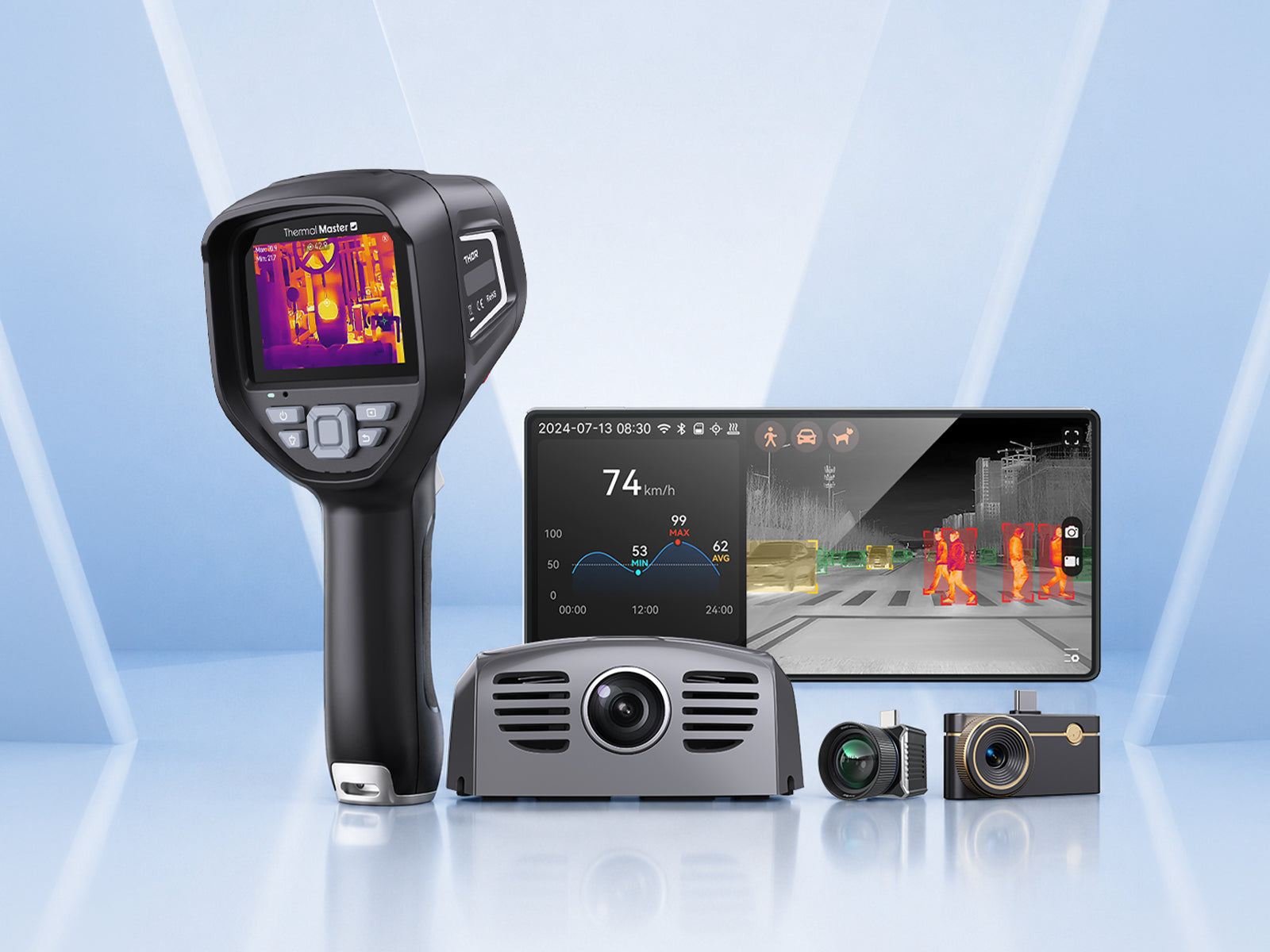
Thermal Master Thor002
The Thor002 features a sensitivity of ≤40 mK, a Super IR resolution of 512×384, and a dedicated 3.5-inch display, making it well-suited for extended vehicle inspections. Furthermore, it is capable of independently monitoring temperature fluctuations without the need to use a mobile phone as a display terminal.
In practical operation, you can repeatedly scan circuits and conduct prolonged observations to analyze thermal change patterns. This thermal imager also offers a 25Hz refresh rate, ensuring smooth image updates and enabling you to continuously and precisely track temperature variations across multiple components.

What Are the Limitations of Using a Thermal Camera?
Thermal imagers can assist in locating abnormal heat sources, but they cannot directly measure electrical current. Furthermore, extremely faint battery leakage may not generate significant heat, and detection results are susceptible to the influence of ambient temperature. Therefore, thermal imagers are best suited for rapid preliminary troubleshooting and should subsequently be used in conjunction with a multimeter for final verification.
When Should You Use a Multimeter Instead?
You can use a multimeter when you need to precisely measure current consumption and verify the presence of parasitic discharge. After using thermal imaging scans to identify suspicious areas, a multimeter allows you to further pinpoint exactly which circuit is causing the problem.
Summary
A thermal imager can help you quickly pinpoint abnormal hot spots, thereby narrowing down the scope of troubleshooting for battery leakage faults. However, since it cannot directly measure electrical current, it serves primarily to make the diagnostic process faster and more intuitive. For a precise diagnosis, it is recommended to use a multimeter in conjunction with the thermal imager to further verify the issue.
Moreover, thermal imagers are not limited to detecting automotive problems; they can also be used to identify structural issues within your home, as well as HVAC-related faults. Consequently, they represent a worthwhile investment. If you are currently in need of a diagnostic tool for your home, we encourage you to try the high-performance thermal imagers from Thermal Master—they are sure to provide you with an excellent diagnostic experience.
FAQ
1. How do you find a parasitic battery drain in a car?
To diagnose a parasitic battery drain, connect a multimeter in series with the battery and measure the current draw after the vehicle has been shut off. Then, remove the fuses one by one; this will reveal which circuit causes the current draw to drop. Once the current consumption decreases, you have identified the faulty circuit responsible for draining the battery.
2. Can thermal cameras detect small electrical currents?
Thermal imagers do not directly detect electric current, but rather the heat generated by that current. If a weak current generates sufficient heat to create even subtle temperature differences, it can be detected; however, current losses falling below this threshold may go undetected.
3. Why is my car battery draining overnight?
Your car battery could drain completely overnight due to "parasitic discharge"—a phenomenon where certain components continue to consume power even after the vehicle has been switched off. Common causes include interior lights, faulty control modules, aftermarket electronic devices, or wiring faults. This issue becomes even more pronounced if the battery itself or the charging system is underperforming.

Leave a comment
All comments are moderated before being published.
This site is protected by hCaptcha and the hCaptcha Privacy Policy and Terms of Service apply.