



Electrical inspections rely on detecting hidden overheating issues (such as loose connections, circuit overloads, or component failures) before they escalate into serious problems. Infrared thermal imagers can reveal these faults in seconds, but choosing the right model is not easy.
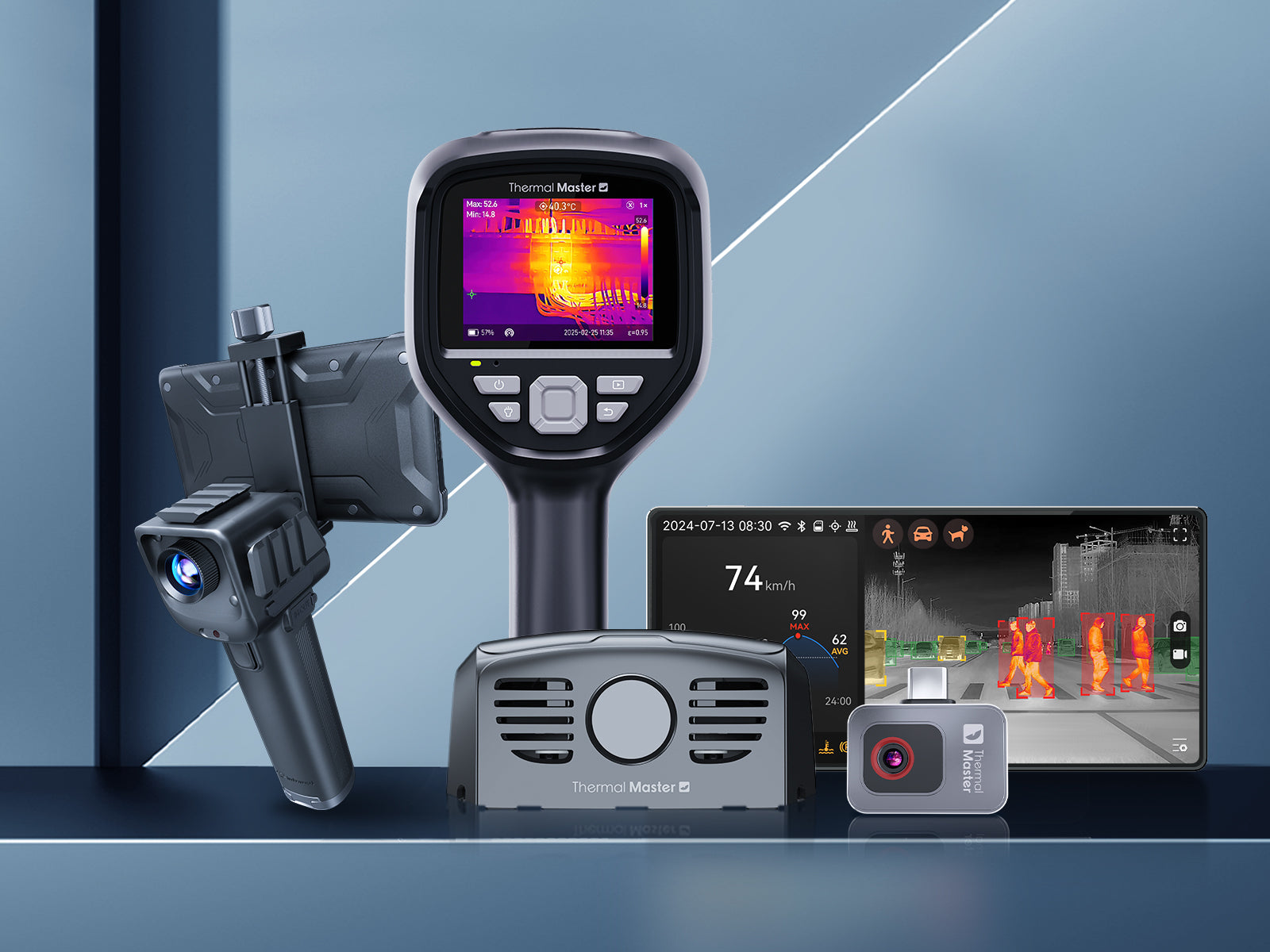
To help you make the right choice, we have selected six thermal imagers that excel in electrical inspections and practical applications.
What Are the Key Features of Infrared Cameras for Electrical Applications?
When using an infrared camera for electrical testing, it's not just about detecting heat, but also about identifying abnormal temperature differences to pinpoint faults. However, not all thermal imagers can do this. Here are some key characteristics:
- Thermal Sensitivity (NETD): NETD determines the minimum temperature difference that can be detected. For example, a NETD of ≤40 mK can be detected before a hotspot worsens.
- Temperature Accuracy: These provide the precision of the measurement. For example, an accuracy of ±1.5°C to ±2°C is sufficient to reliably diagnose overheated components.
- Infrared Resolution: Infrared resolution affects the clarity of details observed. Therefore, higher resolution is recommended for identifying small components such as connectors or PCB traces.
- Temperature Range: The thermal imager's temperature range needs to withstand high temperatures. Therefore, a large temperature range is more suitable for inspecting overloaded circuits or industrial systems.
- Form Factor (Handheld vs. Smartphone): Smartphone thermal imagers are more portable and convenient, while handheld cameras are better suited for long-duration, high-intensity inspection work.
- Image Processing and Enhancement: These can improve image clarity and contextual information. Features such as Super Infrared or Fusion Mode help you locate faults more accurately.
What Are the 6 Best Infrared Cameras for Electrical Inspections?
1. Thermal Master P4
The Thermal Master P4 is an all-in-one smartphone thermal imager designed for a range of electrical inspections. It boasts an infrared resolution of 256×192, upgradable to 512×384 (X³IR), a thermal sensitivity of ≤35 mK, a temperature measurement range of -20°C to 600°C, and an accuracy of ±2°C.
Features an AI dual-lens system and image-enhancement capabilities, providing clear thermal and visible-light images for easier fault location in distribution panels, wiring, and equipment. Its lightweight design and smartphone-driven construction make it suitable for professional electricians.

2. Thermal Master P3
The Thermal Master P3 is designed for precision PCB and electrical diagnostics. It offers a 256×192 resolution, up to 512×384 with X³IR enhancement, a sensitivity of <35 mK, a temperature range of -20°C to 600°C, and an accuracy of ±2°C/±2 %.
Additionally, it features an 8mm manual-focus macro lens that can detect extremely small temperature changes, making it ideal for PCB inspection, circuit repair, and fine electrical analysis.
3. Thermal Master P2 Pro
The Thermal Master P2 Pro is a compact smartphone thermal imager for close-range electrical inspection and everyday troubleshooting. It features an infrared resolution of 256×192, up to which it can be enhanced to 512×384 (X³IR), with a sensitivity of ≤40 mK, accuracy of ±2°C, and a temperature range up to 600°C. It also boasts macro capabilities and low power consumption (~0.33 W), making it suitable for detecting tiny hot spots in circuit boards, connectors, and electronic components.
4. Thermal Master Thor 001
The Thermal Master Thor 001 is a handheld thermal imager with a 3.5'' 640×480 IPS hard screen, designed for professional electrical inspection. It uses a 256×192 resolution sensor, up to 512×384 ultra-infrared resolution, a sensitivity of ≤35 mK, an accuracy of ±1.5°C, and a temperature measurement range of -20°C to 550°C. In addition, it features a stand-alone design, macro capabilities, and a long battery life (approximately 10 hours), making it ideal for inspecting switchboards, transformers, and industrial systems.
5. FLIR ONE Edge Pro
The FLIR ONE Edge Pro is a wireless smartphone thermal imager designed for flexible inspection. It boasts a 160×120 thermal resolution, a temperature range of -20°C to 120°C / 0°C to 400°C, and an accuracy of ±3°C. With wireless connectivity and FLIR's MSX image enhancement, it is ideal for inspecting switchboards, fuse boxes, and hard-to-reach areas.
6. Seek Thermal Compact Pro
The Seek Thermal Compact Pro is a high-resolution plug-in smartphone thermal imager designed for fine inspection. It features a 320×240 infrared resolution (76,800 pixels) and a temperature range of -40°F to 626°F. In addition, there are adjustable focus lenses (from about 15 cm to long distances), making them suitable for the inspection of lines, connectors, and small electronic components where high image detail is required.
How to Choose the Best Infrared Camera for Electrical Inspections?
When choosing the best infrared thermal imager for electrical inspection, key factors to consider first include thermal sensitivity (NETD), resolution, and temperature accuracy. These will affect your ability to detect minute hotspots, identify small components, and make correct judgments during electrical diagnostics.
Your choice should also be based on the type of inspection you intend to perform, such as PCB-level analysis, home wiring inspection, or industrial equipment monitoring. Different applications have different requirements for sensitivity, clarity, and portability.
If you plan to use the infrared thermal imager for purposes other than electrical inspection, such as HVAC systems, building inspections, or general maintenance, you can choose a more comprehensive model. For example, the Thermal Master P4 is a well-rounded all-rounder, while the P2 Pro or P3 are better suited for delicate electrical work, and the Thor 001 is more suitable for industrial environments.

Can Infrared Cameras Used for Electrical Inspections Be Used in Other Scenarios?
Yes, infrared thermal imagers used for electrical inspections can also be applied to other fields. They can also be used for home inspections, HVAC diagnostics, machinery maintenance, and automotive troubleshooting, as these applications all rely on detecting temperature differences. Furthermore, a full-featured thermal imager can handle a variety of tasks beyond electrical work.
Summary
Choosing the right infrared thermal imager for electrical testing depends on your specific needs, including sensitivity, resolution, and application scenario. The six products listed above cover everything from detailed diagnostics to everyday use, helping you detect electrical problems more efficiently and complete various testing tasks.
FAQ
1. What is an infrared camera used for in electrical inspections?
Infrared thermal imagers are used to detect abnormal thermal patterns in electrical systems, helping you identify problems such as loose connections, circuit overloads, and component failures before they cause damage or safety hazards. By visualizing temperature differences in real time, it can detect faults faster and more efficiently.
2. Can infrared cameras be used for home electrical inspections?
Yes, smartphone infrared thermal imagers can be used for quick inspections and basic diagnostics, offering convenience and portability. However, for more complex or industrial tasks, handheld thermal imagers are recommended, as they provide higher accuracy and performance.
3. Are smartphone infrared cameras good enough for electrical inspections?
Yes, infrared thermal imagers are commonly used to inspect circuit breakers, sockets, and wiring in homes, quickly detecting overheating or hidden problems without opening walls or dismantling systems. They can detect overloaded circuits, loose connections, or insulation problems early, improving safety and maintenance efficiency.
Related Reading:
Why Is My Solar Panel Giving Voltage but No Current?
Thermal Imaging Camera for Building Inspection: A Complete Guide



Leave a comment
All comments are moderated before being published.
This site is protected by hCaptcha and the hCaptcha Privacy Policy and Terms of Service apply.