



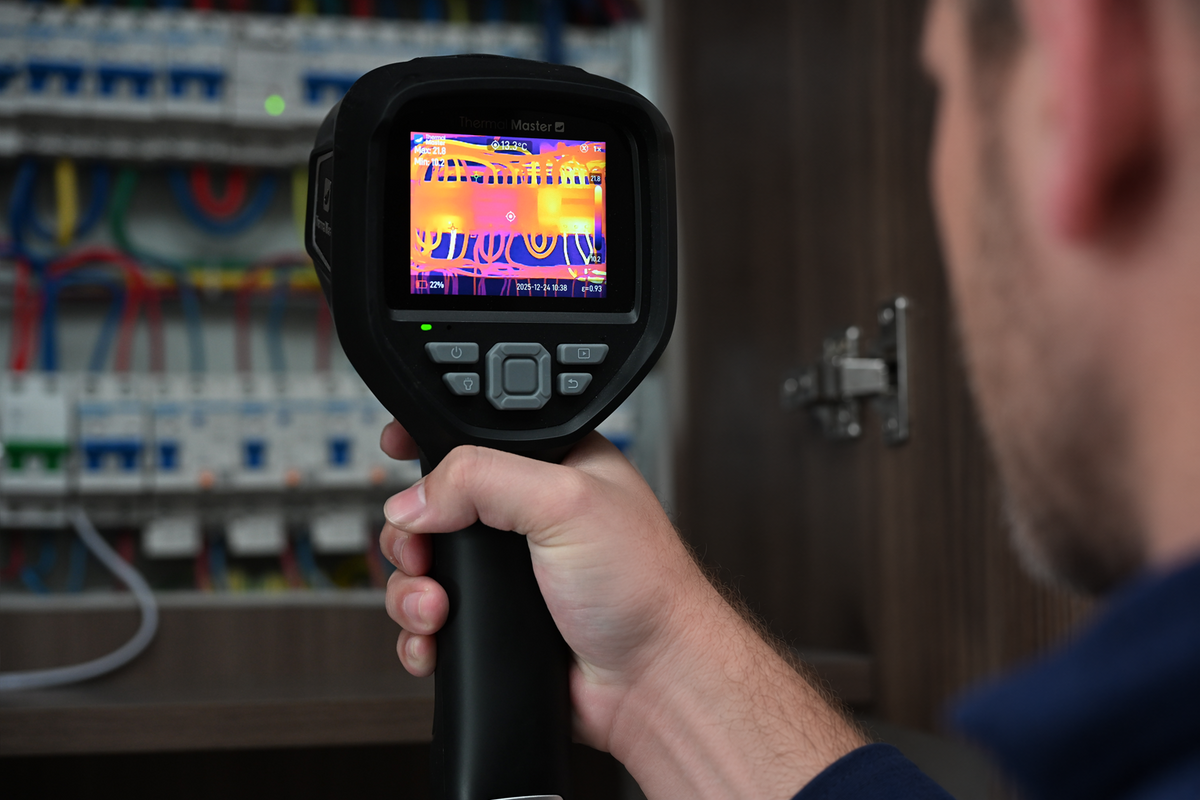
A thermal camera for electrical inspection can help during emergency troubleshooting by showing unusual heat patterns around breakers, connections, cables, and other components. It cannot diagnose the electrical fault by itself, but it can quickly show technicians where to investigate first.
Why Use a Thermal Camera for Emergency Electrical Repairs?
Many electrical problems can produce abnormal heat.
A loose connection, overloaded circuit, poor contact, or failing component may appear warmer than similar components operating under comparable conditions. Instead of checking every connection one by one, technicians can use a thermal camera for electrical inspection to scan a wider area and look for unusual temperature differences.
This is particularly useful in electrical panels where many breakers, terminals, and cables look almost identical from the outside.

Electrical Problems Thermal Imaging Can Help Find
Loose or poor connections: Localized heating around terminals or connection points.
Overloaded circuits: Breakers or conductors may appear warmer than similar components under comparable loads.
Breakers, fuses, contactors, and motors: Uneven or unusual heat patterns may indicate areas that need further testing.
Cables and wiring: Abnormal heating can help identify sections that deserve closer inspection.
A thermal camera for electrical inspection can make these temperature differences easier to compare across multiple components before further electrical testing begins.
Thermal Master Thor002 for Emergency Electrical Inspection
During emergency troubleshooting, technicians often need to move quickly between panels, breakers, cables, and equipment. A handheld thermal camera such as the Thermal Master Thor002 combines the screen and controls in one standalone device, allowing technicians to start scanning quickly when time matters.

Quickly Locate the Fault Area
If a production line suddenly loses power, a technician can scan rows of similar breakers and terminals and compare their thermal patterns. If a small hot spot appears around one connection, Thor002 can help quickly locate the possible fault area before further electrical testing.
The same approach can help when checking distribution panels, cable connections, or other equipment where the fault location is not immediately visible.
See Clear Thermal Detail and Measure Accurately
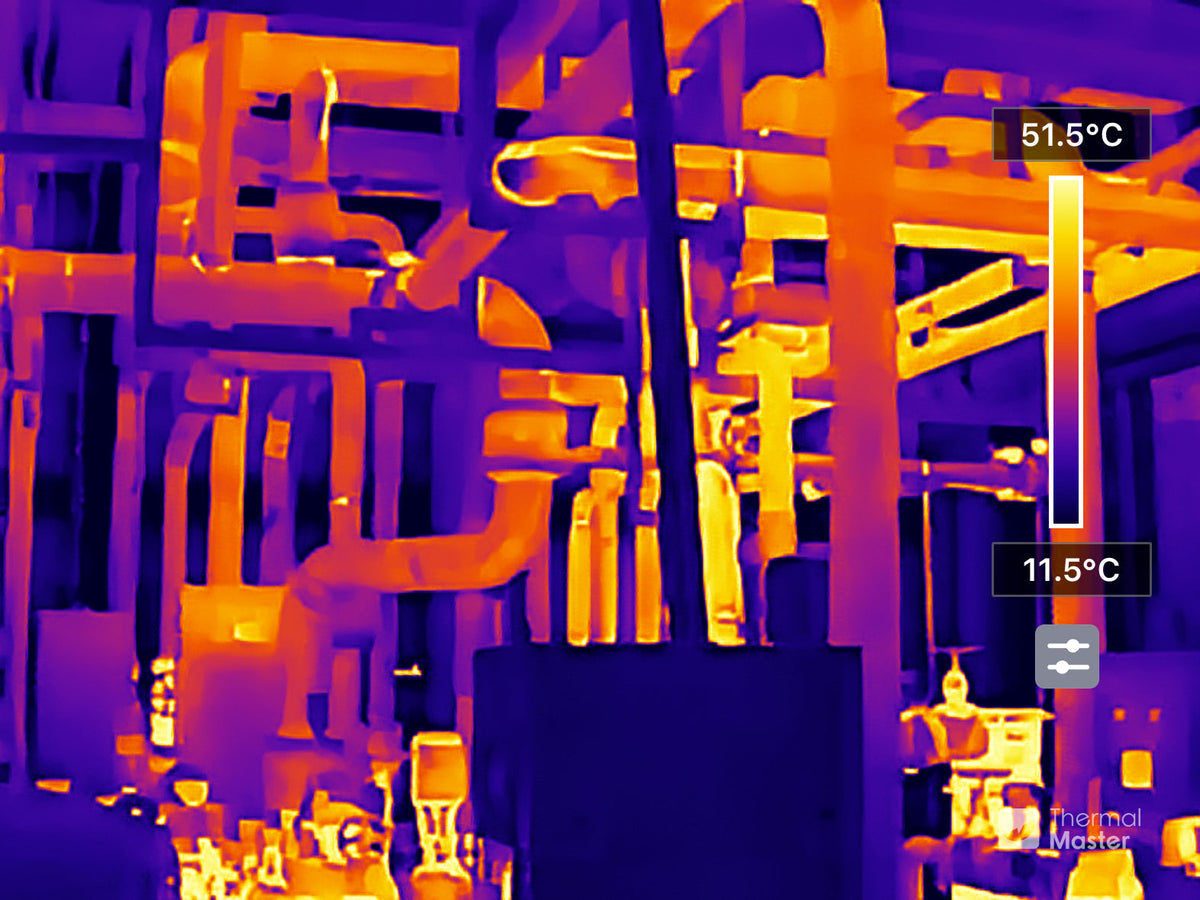
Thor002 features a 256×192 infrared detector with X³IR image enhancement up to 512×384, producing clear, detailed thermal images. In crowded electrical panels, this added detail makes closely spaced components easier to distinguish. With ±2°C measurement accuracy, technicians can also compare suspected hot spots with nearby components more precisely.
Move Smoothly Between Inspection Points
A 25 Hz frame rate keeps the thermal image smooth while moving between panels or equipment. The built-in 3.5-inch IPS display provides a clear view on the spot, while up to 8 hours of operating time supports longer inspections without frequent interruptions.
How to Use a Thermal Camera During Electrical Troubleshooting?

During emergency troubleshooting, a thermal camera for electrical inspection works best when it is used as part of a clear inspection process. Start with a broad scan to find unusual heat patterns, then narrow down the area before using electrical test tools to confirm the cause. After the repair, scan the same area again to check whether the abnormal heating has changed.
What Are the Limitations of Thermal Imaging?
A thermal camera cannot see electrical current or directly tell you that a breaker, cable, or connection has failed. It only displays surface temperature patterns.
A hot spot does not always mean there is a fault. Electrical load, emissivity, reflections, airflow, surrounding equipment, and operating conditions can all affect the thermal image.
Some electrical problems may also show little thermal evidence when equipment is switched off or operating under very low load.
For this reason, a thermal camera for electrical inspection works best as part of the troubleshooting process rather than as a replacement for electrical testing.

Final Thoughts
During emergency electrical repairs, a thermal camera for electrical inspection can help technicians quickly identify unusual heating around breakers, connections, cables, and other equipment.
It does not replace electrical testing. Its value is in showing where to look first, helping turn a large troubleshooting area into a much more focused inspection.

コメントを書く
全てのコメントは、掲載前にモデレートされます
このサイトはhCaptchaによって保護されており、hCaptchaプライバシーポリシーおよび利用規約が適用されます。