



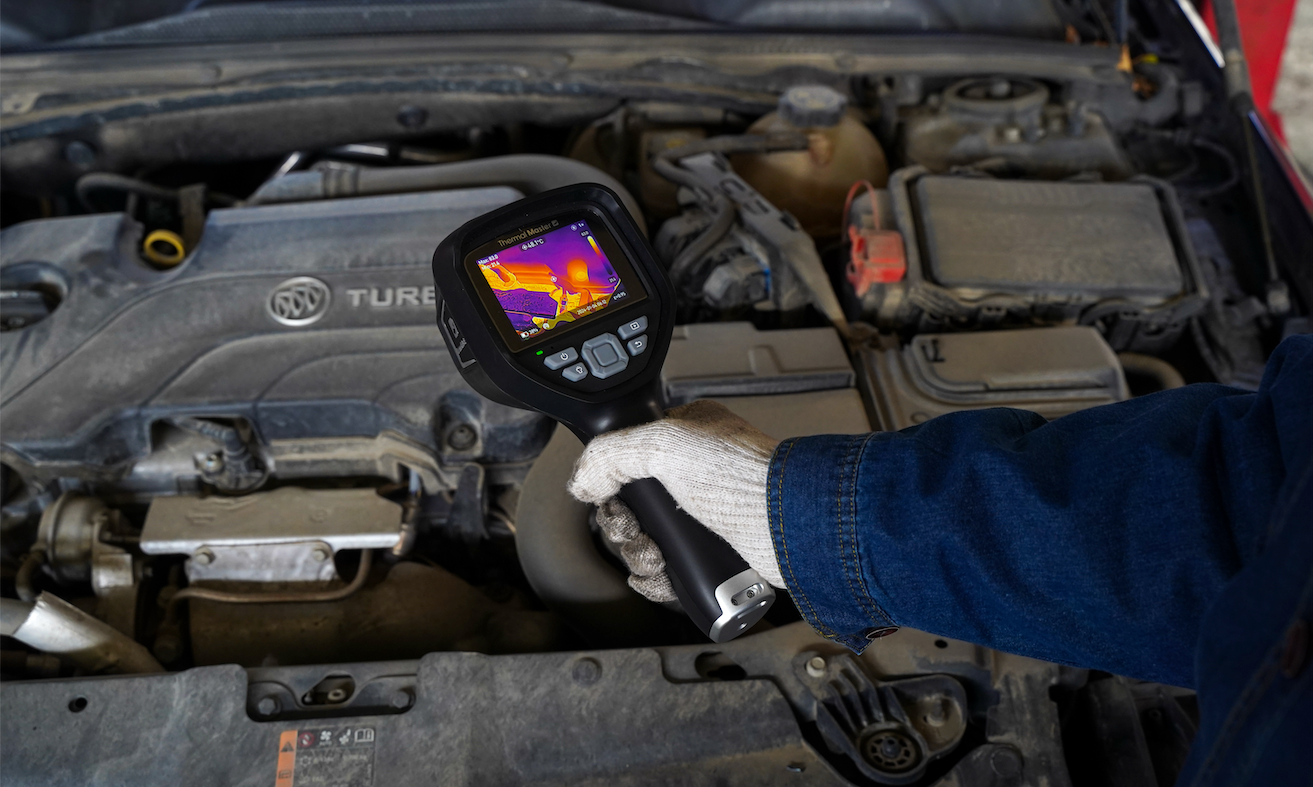
Long before an engine misfires, a coolant line cracks, or a brake caliper seizes, the problem usually starts as an abnormal heat pattern. A thermal camera for car diagnostics makes those changes visible in real time, cutting diagnosis from hours to minutes.
In real-world vehicle inspections, a thermal camera for car including handheld thermal cameras and smartphone thermal cameras has become a standard first look tool before any disassembly. It helps technicians quickly spot overheating components, coolant issues, and electrical hotspots early.
This guide looks at the most common engine repair scenarios where infrared scanning gives a clear advantage.
If you just want the key takeaways from this blog, this image below is all you need to look at:

What Car Engine Problems Can a Thermal Camera Detect?
Every mechanical or electrical fault in a running engine generates heat. A thermal camera turns that heat into a real-time color image, revealing faults that would otherwise take hours of manual testing to find.
-
Coolant system faults: A thermal camera for car coolant system check reveals blocked radiator sections as uneven hot and cold zones.
-
Cylinder misfires: A non-firing cylinder runs noticeably cooler than its neighbors. A thermal imaging camera, scanning across the exhaust manifold after a 15-minute warm-up, reveals the cold runner immediately and points to the exact cylinder without a scan tool.
-
Brake caliper seizure: A stuck caliper piston caused by worn seals keeps one rotor under constant friction. Comparing two matching rotors under an infrared thermal camera after a short test drive shows the seized side running significantly hotter.
-
Electrical hot spots: Corroded terminals, overloaded wiring, and failing relays all show up as heat anomalies. Any thermal camera flags these quickly in a fast scan.
-
Bearing and belt wear: Friction from failing components builds heat at predictable points. An infrared thermal camera or a handheld thermal camera can detect this before noise or vibration develops, enabling preventive replacement.

How the Automotive Industry Validated Thermal Imaging
A thermal camera for car diagnostics turns engine heat into visible data, allowing faults to be identified through temperature patterns before any disassembly begins.
This capability is not new. A thermal camera for car has been shaped by decades of industrial thermal imaging development. A company founded in Milan in 1992 originally worked in industrial safety equipment and early inspection tools, where thermal imaging was used to measure surface temperature without contact.
Building on this development, FLIR systems were introduced into automotive production lines for major manufacturers. In one case, a FLIR thermal camera was installed above a conveyor belt to monitor engine parts during induction heating and bonding. Parts that failed to reach target temperature were automatically flagged and removed.
The same principle applies in workshop environments today. A thermal camera for car makes engine faults visible through heat patterns, replacing guesswork with direct thermal evidence.
How to Run a Thermal Inspection on a Car Engine
The workflow is consistent regardless of which infrared thermal camera you use. The Thermal Master P3 , for example, connects directly to any Android or iPhone via USB-C and follows a simple inspection process that can be completed in under 10 minutes:
-
Scan the engine bay cold. A thermal camera quickly checks battery terminals, fuse boxes, belts, and hose connections before the engine warms up, making abnormal heat easy to spot from the start.
-
Re-scan after warm-up. Once the engine reaches operating temperature, a thermal camera for car immediately reveals clogged radiator sections, sticking thermostats, coolant flow issues, and overheating hose connections through clear temperature differences.
-
Look for imbalance. A thermal camera for car makes it easy to compare temperatures between cylinders, brake rotors, and matching hoses. Any hotspot or area that is cooler than expected helps pinpoint the source of the fault.
-
Save thermal images. The Thermal Master P3 saves full-resolution thermal images directly to your phone, making it easy to document repairs, compare before and after results, and share findings with customers.
-
Double-check with tools. A thermal camera for car quickly narrows down the problem area, while a pressure tester, multimeter, or OBD scanner confirms the final diagnosis.

Choosing a Thermal Camera for Engine Diagnostics
Professional workshops have relied on purpose-built thermal imaging cameras for years. Thermal cameras from industrial brands have long been the workshop standard, but smartphone-attachable infrared thermal cameras now cover the same diagnostic scenarios at a fraction of the cost.
The Thermal Master P3 delivers 256×192 native resolution, 35mK thermal sensitivity, manual focus, and a temperature ceiling of 600°C. For engine bay diagnostics, manual focus is what sets it apart from fixed-focus alternatives, making it easier to inspect close range components such as hose joints, relay clusters, and exhaust runners. USB-C compatibility also allows it to work directly with Android phones and recent iPhones without adapters.
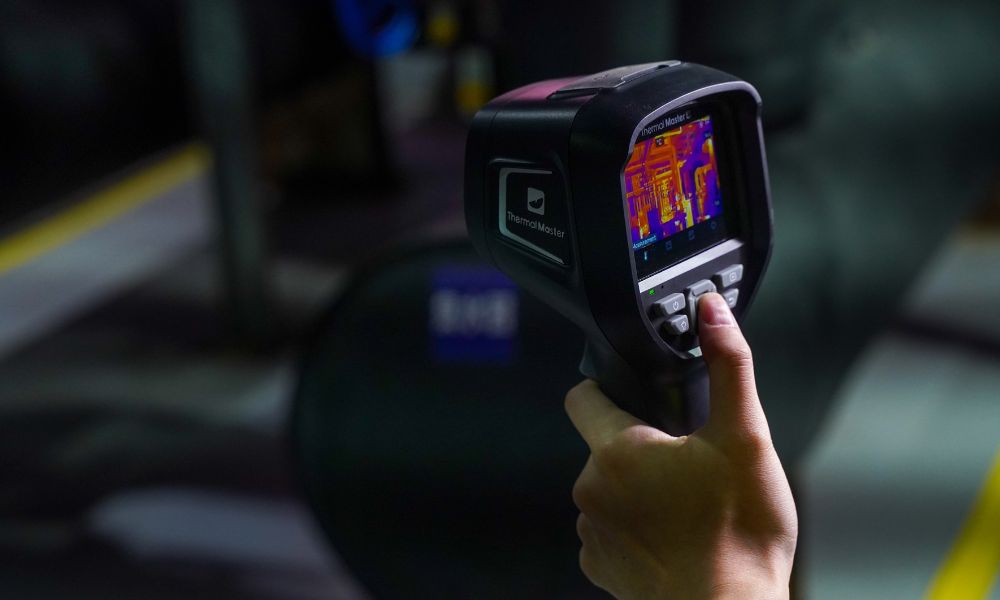
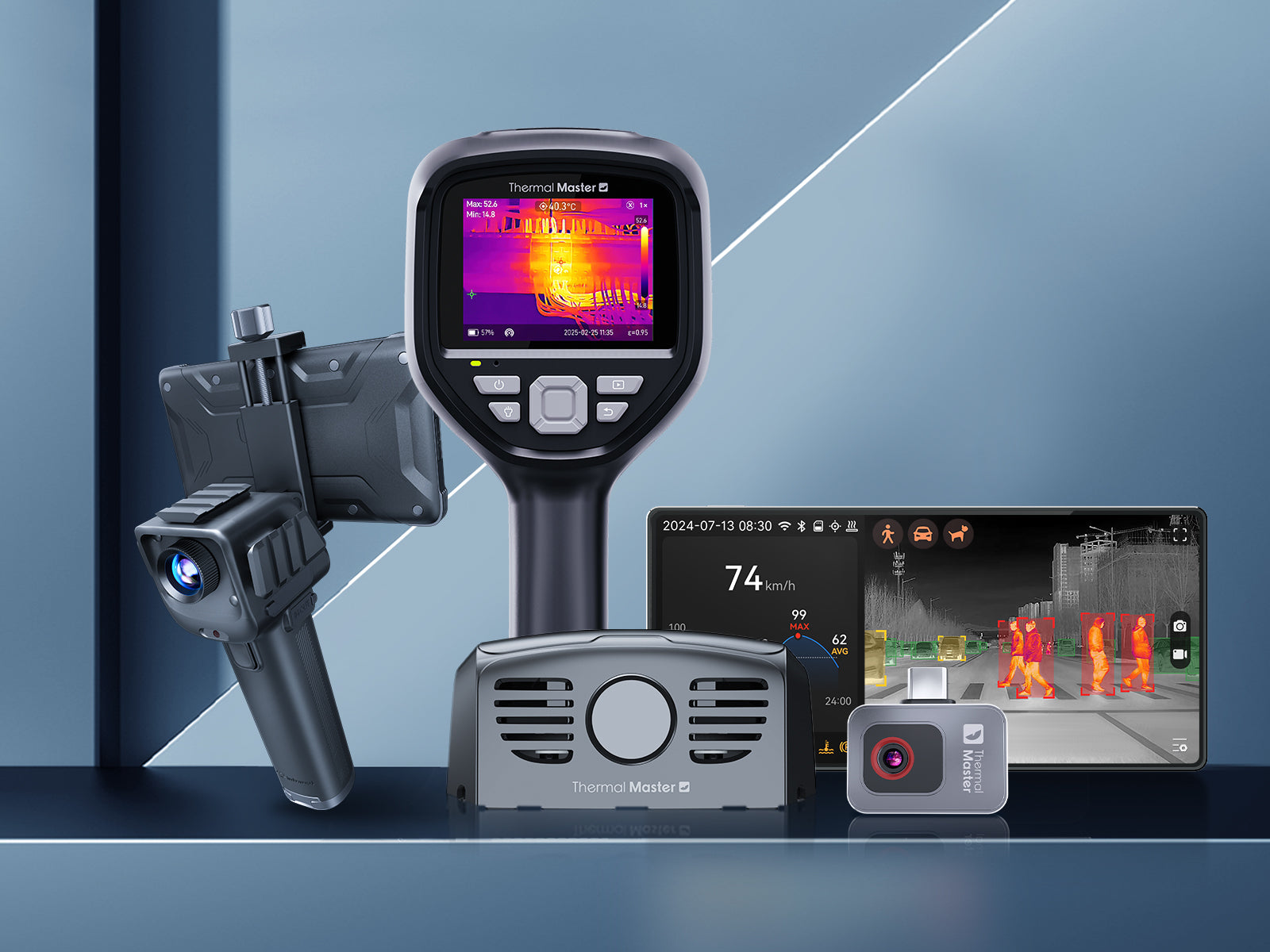
For technicians who prefer a standalone solution, the Thermal Master Thor002 is a handheld thermal camera with its own display and built-in battery. It features a 3.5-inch 640×480 IPS screen, allowing clear on-device viewing of thermal details without relying on a smartphone. Fine temperature differences across components such as exhaust sections, brake systems, and electrical connections remain easy to distinguish during routine diagnostics.

|
|
Thermal Master P3
|
Thermal Master Thor002
|
|
Detector
|
256×192
|
256×192
|
|
X³IR™ Resolution
|
512×384
|
512×384
|
|
Thermal Sensitivity
|
35mK
|
40mK
|
|
Measurement Range
|
-20°C to 600°C
|
-20°C to 550°C
|
|
Temp Accuracy
|
±1.5°C
|
±2°C
|
|
Frame Rate
|
25Hz
|
25Hz
|
Conclusion
Engine problems leave behind a heat signature. A thermal camera for car inspection makes those patterns visible before a small issue turns into a breakdown. In most workshops, the workflow is straightforward: scan early, compare across components, and document results before any disassembly.
For independent mechanics and serious DIY technicians, Thermal Master cover a wide range of engine diagnostics needs, making thermal inspection accessible for both professional shops and personal toolkits.
FAQ
Can a thermal camera replace an OBD scan tool?
No. An OBD tool reads fault codes from the vehicle computer. A thermal imaging camera shows you the physical location and heat signature of the problem. A thermal cameras shows the physical location and heat signature of the problem. Used together, they reduce diagnostic time more than either alone.
Does it work on diesel engines?
Yes. Diesel trucks and heavy equipment are common use cases for a handheld thermal camera in professional shops. The method is the same as for petrol engines: compare symmetrical components. Shops also use infrared thermal cameras in workshop settings. The diagnostic method, comparing temperature patterns across symmetrical components, is identical to gasoline engine work.
How close do I need to be to the engine?
Most thermal imaging cameras in the smartphone-attachable category read accurately at 20 to 60 cm. For a thermal camera for car close-up work, manual focus is key. A handheld thermal camera with manual focus gives more flexibility for tight engine bays at close range.

Leave a comment
All comments are moderated before being published.
This site is protected by hCaptcha and the hCaptcha Privacy Policy and Terms of Service apply.