



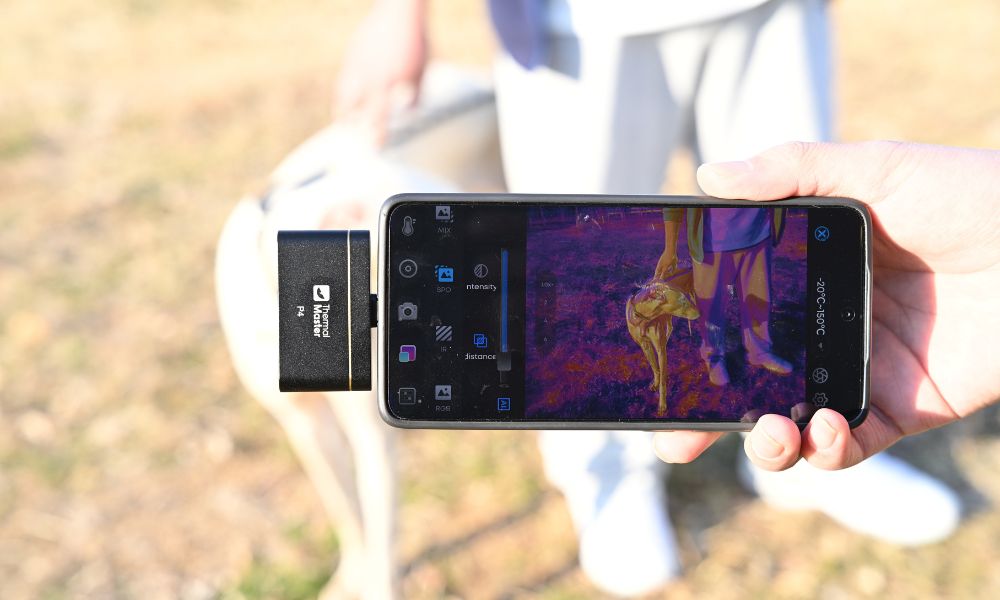
Yes, you can use a thermal camera to observe birds. Thermal imaging monoculars designed specifically for birdwatching are now available, as birds naturally generate body heat that is highly visible against a cooler outdoor background. Thermal imagers help you detect birds in darkness, fog, forests, wetlands, and other low-visibility environments where conventional optical equipment struggles.
To this end, Thermal Master has launched DV2 and T2 max thermal imaging bird-watching cameras, specifically designed for wildlife observation and long-range heat source detection. Below, learn how thermal imaging cameras detect birds and where they perform best.
How Does a Thermal Camera Detect Birds?
Unlike traditional binoculars, thermal cameras do not reveal feathers, colors, or visible light. Instead, they detect infrared radiation emitted by heat sources, including birds, mammals, and humans. Against a cooler outdoor background, birds appear as bright thermal targets.
- Detecting Body Heat Rather Than Visible Light: Thermal imaging technology captures the infrared thermal radiation emitted by birds, rather than relying on sunlight or artificial light sources. This allows you to observe birds even in darkness, fog, or dense forests.
- Utilizing the Principle of Temperature Differences: Birds generally have a higher body temperature than their surroundings (such as trees, grass, water surfaces, or rocks). Therefore, the greater the temperature difference, the easier it is to detect birds.
- NETD Affects Detection Clarity: Thermal sensitivity (commonly referred to as NETD) determines a thermal camera’s ability to capture subtle thermal differences. A low NETD value (such as ≤20mK or ≤40mK) allows for clearer differentiation between birds and the warm outdoor background.
- Higher Resolution Enhances Detail: Infrared resolution affects your ability to clearly identify movement, body shape, and flock patterns. For example, a 256×192 thermal imaging sensor is suitable for general birdwatching, while a 512×384 enhanced imaging sensor provides clearer long-range observation.
- Suitable for low-visibility environments: Thermal imaging technology is not limited by visible light conditions, so you can continue to detect birds during nighttime migrations, rainy weather, sunrise observations, or in foggy wetland environments.

When Are Thermal Cameras Most Useful for Birdwatching?
Thermal cameras are most useful when visibility becomes difficult for traditional monocular or visible-light cameras. In practice, many birdwatchers use thermal imaging during early morning hours, nighttime observation, or wildlife surveys in remote areas.
Night Birdwatching
Thermal cameras are extremely effective for observing nocturnal birds because birds remain visible through body heat even in complete darkness. Owls, nightjars, and other nighttime species become easier to locate without using bright flashlights that could disturb wildlife.
Dense Forest Observation
Forested environments often create visual obstruction due to branches, shadows, and thick vegetation. A thermal imaging camera can help you detect heat movement hidden behind leaves or tree cover, especially when birds move between branches.
Wetlands and Marshes
Wetlands usually contain fog, water reflections, and low-contrast lighting conditions. Thermal imaging helps separate warm-bodied birds from cooler water surfaces, making detection easier during sunrise or sunset observation sessions.
Migration Tracking
Many birds migrate during nighttime hours when temperatures are lower and skies are darker. Thermal cameras allow researchers and wildlife observers to monitor flight movement patterns without depending entirely on visible light systems.
Search and Rescue for Wildlife
Wildlife rehabilitation teams sometimes use thermal imaging to locate injured birds hidden in fields, forests, or roadside vegetation. This means that thermal cameras are not only useful for hobby birdwatching but also for conservation work.

What Limitations Do Thermal Cameras Have for Bird Identification?
Although thermal imaging cameras are highly effective for detecting birds, standard thermal imaging equipment still has some limitations in practical birdwatching. Most thermal imaging cameras primarily display thermal signals rather than detailed plumage colors, skin textures, or species-specific features, making it difficult at times to identify specific birds from a distance.
Furthermore, small birds hidden in dense forests, wetlands, or among branches may appear only as bright thermal spots, lacking clear outlines. During hot daytime hours, ambient heat can also affect thermal imaging contrast, making it harder to distinguish birds from warm backgrounds such as rocks, roads, or tree trunks.
Therefore, it is recommended to use thermal imaging binoculars specifically designed for wildlife tracking and outdoor observation. Devices such as the Thermal Master DV2 combine long-range thermal imaging, smoother tracking capabilities, dedicated bird-watching color schemes, and a comfortable viewing experience, helping you track bird activity more naturally during nighttime, forest, wetland, or migration observation activities.
Which Thermal Cameras Work Best for Birdwatching?
Choosing the right thermal camera depends on how you plan to observe birds. Some users need lightweight smartphone thermal cameras for casual outdoor exploration, while others prefer dedicated thermal monoculars with longer detection ranges and higher thermal sensitivity.
Thermal Master DV2
Thermal Master DV2 is a thermal imaging pair of birdwatching binoculars designed specifically for outdoor birdwatching and wildlife observation. It features a 5-inch touchscreen, allowing you to track moving birds more easily at night or in low-light conditions. It also features a high-sensitivity 256×192 @12μm sensor and 512×384 thermal imaging output, allowing you to observe birds more clearly at medium to long distances.
Key Features:
- 1094-Yard Night Vision: Detects birds and wildlife clearly across long outdoor distances
- 15mK High Sensitivity: Captures subtle bird heat differences with clearer thermal contrast
- 512×384 X³IR Resolution: Produces sharper thermal details for long-range birdwatching
- 5-Inch 1280 HD Touchscreen: Improves viewing comfort during outdoor observation sessions
- 50Hz Real-Time Imaging: Provides smoother tracking for flying birds and moving wildlife
- Hotspot Tracking + Laser Positioning: Helps locate and track birds more efficiently outdoors

Thermal Master T2 Max
The Thermal Master T2 Max combines thermal imaging capabilities with outdoor portability, allowing you to fully enjoy birdwatching during a variety of outdoor activities. It also supports 256×192 infrared resolution, which can be enhanced to 512×384 super-IR output via X³ technology, while maintaining a sensitivity of ≤20mK to improve thermal imaging detail. These features allow you to observe birds more clearly and maintain smoother thermal tracking even in foggy or rainy conditions, during forest expeditions, or while monitoring wildlife at night.
Key Features:
- ≤20mK@25℃,f/0.8: Detects subtle bird heat signatures more clearly outdoors
- 512×384 X³ Super IR Resolution: Enhances image sharpness during long-range observation
- 50Hz Real-Time Imaging: Maintains smoother motion during active wildlife tracking
- 15mm High-Energy Lens: Improves long-distance outdoor thermal visibility
- 15× Digital Zoom: Enlarges distant thermal targets for easier bird observation
- Dedicated Outdoor Palettes: Optimizes viewing modes for forests, night use, and wildlife detection

Are Thermal Cameras Better Than Binoculars for Birdwatching?
Thermal imagers and binoculars are designed for different purposes, so one cannot fully replace the other. Thermal imagers are better suited for detecting birds hidden in darkness, fog, forests, or distant terrain, while traditional binoculars are better for observing feather details, colors, and species characteristics. Therefore, you can combine binoculars with compact thermal imaging devices such as the Thermal Master DV2, X3, or T2 Max to enhance bird detection and visual identification capabilities in outdoor environments.
What Should You Look for in a Birdwatching Thermal Camera?
If you want to choose a thermal imaging camera for birdwatching, several specifications matter more than marketing terms.
- Thermal Sensitivity (NETD): Lower values, such as ≤20mK, help reveal smaller heat differences more clearly.
- Infrared Resolution: 256×192 is a practical minimum for outdoor birdwatching, while enhanced 512×384 imaging improves detail.
- Frame Rate: 50Hz or 60Hz creates smoother movement tracking for flying birds.
- Detection Distance: Long-range lenses help identify birds across lakes, forests, or open fields.
- Outdoor Durability: Battery life, weather resistance, and portable design become important during long field sessions.
- Dedicated Viewing Palettes: Bird-specific palettes improve visibility in changing outdoor environments.
A thermal camera with balanced resolution, sensitivity, portability, and smooth imaging usually performs better in real birdwatching situations than devices focused only on extreme zoom numbers.
Summary
Yes, thermal imaging cameras can be used for birdwatching, and thermal imaging technology is becoming increasingly popular for nighttime birdwatching, wildlife observation, and outdoor adventures. By detecting body heat rather than visible light, thermal imaging cameras allow you to locate birds in environments such as darkness, fog, forests, and wetlands. While thermal imaging technology cannot completely replace binoculars, it enhances bird detection and tracking in conditions of low visibility.
For example, thermal imaging binoculars designed for birdwatching, such as the Thermal Master DV2 and T2 Max, offer varying levels of thermal sensitivity, detection range, and portability to suit your planned outdoor birdwatching activities.

FAQ
Can thermal cameras see birds at night?
The answer is yes, because birds generate body heat that thermal cameras can detect even in complete darkness, so you can observe nighttime bird activity more effectively.
Can a thermal camera identify bird species?
The answer is partially, because thermal imaging mainly shows heat signatures instead of feather colors or detailed patterns, so you may still need binoculars for exact species identification.
What thermal sensitivity is good for birdwatching?
The answer is ≤20mK to ≤40mK, because lower NETD values reveal smaller temperature differences more clearly, so you can detect birds more easily in forests or low-contrast environments.
Are smartphone thermal cameras good for birdwatching?
The answer is yes for casual and portable use, because modern smartphone thermal cameras now support high-resolution thermal imaging and outdoor palettes, so you can carry lightweight thermal gear during hikes or wildlife trips.
Do thermal cameras work in fog or rain?
The answer is generally yes, because thermal imaging detects heat instead of visible light, so thermal cameras often perform better than traditional optics in foggy or low-light conditions.

コメントを書く
全てのコメントは、掲載前にモデレートされます
このサイトはhCaptchaによって保護されており、hCaptchaプライバシーポリシーおよび利用規約が適用されます。