



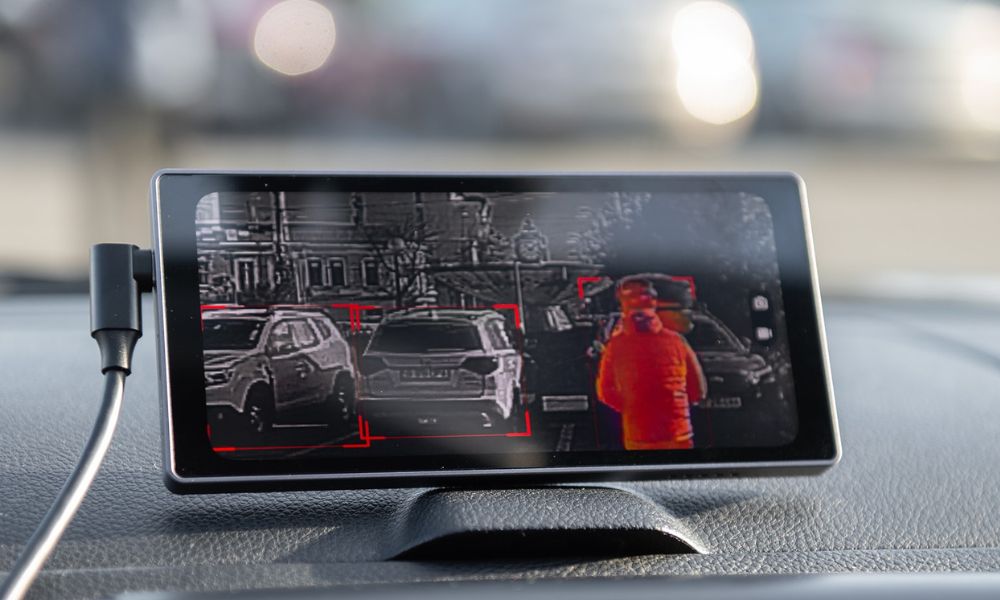
Thermal cameras have been used in a select number of high-end and safety-focused vehicles to improve night driving visibility and hazard detection. These systems allow you to detect pedestrians, animals, and obstacles beyond the reach of headlights, significantly enhancing driving safety.
To address this need, Thermal Master offers three car night vision systems designed to bring similar capabilities to more vehicles. In this article, you’ll explore which cars have adopted this technology and how it’s evolving today.
Which Car Brands Have Used Thermal Cameras?
Yes, several premium car brands have integrated thermal imaging technology into their vehicles, mainly for safety and driver assistance. In simple terms, thermal imaging cameras detect heat signatures instead of visible light, making them highly effective in darkness, fog, or poor weather conditions.
1. BMW Night Vision (7 Series, 5 Series, X5, X6)
BMW was one of the earliest adopters of automotive thermal imaging. The models like the 7 Series and X5 featured Night Vision systems that could detect pedestrians and animals at night. This means that even on completely dark rural roads, you could receive alerts before a potential collision.
For example, BMW’s system highlighted heat signatures directly on the dashboard display and even warned you with audible alerts when a person or animal entered your path. This added an extra layer of safety beyond traditional headlights.
2. Mercedes-Benz Night View Assist (S-Class, E-Class)
Mercedes-Benz introduced Night View Assist in flagship models like the S-Class. Tthis system used infrared technology combined with advanced detection algorithms. This means that you could see a clearer view of the road ahead, even in total darkness.
In practice, the system displayed a grayscale image of the road on the dashboard and highlighted pedestrians in the scene. For example, when driving on unlit highways, it helped you spot people or animals far earlier than normal vision would allow.
3. Audi Night Vision Assistant (A6, A7, A8, Q7)
Audi also integrated a thermal imaging camera into its premium lineup. This means that you could benefit from heat-based detection in models like the A8 and Q7. In practice, Audi’s system focused heavily on pedestrian detection and used visual warnings in the instrument cluster.
For example, if a person was detected near the road, the system would highlight them in yellow or red depending on the level of risk. This helped you react faster in real-world driving situations.
4. Cadillac Night Vision (DeVille, DTS, CT6)
Cadillac was actually one of the pioneers of automotive thermal imaging. It introduced night vision as early as the early 2000s. This means that drivers had access to advanced safety technology long before it became common in Europe.
In practice, Cadillac’s system displayed thermal images on the dashboard, allowing you to detect heat sources ahead. For example, on rural roads with wildlife, this feature significantly reduced the risk of unexpected collisions.
5. Lexus Night View (LS Series)
Lexus also explored thermal imaging with its LS luxury sedan. This means that you could rely on infrared detection to identify obstacles in low visibility conditions. In practice, the system was designed to assist rather than replace driver awareness.
For example, when driving in foggy or rainy conditions, it helps you detect pedestrians who might otherwise be invisible to the naked eye.

Why aren’t Thermal Cameras Common in Most Cars?
Thermal cameras are still relatively rare in vehicles, mainly due to cost, complexity, and limited demand in mid-range segments. In simple terms, these systems require specialized sensors and processing power, which increases the vehicle price.
In practice, most car manufacturers prioritize features like adaptive cruise control or lane keeping assist because they are more widely used. This means that thermal imaging remains mostly in luxury vehicles or niche applications.
For example, a thermal imaging system can add thousands of dollars to a vehicle’s cost, making it less attractive for mass-market adoption. However, with technology becoming more affordable, this trend is gradually changing.
How are Thermal Cameras Used in Modern Driving?
Thermal cameras are primarily used for safety and hazard detection in low-visibility conditions. In simple terms, they help you “see” heat instead of light, making them extremely effective at night.
- Pedestrian detection: Identifies people beyond headlight range
- Animal detection: Helps prevent wildlife collisions
- Fog and rain visibility: Works when normal cameras fail
- Long-range awareness: Detects objects up to hundreds of meters away
For example, when driving on a dark highway, a thermal camera can detect a person or animal before they are visible to your headlights. This means that you gain valuable reaction time, which can prevent accidents.
What are the Limitations of Car Thermal Cameras?
Thermal cameras are powerful, but they are not perfect. In simple terms, they detect heat differences, not detailed images. This means that they may struggle with objects that have similar temperatures to their surroundings.
In practice, thermal cameras cannot see through solid objects like walls or barriers. For example, if a pedestrian is hidden behind a parked car, the system may not detect them until they step into view.
Additionally, older systems may have lower resolution or slower processing speeds. This means that modern solutions are continuously improving to address these limitations.
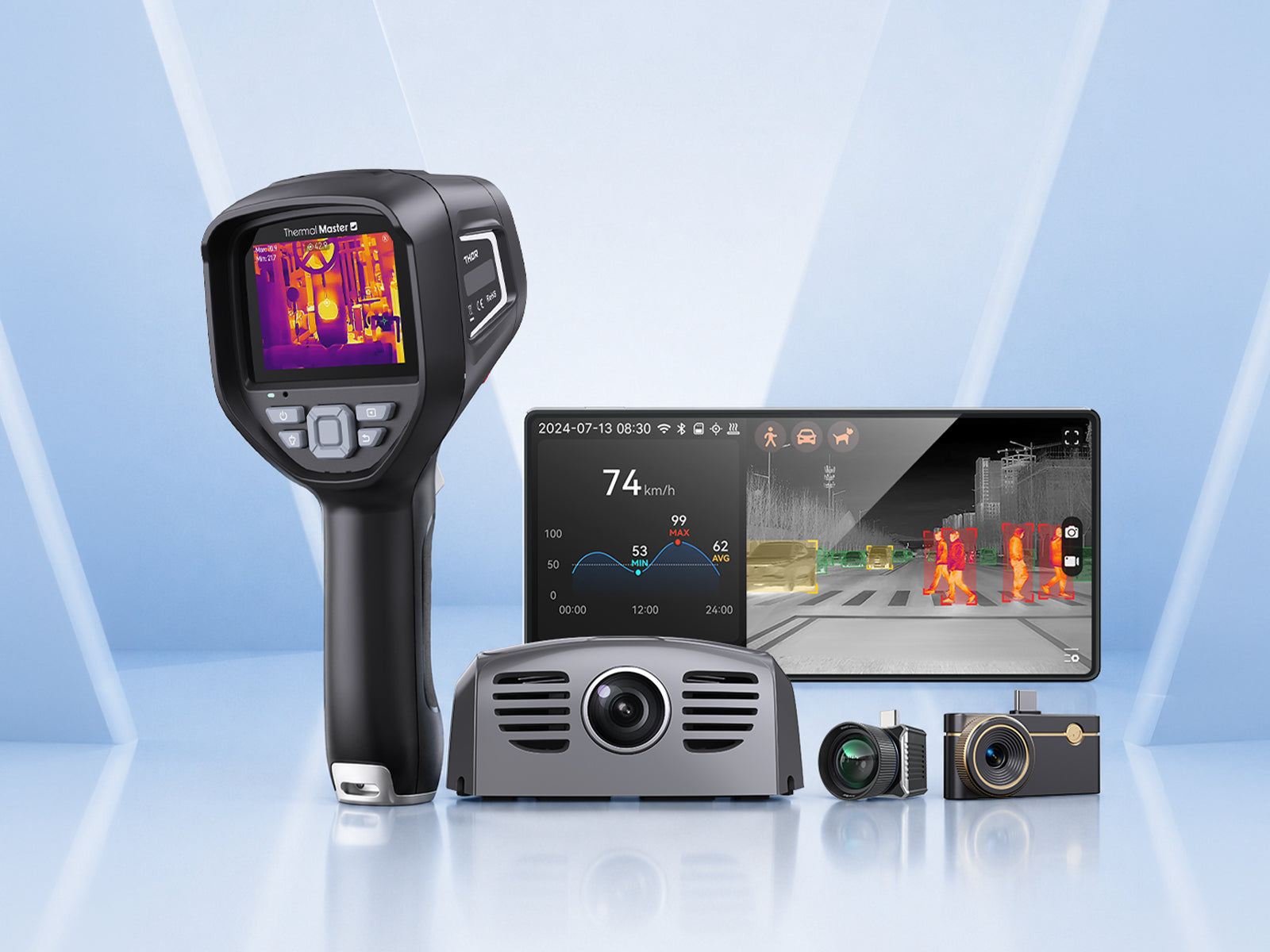
Thermal Master 3 Best Thermal Cameras for Cars
Thermal Master NV300
Thermal Master NV300 is designed for real-world driving scenarios where safety and fast response are critical. In practice, it offers up to 328 meters of detection range, allowing you to identify pedestrians, animals, and vehicles long before they enter your headlights. For example, when driving on dark rural roads, it provides AI-based collision warnings with a rapid 0.1-second response time. This means that you get near-instant alerts and extended visibility, making it a practical upgrade for cars, trucks, and RVs.
Key Features:
- 328m Detection Range: Detects pedestrians and animals far beyond headlight visibility
- AI Collision Warning: Identifies hazards and alerts you in real time
- 0.1s Response Time: Provides near-instant feedback for fast decision-making
- 256–512 IR Resolution: Enhances image clarity for better recognition
- Wide Vehicle Compatibility: Supports cars, trucks, buses, and RVs
Thermal Master NV300 Max
Thermal Master NV300 Max combines thermal imaging with a dashcam and dual-spectrum system for a more advanced driving experience. In simple terms, it integrates infrared and visible imaging to give you a clearer and more detailed view of the road. For example, in foggy or rainy conditions, you can still identify hazards thanks to its dual-spectrum imaging and AI recognition. This means that you gain both visibility and recording capabilities in one system.
Key Features:
- Dual-Spectrum Imaging: Combines thermal and visual data for clearer detection
- 328m Detection Distance: Extends visibility in low-light conditions
- AI Hazard Recognition: Automatically identifies pedestrians and vehicles
- 0.1s Fast Response: Reduces delay in critical situations
- 3-in-1 System: Works as a thermal imager, dashcam, and OBD system
Thermal Master NV500
Thermal Master NV500 is built for drivers who need longer detection distances and stronger night visibility. In practice, it can detect heat signatures up to 526 meters, making it ideal for highways and high-speed driving. For example, you can identify pedestrians or animals much earlier than with standard headlights. This means that you gain more reaction time and improved safety in extremely low-light conditions.
Key Features:
- 526m Detection Range: Extends visibility for high-speed and long-distance driving
- High-Sensitivity Sensor: Detects subtle heat differences earlier
- AI Target Recognition: Identifies pedestrians, animals, and vehicles automatically
- Long-Range Imaging Optimization: Improves clarity in complete darkness
- All-Weather Performance: Works reliably in fog, rain, and extreme temperatures

Are Thermal Cameras Becoming more Common in Cars?
Yes, thermal cameras are gradually becoming more accessible as technology advances. In simple terms, improvements in sensor cost and AI processing are making these systems more practical for everyday use.
In practice, aftermarket solutions like Thermal Master systems allow you to upgrade your vehicle without buying a luxury car. This means that you can enjoy similar safety benefits at a lower cost.
Summary
Thermal cameras have been used in select luxury vehicles from brands such as BMW, Mercedes-Benz, Audi, Cadillac, and Lexus to enhance night-driving safety. While they are not yet standard in most cars, their ability to detect heat signatures provides a significant advantage in low-visibility conditions. With modern solutions like Thermal Master’s NV series, you can now access this technology more easily and improve your driving safety without relying on factory-installed systems.
FAQ
Which cars have built-in thermal cameras?
The answer is that mainly luxury vehicles like BMW, Mercedes-Benz, Audi, Cadillac, and Lexus have used built-in thermal cameras, because these systems are expensive and focused on safety, so you typically find them in premium models.
Do thermal cameras work better than night vision?
The answer is yes in certain situations, because thermal cameras detect heat instead of light, so you can see pedestrians and animals even in total darkness or fog.
Can you add a thermal camera to any car?
The answer is yes, because aftermarket systems like car night vision devices can be installed on most vehicles, so you can upgrade your driving safety without changing your car.
Why don’t all cars use thermal cameras?
The answer is mainly cost and complexity, because thermal imaging systems are more expensive than standard sensors, so manufacturers limit them to high-end models.
Are thermal cameras useful for everyday driving?
The answer is yes, especially at night or in poor weather, because they help you detect hazards earlier, so you can react faster and avoid accidents.
Related Reading:

コメントを書く
全てのコメントは、掲載前にモデレートされます
このサイトはhCaptchaによって保護されており、hCaptchaプライバシーポリシーおよび利用規約が適用されます。