



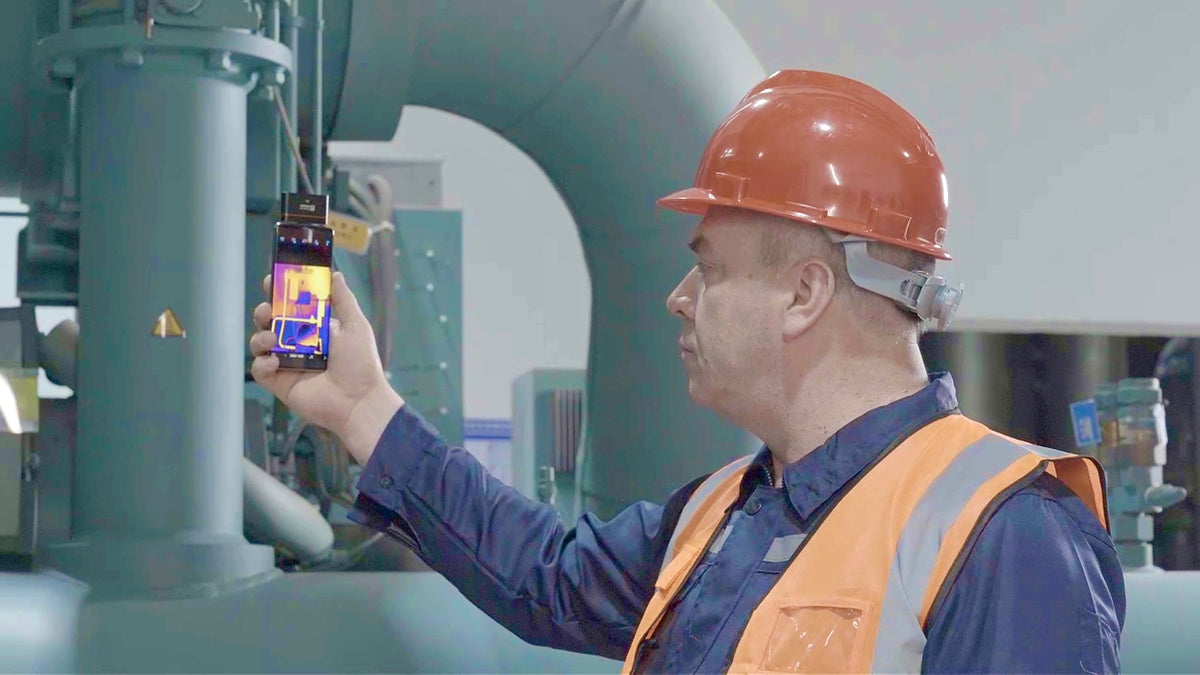
A thermal camera for HVAC inspection can help a community food distribution center identify potential problems before they affect daily operations.
Every week, a nonprofit warehouse in Dallas, Texas, handles fresh produce, dairy products, and frozen food on a tight schedule. If a walk-in cold room fails overnight, it could result in food spoilage and disrupt the next day’s distribution.
Repeated Cold Room Shutdowns with No Visible Warning
Ahead of a major food distribution day, a volunteer maintenance worker noticed that one of the warehouse’s walk-in cold rooms was shutting down intermittently during operation. The system could be restarted, but its temperature began to fluctuate.

The team checked the temperature controller, fans, equipment exterior, and surrounding wiring, but found no obvious problems. An HVAC and electrical technician was brought in and confirmed that the system was still receiving power. However, the cold room continued to shut down when the cooling load increased.
With limited time available, the team could not afford to dismantle and inspect every circuit and component individually.
How Thermal Imaging Helped the HVAC Technician Find the Problem?
See HVAC Problems More Clearly
The technician used the P4 as a thermal camera for HVAC inspection around the cold room’s control circuits, electrical disconnect, and nearby electrical panel.
Using X³IR super-resolution technology, the P4 produces a clearer 512 × 384 thermal image. When inspecting electrical panels filled with closely spaced terminals, breakers, and wires, the additional image detail can make subtle but important temperature differences easier to identify.
During the inspection, the technician noticed that one terminal in the cold room’s control circuit was significantly hotter than the surrounding connection points of the same type. For technicians using a thermal camera for HVAC inspection, this type of thermal contrast can provide an early indication of an electrical problem.

Quickly Confirm the Source of the Hot Spot
Finding a hot spot was only the first step. The bigger challenge was determining exactly which terminal, wire, or component the hot spot corresponded to.
The P4 combines an AI dual-camera system with its IR Eraser feature, allowing technicians to use the touchscreen to locally adjust and switch between thermal and visible-light views. This makes it easier to compare an abnormal thermal area with the actual wire, terminal, or switch without leaving the current inspection view.
Instead of relying on a thermal image alone, the P4 helps technicians answer two important questions more quickly:
Which location is overheating? Which physical component does it correspond to?
In a cold room control circuit where connections are tightly packed and time is limited, this side-by-side visual reference can reduce repeated checks and help minimize misidentification. A thermal camera for HVAC inspection can be particularly useful when several components are located close together.

Make a More Targeted Repair with the P4
Following proper safety procedures and de-energizing the circuit, the technician inspected the connection identified by the P4 and found signs of aging at the connection point.
The deteriorated connection could increase electrical resistance and generate additional heat as the equipment load increased, potentially contributing to the cold room’s unstable operation.
After completing the repair, the technician used the Thermal Master P4 to reinspect the area. The abnormal hot spot was no longer visible, and the cold room returned to stable operation.

What Can the P4 Do for HVAC Inspection?
Community food distribution organizations often rely on cold storage, HVAC systems, electrical panels, and volunteer-based facility maintenance to keep their operations running. Many developing problems are difficult to detect before they lead to equipment failure.
The P4 can help maintenance teams and qualified contractors identify abnormal temperature patterns associated with issues such as:
- Overheating electrical connections
- Aging or failing breakers and contactors
- Circuit overloads
- Refrigeration and HVAC system problems
- Air leaks, insulation deficiencies, or moisture issues

Thermal imaging does not replace professional electrical diagnostics or licensed repair work. However, the Thermal Master P4 can help maintenance teams identify abnormalities earlier, locate problem areas more quickly, and provide clearer visual evidence for follow-up repairs.
When maintaining a stable cold chain is essential to getting food to the community on time, a thermal camera for HVAC inspection can be an important tool for quickly identifying abnormal hot spots and helping prevent service interruptions.
Read More
5 Reasons Why Thermal Cameras Enhance Your Daily Life
How to Choose the Best Thermal Imaging Camera for Industrial Use
How to Use a Thermal Master Thermal Imaging Camera for Accurate Inspec

Hinterlasse einen Kommentar
Alle Kommentare werden vor der Veröffentlichung geprüft.
Diese Website ist durch hCaptcha geschützt und es gelten die allgemeinen Geschäftsbedingungen und Datenschutzbestimmungen von hCaptcha.