



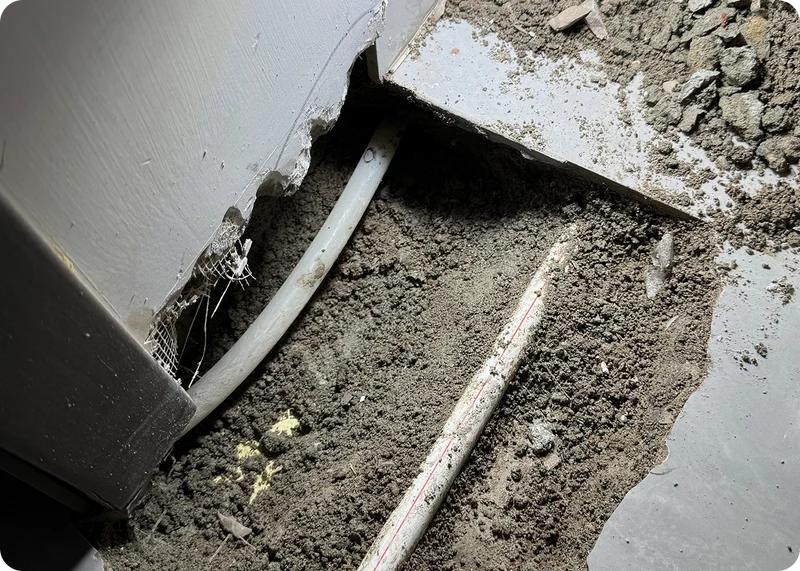
Have you ever torn up your floor looking for a water leak, only to find nothing? You keep breaking up more flooring, but still can't locate the source. Hidden leaks behind walls or beneath floors can be difficult to track down. An infrared water leak detector helps you spot suspicious temperature patterns and narrow down potential leak locations before causing unnecessary damage.
Where to Look for Signs of Hidden Water Leaks?
Visible stains show where water has reached the surface, but the leak may have started elsewhere. A thermal camera can help trace suspicious temperature patterns toward a possible source, so you can investigate the underlying problem before repairing the visible damage.
- Yellow-stained walls and ceilings
- Damp bathrooms and kitchens
- Musty laundry rooms and areas around water heaters
- Warped floors and baseboards
These signs can help you decide where to start. Using an infrared water leak detector in these areas can also help narrow down the possible source of hidden moisture.

A compact thermal camera like the Thermal Master P2 Pro helps spot hidden leaks and moisture.
The Principle of Infrared Water Leak Detection
A thermal imager doesn’t see water directly. It shows surface temperatures, and wet materials such as drywall, concrete, or wood may appear cooler or warmer than the dry areas around them. That difference can be an early clue to a hidden leak.
Moisture inside a wall may evaporate and cool the surface, making damp spots appear cooler. Wet insulation on a flat or low-slope roof may retain heat longer than dry insulation and appear warmer after sunset. A leaking hot water pipe can create a warm area, too.
For effective thermal imaging leak detection, scan slowly and compare any unusual patch with a nearby dry area. Then confirm the finding with a moisture meter. If the source remains unclear, a professional may need to inspect the exterior flashing, run a water test, or make a small opening in the drywall.

What to Look for in a Thermal Imager for Water Leak Detection?
Hidden water leaks often show no obvious signs at first. When choosing a thermal camera for water leak detection, look for clear thermal images that make small temperature patterns easy to distinguish. Image enhancement that produces 512 × 384 thermal images can improve detail and reduce image noise. A thermal sensitivity (NETD) of 40 mK or lower also helps reveal subtle temperature differences, while a wide field of view makes it easier to scan walls and ceilings efficiently.
Check temperature accuracy separately. A specification around ±2°C or ±2% is useful for temperature readings, but an exact reading alone cannot tell you whether a surface is wet. For infrared water leak detection, the pattern of temperatures across nearby surfaces matters more.
The Thermal Master P2pro is a compact infrared water leak detector that uses X³IR processing to produce 512 × 384 enhanced thermal images with sharper detail and less noise. Combined with its ≤40 mK thermal sensitivity, this can make suspicious temperature patterns easier to spot and help you identify areas that need further inspection.

How to Detect Water Leaks with Infrared Imaging?
The following steps use the Thermal Master P2pro as an example to show how a thermal camera for water leak detection can help identify temperature patterns that may indicate hidden moisture.
Step 1: Set Up the Camera
Connect the P2pro to your phone and open the Thermal Master app. Select one of the 12 color palettes and adjust settings such as emissivity, distance, and ambient temperature for more accurate thermal readings. These steps help you prepare the P2pro for inspecting possible water leaks.
Step 2: Inspect the Area
Slowly scan walls, ceilings, or floors where you suspect moisture might be hiding. The 15× digital zoom helps you examine specific areas like joints or pipe bends, although zooming does not add thermal detail. Adjust the color bar or set a temperature alert to make unusual hot or cold areas easier to spot during thermal imaging leak detection.
Step 3: Analyze and Save
The P2pro includes point, line, and area measurement tools to help you examine suspicious temperature patterns. You can capture thermal images or videos and save them for later. Share the results with a plumber or other professional to show exactly where you found an anomaly.
Step 4: Confirm the Diagnosis
If the thermal image shows a temperature anomaly, check the area with a moisture meter or a physical inspection. An infrared water leak detector can help narrow down where to investigate, but a temperature difference alone cannot confirm a leak.
Conclusion
Thermal imaging can help you find possible hidden leaks before stains appear by revealing unusual temperature patterns on walls, ceilings, and floors. A phone-connected infrared water leak detector, such as the P2pro, makes it easy to scan these areas. Confirm any suspicious spots with a moisture meter or a professional inspection.
FAQ
Can an Infrared Water Leak Detector See Through Walls?
No. Thermal cameras cannot see through solid walls. They measure surface temperatures and may reveal unusual patterns caused by moisture or leaking pipes behind the wall.
Can a Thermal Camera Detect Water Leaks Under Floors?
Yes, in some situations. Thermal imaging may reveal temperature changes associated with water beneath flooring, especially around heated pipes. However, thick flooring and insulation can make leaks difficult to identify.
What Does a Water Leak Look Like on a Thermal Camera?
A possible leak may appear as an irregular cool or warm area. Damp materials can appear cooler because of evaporation, while leaking hot water pipes may create warmer patterns.

Hinterlasse einen Kommentar
Alle Kommentare werden vor der Veröffentlichung geprüft.
Diese Website ist durch hCaptcha geschützt und es gelten die allgemeinen Geschäftsbedingungen und Datenschutzbestimmungen von hCaptcha.