



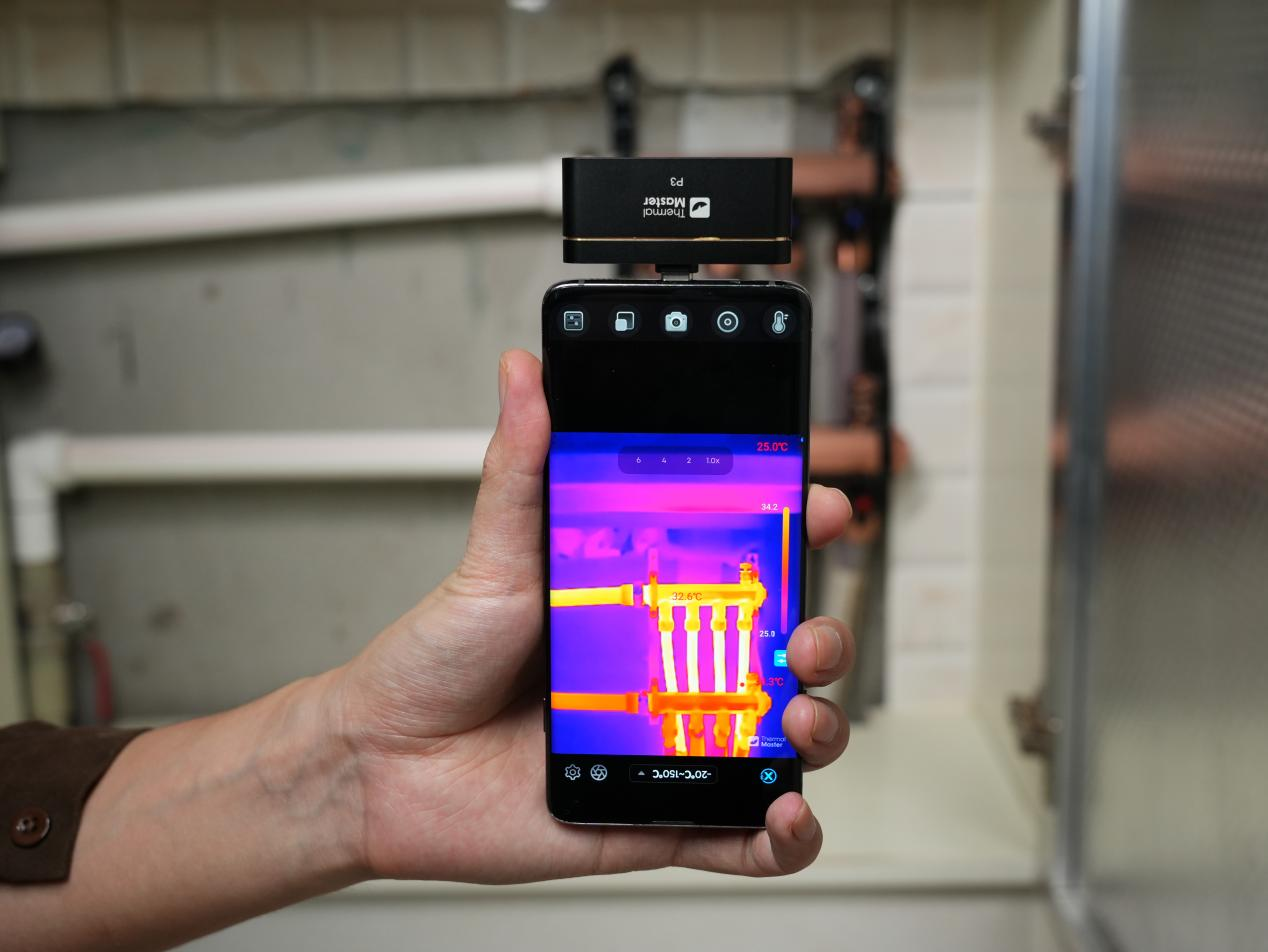
Smartphone thermal cameras for plumbers are becoming an essential tool for pipe leak detection. They help plumbers, HVAC technicians, and maintenance professionals locate hidden leaks faster.
However, thermal imaging doesn't reveal every leak automatically. Factors such as pipe depth, water temperature, flooring materials, and environmental conditions all affect detection results. This guide explains how smartphone thermal cameras work for leak detection, their limitations, and how to choose the right model for different inspection needs.
key takeaways:
● Smartphone thermal imaging cameras help plumbers locate slab pipe leaks fast and cut unnecessary concrete demolition.
● Thermal cameras capture faint temperature changes from unseen underground slab pipe leaks with no surface water in southern and western US buildings.
● Thermal Master P1 suits routine residential leak inspections at low cost; Thermal Master P3 delivers long-range, high-precision detection for residential and commercial work.
These takeaways are only part of the picture. The following sections explain why some leaks are harder to detect and how to improve inspection accuracy in real-world conditions.

What Are the Common Types of Underground Pipe Leak Damage?

Most single-family residences and commercial facilities throughout the southern and western United States feature monolithic poured concrete slab foundations, where water supply and drain lines are buried deep within the concrete matrix or the subsoil underneath. After the concrete slab is fully cast and cured, the embedded piping becomes completely enclosed and impossible to view directly.
While this foundation design delivers outstanding durability and structural stability, it is susceptible to three common forms of pipe damage that cause hidden leaks:
● Pinhole seepage stemming from long-term pipe corrosion
● Split pipe joints triggered by shifting and settling soil
● Degraded gaskets, seals, and connecting hardware at pipe junctions
None of these faults produce visible puddles or surface water. Instead, they remain completely hidden and slowly shift the temperature and moisture conditions beneath the concrete slab — exactly the kind of subtle change a smartphone thermal camera is built to reveal.
Why Are Underground Pipe Leaks Difficult to Locate?
Most homes and commercial buildings across the southern and western U.S. sit on a single poured concrete slab, with the water supply and drain lines buried right inside the concrete or the soil underneath it. Once that slab cures, there's no way to check on those pipes again without tearing something up.
That kind of foundation holds up for decades, but it hides three problems plumbers run into again and again:
● Pinhole leaks that develop after years of pipe corrosion
● Soil shifting and foundation settling often split pipe joints wide open
● Worn gaskets and fittings at pipe connections degrade over time
None of these show up as a puddle on the floor. They just sit there, quietly changing the temperature and moisture under the slab. This faint underground temperature shift is exactly what a smartphone thermal camera is designed to capture clearly.
How Does a Smartphone Thermal Camera Simplify Slab Leak Detection?

Instead of repeated pressure tests or guesswork demolition, a smartphone thermal camera lets a technician narrow the search area quickly and confidently. A typical inspection follows six steps:
1. Clear out interference. Before scanning, technicians reduce nearby heat sources — direct sunlight through a window, a running appliance, or a nearby vent, so the readings stay accurate.
2. Connect and configure the device. The camera attaches to an Android or iPhone through its companion app. Emissivity is usually set around 0.95 for concrete, and the technician picks a palette such as iron-red or rainbow, often with image enhancement or super-resolution turned on.
3. Scan the slab. Moving the camera at a steady height along a fixed path, the technician pays close attention to kitchens, bathrooms, laundry rooms, and areas near the main supply line, since these zones see the most plumbing.
4. Identify abnormal heat zones. A leak typically shows up as a continuous patch of unusual temperature across the concrete, not an isolated hot spot. Pipe routing and slab shape help confirm the pattern isn't just outside heat bleeding through.
5. Mark and confirm. Once an anomaly is found, the technician saves an image or video of it and, when needed, backs it up with a pressure test or acoustic check for added confidence.
6. Repair with precision. Only the confirmed target area gets opened up, which keeps demolition — and the bill — to a minimum.
What Do Real-World Cases Show About Smartphone Thermal Cameras?

A thermal scan doesn't just confirm a leak—it helps plumbers pinpoint where to start. Two real-world jobs show how a smartphone thermal camera speeds up leak detection.
In Houston, a plumber used the Thermal Master P1, a reliable budget thermal camera, to locate a hidden pinhole leak beneath a bathroom floor after identifying a small warm spot. Instead of unnecessary demolition, only a small section of concrete needed to be opened for repair.
In Dallas, an inspector used the Thermal Master P3 to trace multiple hidden leaks beneath a 12-unit apartment building. As one of the best thermal cameras for home and DIY, it also handled demanding commercial inspections with ease. Combined with a pressure test, the smartphone thermal camera narrowed the search to a few precise locations, completing the leak investigation in a single afternoon.
How Should You Choose the Right Thermal Camera for Your Job?

The right choice depends on your inspection environment.
- For residential jobs such as kitchens, bathrooms, and slab leaks, the Thermal Master P1 offers a lightweight, cost-effective solution.
- For commercial buildings, buried pipelines, or long-distance outdoor inspections, the Thermal Master P3 delivers greater range and higher thermal sensitivity, making it the better option for complex jobs.
Conclusion
Underground pipe leaks rarely show visible signs, making them difficult to locate with traditional methods. A smartphone thermal camera helps identify temperature differences caused by hidden leaks, reducing unnecessary demolition and improving inspection efficiency. Whether you're inspecting residential plumbing or commercial slab leaks, it helps narrow the search area before repairs begin. Thermal Master offers smartphone thermal cameras for both everyday and professional inspections, including the Thermal Master P1 and Thermal Master P3.
FAQ
Q: Why do professional plumbers often prefer the P3 over the P1?
A: The P3's adjustable focus and stronger super-resolution algorithm help it read through thicker slabs and pick up faint coastal leaks. It's also more rugged and better suited to switching between commercial and residential jobs in a single day, making it a dependable smartphone thermal camera for full-time professionals.
Q: I only handle small residential leak jobs — is the P1's battery life and portability enough for a full day of house calls?
A: Yes. The P1 is compact enough to fit in a tool bag and runs for more than five hours on a single charge, which comfortably covers a typical day of home visits.
Q: Can the P3's adjustable macro lens handle both circuit board inspection and slab leak detection?
A: Yes. Its 8mm macro setting is well suited to close-up work like circuit board inspection, while its long-range mode adapts easily to scanning concrete slabs — making it a genuinely two-in-one tool for technicians who do both.
Q: Is the P1 a good budget thermal camera for someone who only does occasional leak checks?
A: Yes — its low price, compact size, and more-than-five-hour battery life make it a smart budget thermal camera for anyone who doesn't need the P3's extended detection range.


コメントを書く
全てのコメントは、掲載前にモデレートされます
このサイトはhCaptchaによって保護されており、hCaptchaプライバシーポリシーおよび利用規約が適用されます。