



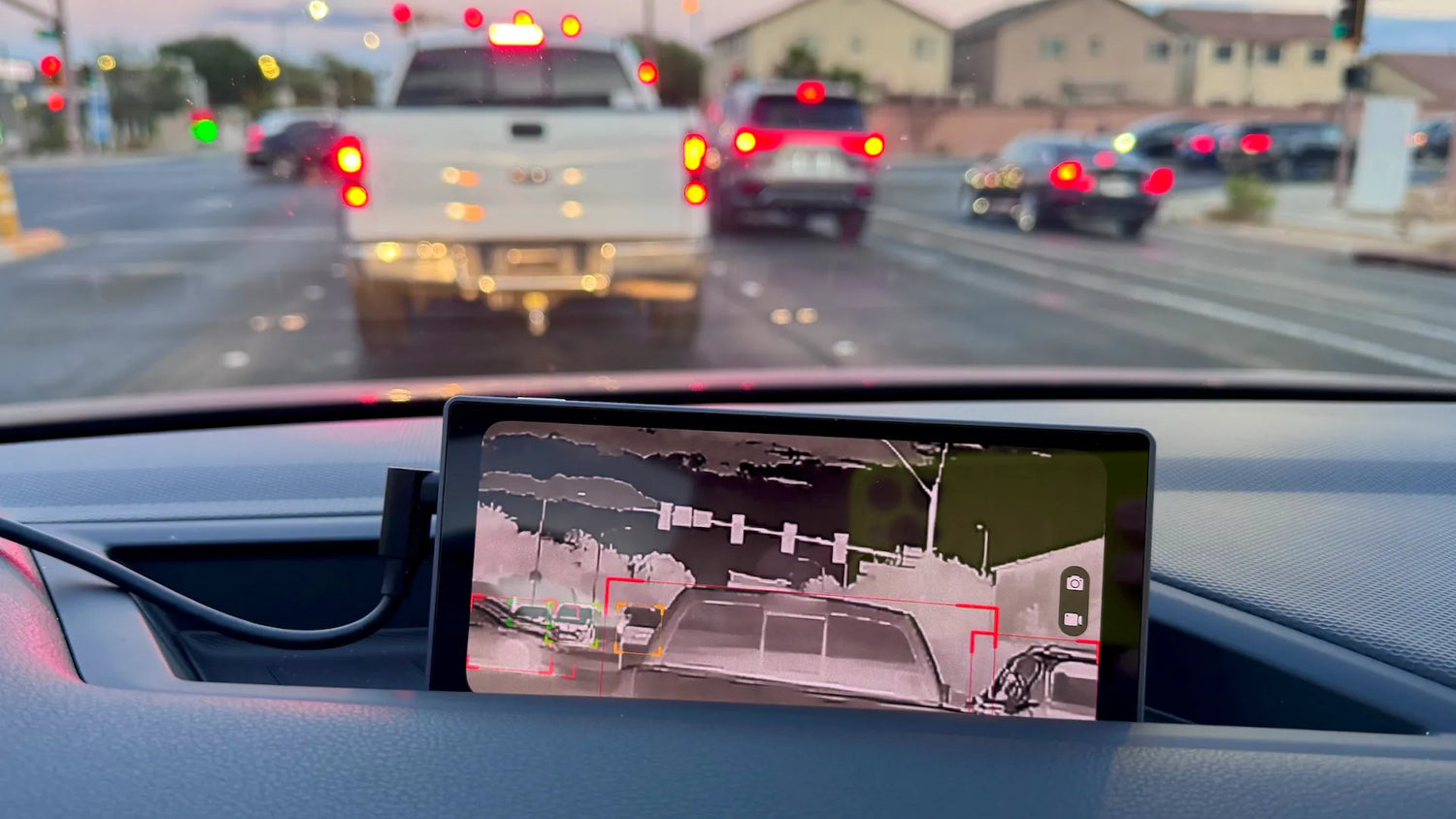
Thermal imaging night vision devices work by detecting heat rather than visible light, allowing you to see clearly even in complete darkness. But how exactly does it work? And why is it so effective for nighttime driving and low-light conditions? Let's find out.
How Does Thermal Night Vision Work?
Thermal night vision works by detecting heat. All objects—people, animals, vehicles, and roads—emit infrared radiation. Thermal imagers capture this heat and convert it into a visible image, allowing you to "see" objects even in dark environments.
In a thermal night vision system, infrared sensors detect temperature differences and convert them into clear thermal images. Hotter objects appear brighter, while cooler areas appear darker. Unlike traditional night vision, it doesn't rely on ambient light, so it works effectively in darkness, fog, or smoke.
What Are the Key Components of a Thermal Night Vision System?
Thermal imaging night vision systems combine hardware and processing technologies to detect and display heat sources. Each component plays a crucial role in various aspects.
- Infrared Lens: Focuses infrared radiation onto the sensor, rather than visible light.
- Thermal Sensor (Detector): Detects temperature differences and converts them into electrical signals.
- Image Processor: Enhances the raw data and transforms it into a clear thermal image.
- Display Screen: Displays the thermal image in real time for easy viewing.
- Software and Algorithms: Optimize image sharpness, contrast, and temperature analysis.

What Makes Thermal Night Vision Work in Complete Darkness?
Night vision thermal camera adapts to real-world driving and low-light environments, working efficiently at night:
Unreliant on Headlights
Even when headlights cannot fully illuminate the road ahead, thermal imaging night vision systems continuously detect the heat of distant objects. This allows you to identify potential hazards beyond the range of your headlights on dark or winding roads.
Clear Target Detection
Pedestrians, animals, and vehicles emit more heat than their surroundings, making them clearly visible. This allows you to quickly identify moving or stationary targets, preventing you from overlooking them.
Enhanced Visibility in Dark Areas
Thermal imaging night-vision systems maintain a clear view of the environment on roads without streetlights, on rural highways, and in dimly lit streets. It provides a stable field of view even without streetlights or other external light sources.
Performance in Low-Visibility Conditions
Traditional vision systems may struggle in low-light conditions such as fog, smoke, or light rain. Thermal imaging systems help maintain situational awareness by detecting heat signatures.
Real-Time Hazard Perception
Thermal imaging night vision systems continuously scan the surrounding environment and display thermal images in real time. It gives you more time to react to potential hazards, such as pedestrians crossing the road or animals entering the road.
Where Is Thermal Night Vision Commonly Used?
Thermal night-vision technology is widely used in scenarios where visibility is limited—such as at night or in low-light conditions. The following are some common applications:
- Night Driving: It assists in detecting pedestrians, animals, and vehicles on dark roads or highways, thereby enhancing safety and reaction times during nighttime driving.
- Automotive Safety Systems: Integrated into Advanced Driver-Assistance Systems (ADAS), A thermal camera enables real-time hazard detection and enhances the driver's overall situational awareness.
- Security Surveillance: Used for monitoring properties, industrial sites, and surrounding areas at night, allowing for the detection of intruders even in conditions of total darkness.
- Wildlife Observation: It enables the tracking and observation of animals at night without disturbing them—a capability frequently utilized by researchers and outdoor enthusiasts.
- Search and Rescue: It aids in locating missing persons under dark or low-visibility conditions, such as within forests, disaster zones, or during nighttime operations.
Why Is Thermal Night Vision Important for Night Driving?
Thermal imaging night vision systems are crucial for nighttime driving because they help detect potential hazards that might otherwise go unnoticed. By identifying the heat emitted by pedestrians, animals, and vehicles, the system makes these objects stand out clearly in low-light conditions. This not only improves visibility and gives you more reaction time, but also effectively reduces the risk of accidents.
What Thermal Night Vision Devices Are Available?
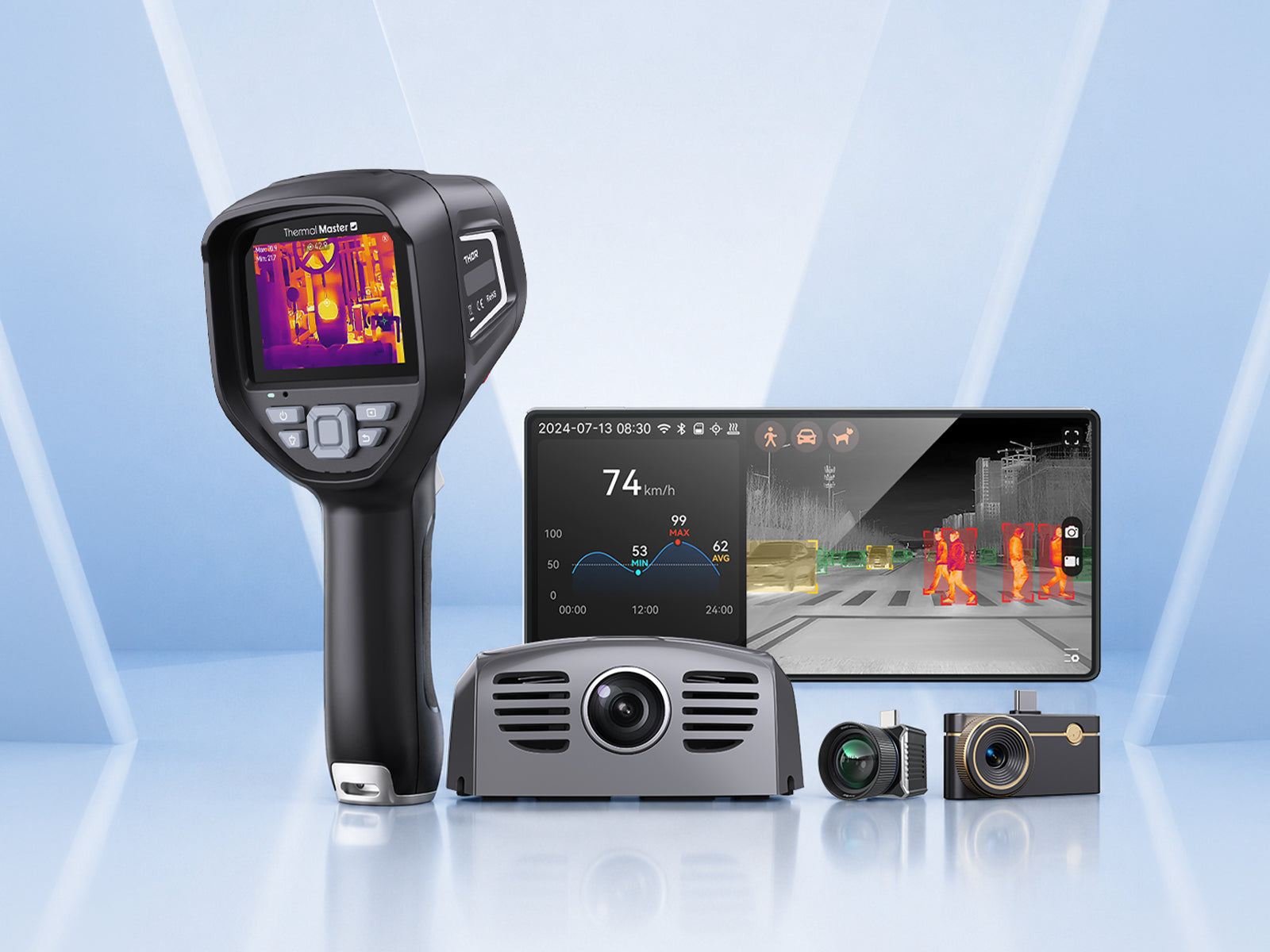
Several automotive night vision thermal camera devices are available on the market, each offering different performance levels to suit your driving needs:
Thermal Master NV300
Thermal Master NV300 offers a detection range of up to 328 meters, helping you spot pedestrians, animals, and vehicles ahead on dark roads. It also features AI collision warning, a fast response time (≤0.1 seconds), and enhanced super-resolution imaging, providing clear and sensitive visibility for your daily nighttime driving, and is easy to operate.
Thermal Master NV500
Thermal Master NV500 has a detection range of approximately 526 meters, suitable for highways or high-speed driving. It also features 768×576 super-resolution, built-in AI detection, and three display modes: visible light mode, infrared mode (thermal imaging mode), and fusion mode.
This helps you detect potential hazards earlier and with greater confidence, providing greater detection range and clearer details.
Thermal Master NV300 Max
The Thermal Master NV300 Max integrates thermal imaging, a dashcam, and OBD (On-Board Diagnostics) into one device. It boasts ultra-high resolution Dual Spectrum 1280×720+512×384 infrared imaging and a 328-meter detection range, along with AI-powered pedestrian, animal, and vehicle recognition.
Through real-time alerts (approximately 0.1 seconds) and dual-spectrum fusion (thermal imaging + visible light) technology, it can be used in complex nighttime driving scenarios requiring clear images and contextual information.

How to Choose a Thermal Night Vision Device?
Choosing the right thermal imaging night vision device starts with understanding your driving needs. If you primarily drive in urban areas, a shorter detection range may suffice; however, for highways or rural roads, a longer detection range (approximately 300 to 500 meters) gives you more time to react.
Additionally, image resolution and thermal sensitivity are also crucial, as they affect the clarity with which you can identify pedestrians, animals, or vehicles in low-contrast environments.
Beyond specifications, actual performance and practical features are equally important. Features such as AI detection, real-time alerts, and dual-spectral imaging can significantly improve your speed of hazard identification.
Ultimately, the best choice is a device that suits your driving habits, environment, and budget, rather than simply selecting the most advanced or most expensive model.
What Are the Limitations of Thermal Night Vision?
While thermal night vision is highly effective in low-light conditions, it also has some limitations that you should be aware of:
- Limited Detail Recognition: Thermal imaging displays thermal differences, not fine visual details, making it difficult to identify specific objects, faces, or text.
- Performance Degrades when Penetrating Glass or Water: Thermal imaging cameras cannot clearly penetrate glass or reflective surfaces, and heavy rain or water can affect detection accuracy.
- Shorter Effective Detection Range for Small Objects: Large heat sources are easily detected, but smaller or low-heat targets are more difficult to identify at greater distances.
- Higher Cost Compared to Standard Night Vision: Thermal imaging systems are more expensive due to the use of advanced sensors and processing technology.
Summary
Thermal imaging night vision devices work by detecting heat and converting it into a visible image, allowing you to work effectively in the dark. They help you identify pedestrians, animals, and other dangerous objects earlier, improving safety while driving at night and in low-visibility conditions. Therefore, understanding how they work and the precautions you should take can help you choose the right device for your needs.
FAQ
Is thermal night vision legal?
Thermal imaging night vision devices are legal, especially in areas such as driver assistance and security. In most cases, there are no restrictions on owning or using thermal imaging devices for personal or commercial purposes. However, laws and regulations may vary from place to place, and certain uses (such as surveillance or hunting) may be regulated. It is recommended to consult local regulations to ensure compliance.
Can thermal cameras detect humans at night?
Yes, thermal cameras can easily detect humans at night by capturing the heat emitted by the human body. Since people are typically warmer than their surroundings, they stand out clearly in thermal images, even in complete darkness or low-visibility conditions.
Is thermal night vision safe to use while driving?
Yes, thermal night vision is safe to use while driving when used as an assistance tool. It helps you detect pedestrians, animals, and vehicles earlier in low-light conditions, improving awareness and reaction time. However, it should support—not replace—your normal driving attention and visibility.
Can thermal night vision detect animals at long distances?
Yes, thermal night vision can detect animals at long distances by capturing the heat they emit, which stands out against cooler surroundings. Larger animals are easier to detect from farther away, often several hundred meters, while smaller animals may be visible at shorter ranges depending on the device’s resolution and detection capability.
Related Reading:
3 Best Vehicle-Mounted Thermal Cameras of 2026
Why Car Thermal Night Vision Is the Future of Road Safety?
Why Infrared Night Vision Outperforms Traditional Night Driving Solutions?



コメントを書く
全てのコメントは、掲載前にモデレートされます
このサイトはhCaptchaによって保護されており、hCaptchaプライバシーポリシーおよび利用規約が適用されます。