


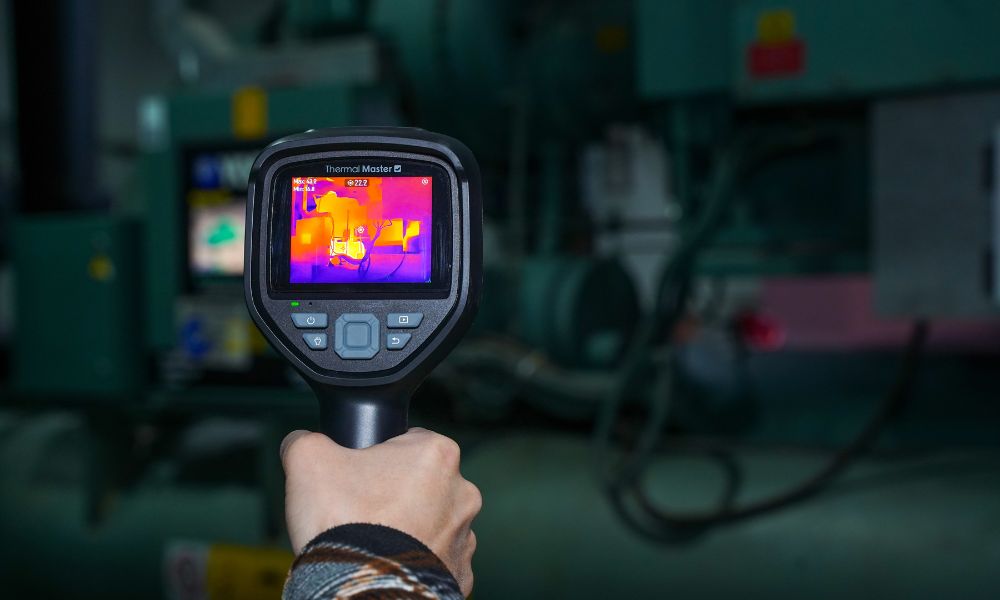
Choosing the right thermal imaging camera for industrial applications involves more than just looking at specifications; it's about finding a tool that can identify problems, support clear analysis, and seamlessly integrate into your workflow.
From detecting overheating signs earlier to generating concise and easy-to-understand inspection reports, the right choice can make your work run more smoothly. So, what aspects should you focus on? Let's take a closer look.
What Does an Industrial Thermal Camera Actually Do?
Industrial thermal imagers are primarily used to detect temperature differences on equipment and surfaces, helping you uncover hidden problems that routine inspections miss. They can detect abnormal temperatures in electrical systems, machinery, piping, and industrial buildings, allowing you to identify potential issues earlier.
In industrial applications, thermal imaging technology is used for equipment inspection, fault diagnosis, energy loss monitoring, and preventative maintenance. Visualizing temperature changes improves inspection efficiency, reduces unexpected downtime, and facilitates safer maintenance decisions.
Why Is Thermal Imaging Critical for Industrial Maintenance?
In industrial operations, unexpected failures are far more costly and dangerous. The difficulty in management stems from the fact that many problems, such as electrical overloads or mechanical wear, begin with subtle temperature changes that go undetected during routine inspections. Without thermal imaging technology, these issues are often overlooked until they cause serious damage or system downtime.
However, using industrial thermal imagers allows you to visualize temperature changes, helping you identify risks earlier, schedule maintenance, and prevent downtime. This results in more reliable operation, lower maintenance costs, and a safer working environment.
What Factors Matter When Choosing an Industrial Thermal Camera?
When choosing a thermal imager for industrial use, you're not just buying a camera — you're investing in a diagnostic tool. That means it’s important to look beyond basic specs and consider how well it performs across real-world inspection tasks. Here are the key factors to keep in mind:
1. Measurement Accuracy and Stability
Inaccurate temperature readings can lead to missed critical issues or misjudged equipment conditions. In industrial inspection, even minute temperature deviations can result in serious malfunctions. Therefore, a stable and accurate thermal imaging camera provides reliable data.
2. Thermal Sensitivity (NETD)
Sensitivity determines a thermal imager's ability to detect subtle temperature differences. Low-sensitivity thermal imagers may fail to detect early problems, such as minor insulation failures or slight overheating of electronic components. Higher sensitivity allows for earlier detection, avoiding downtime due to malfunctions.
3. Durability and Manufacturing Quality
Dust, humidity, vibration, and temperature fluctuations in industrial environments can all affect equipment performance. A well-manufactured thermal camera can withstand these conditions, ensuring stable operation and avoiding frequent malfunctions or calibration issues.
4. Ease of Use and Speed in the Field
Speed and ease of use are also important considerations in practical inspections. A camera with an intuitive interface and fast response not only helps you work efficiently but also reduces the risk of missed inspections.
5. Detection Distance and Coverage
Different industrial scenarios require different detection capabilities. You need to consider detection at safe distances or scanning large areas. A camera with a wider detection distance and coverage allows you to adapt to various working conditions while ensuring detection accuracy.
6. Long-Term Reliability and Support
As industrial thermal imagers are used, software updates, data management, and technical support become increasingly important. A good system ensures your equipment remains functional, accurate, and compatible with your workflow for years to come.

How Do You Choose the Right Thermal Camera Specifications?
Most industrial thermal imagers appear similar in specifications, but subtle differences can lead to variations in practical applications. Therefore, when selecting an industrial thermal imager, you can refer to the following specifications:
Resolution
Standard thermal imagers typically offer resolutions like 160×120, which are insufficient for complex industrial systems. In demanding industrial environments, resolutions of 256×192, 512×384, or higher are preferable, providing sharper images and enabling more confident identification of smaller, more subtle faults.
Thermal Sensitivity (NETD)
Basic thermal imagers may have a NETD of ≥60 mK, while more advanced industrial thermal imaging cameras can achieve ≤40 mK. Lower NETD values allow for the detection of problems before they fully develop thermal patterns.
Temperature Range
Some general-purpose industrial thermal imager models have a temperature range of 250°C to 350°C, but industrial environments often require temperature ranges up to 550°C or higher. Choosing a temperature range that is too small can limit measurement accuracy or result in missing critical data.
Accuracy
Accuracy is how closely the measured temperature matches the actual temperature. Therefore, most thermal cameras have an accuracy of approximately ±2°C or ±2%, suitable for general inspection. However, in industrial diagnostics, higher accuracy can improve the reliability of assessing equipment condition or comparing temperature changes.
Frame Rate
Frame rate refers to the number of times an image is updated per second. Common frame rates include 9 Hz, 25 Hz, and up to 50-60 Hz. For most industrial applications, 25 Hz provides smooth and stable imaging, allowing you to efficiently scan equipment without missing important details.
Lens and Focusing Capabilities
Fixed-focus cameras are faster and easier to use, while adjustable-focus or manual-focus cameras offer more precise inspection, especially when dealing with delicate parts or objects at varying distances, providing greater clarity.
Which Thermal Imaging Cameras Are Best for Industrial Use?
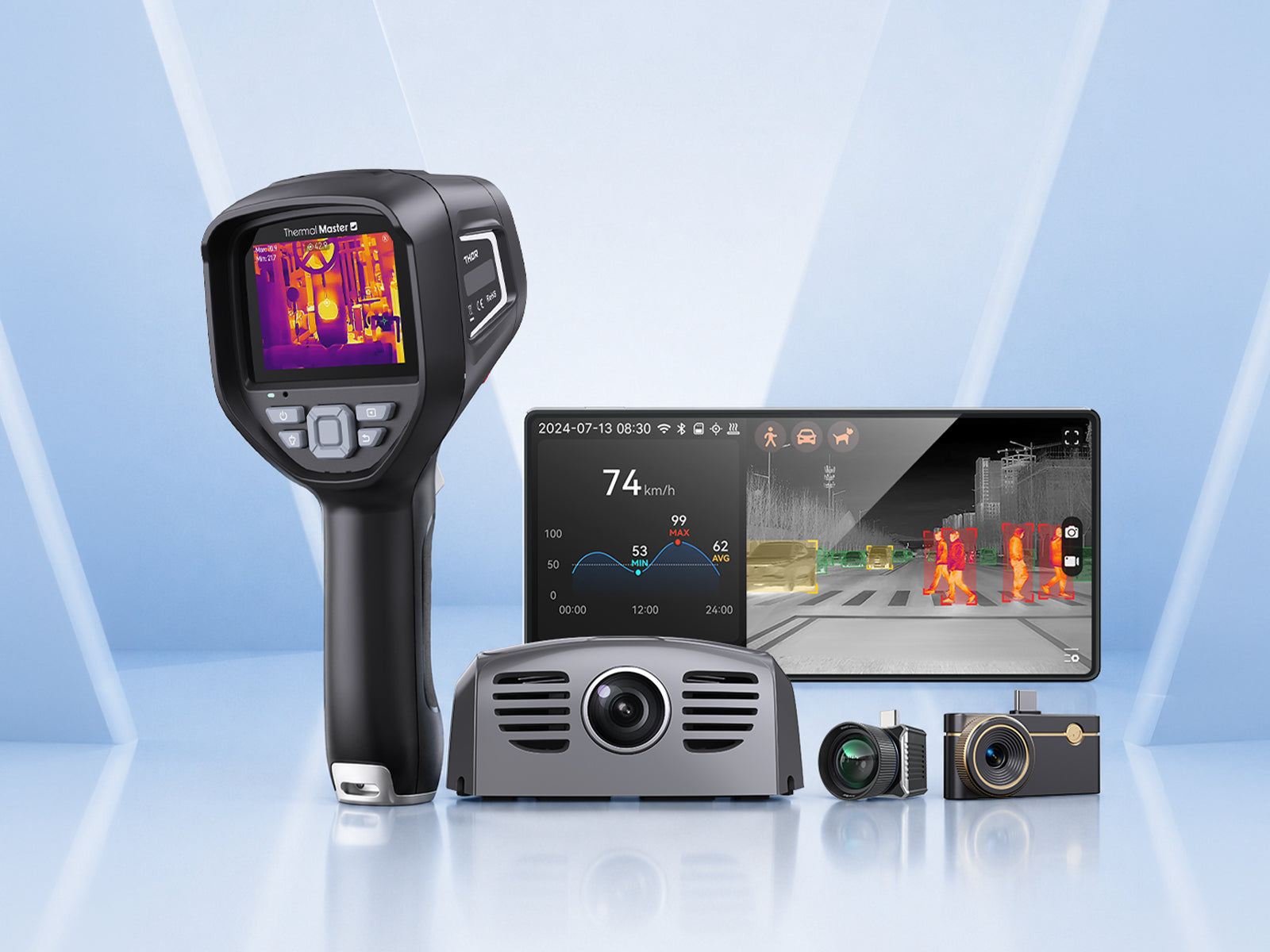
You’ve now seen the key factors and specifications to consider when choosing an industrial thermal camera. For this reason, Thermal Master offers two thermal imaging cameras designed for industrial use, giving you reliable options to choose from.
Thermal Master Thor 001
The Thermal Master Thor 001 is designed for demanding industrial environments, detecting faults caused by minute temperature differences. Equipped with a sensitivity of ≤35 mK, accuracy of ±1.5°C, and Super IR resolution of 512×384, it provides the rich detail needed to quickly identify subtle potential faults.
For close-range inspection, its macro imaging capabilities are particularly useful in PCB diagnostics, electrical system testing, and component-level analysis. Features such as IR-Fuse™ image fusion offer richer visual backgrounds, allowing for easier target observation even in complex inspection environments.
Furthermore, it supports advanced data analysis and report generation on mobile devices and PCs, enabling easy data review and the creation of professional inspection reports.
Thermal Master Thor 002
The Thermal Master Thor 002 is a handheld thermal imager for everyday industrial inspection work. It also boasts a 512×384 Super IR resolution, ≤40 mK sensitivity, ±2°C accuracy, and a temperature range of -20°C to 550°C, meeting the core inspection needs of most industrial applications.
Besides industrial inspection, it can also inspect HVAC (Heating, Ventilation, and Air Conditioning) systems, inspect machinery and equipment, and perform building diagnostics, providing stable and reliable results without complicating your workflow.
Its rugged, handheld design, combined with IR-Fuse™ image fusion and built-in inspection tools, allows for use in harsh environments. Furthermore, it supports on-device image acquisition, such as generating inspection reports on a PC or mobile app, allowing you to easily archive and share inspection results.

Summary
Choosing the right thermal imager for industrial applications hinges on several key aspects: sensitivity, resolution, accuracy, ease of use, and reporting capabilities. The right tool not only helps you quickly identify problems but also allows you to easily analyze and record your findings.
If you're looking for a more practical and cost-effective option, Thermal Master's Thor series strikes a perfect balance between performance and value. With reliable specifications, practical functions, and built-in analysis and reporting tools, it's a reliable choice for getting the job done, compared to many other brands.
FAQ
1. What is the best thermal camera resolution for industrial use?
For most industrial applications, a resolution of 256×192 or higher is recommended. If you need to detect small hotspots or inspect complex systems like electrical panels, a higher resolution, such as 512×384, provides better detail and more accurate fault identification.
2. Can a thermal camera replace traditional industrial inspections?
A thermal camera is not a full replacement, but it is a powerful complementary tool. It allows you to detect hidden issues quickly and safely, reducing the need for invasive inspections and helping you identify problems before they become serious.
3. What temperature range do I need for an industrial thermal camera?
It depends on your application, but most industrial environments require a range of at least -20°C to 500°C or higher. A wider range ensures the camera can safely measure high-temperature equipment such as motors, electrical systems, and pipelines.
Related Reading:
How to Use a Thermal Camera for Home Inspection?
Thermal Imaging Camera for Building Inspection: A Complete Guide


コメントを書く
全てのコメントは、掲載前にモデレートされます
このサイトはhCaptchaによって保護されており、hCaptchaプライバシーポリシーおよび利用規約が適用されます。