



Thermal Master and Fluke are two of the leading brands of infrared thermal imagers on the market, each offering products tailored to meet the diverse needs and user groups.
In this article, we will conduct a comprehensive, side-by-side comparison of the thermal imagers from both brands to help you select the model that best aligns with your specific requirements.
What Should You Know About Thermal Master and Fluke?
Thermal Master
Thermal Master is a company specializing in portable thermal imaging solutions, with a product line encompassing smartphone thermal cameras, handheld thermal imagers, and night vision thermal camera devices. These products are ideally suited for use by electricians, technicians, engineers, and avid DIY enthusiasts, and are also simple to operate.
Take the P3 smartphone thermal camera, for example: it transforms a smartphone directly into a thermal imaging device. This allows you to conveniently perform tasks such as electrical diagnostics, building inspections, and electronic equipment troubleshooting directly on-site.

Fluke
Fluke is a long-established manufacturer of professional electronic test equipment. Its products are widely utilized across various sectors, including industrial maintenance, electrical inspection, and manufacturing production.
Fluke’s thermal imagers typically take the form of standalone handheld devices, designed specifically for professional-grade measurement and industrial applications. They provide technicians working in demanding environments with a traditional yet highly efficient inspection experience.
How Do Thermal Master and Fluke Thermal Cameras Compare?
1. Thermal Imager Product Types
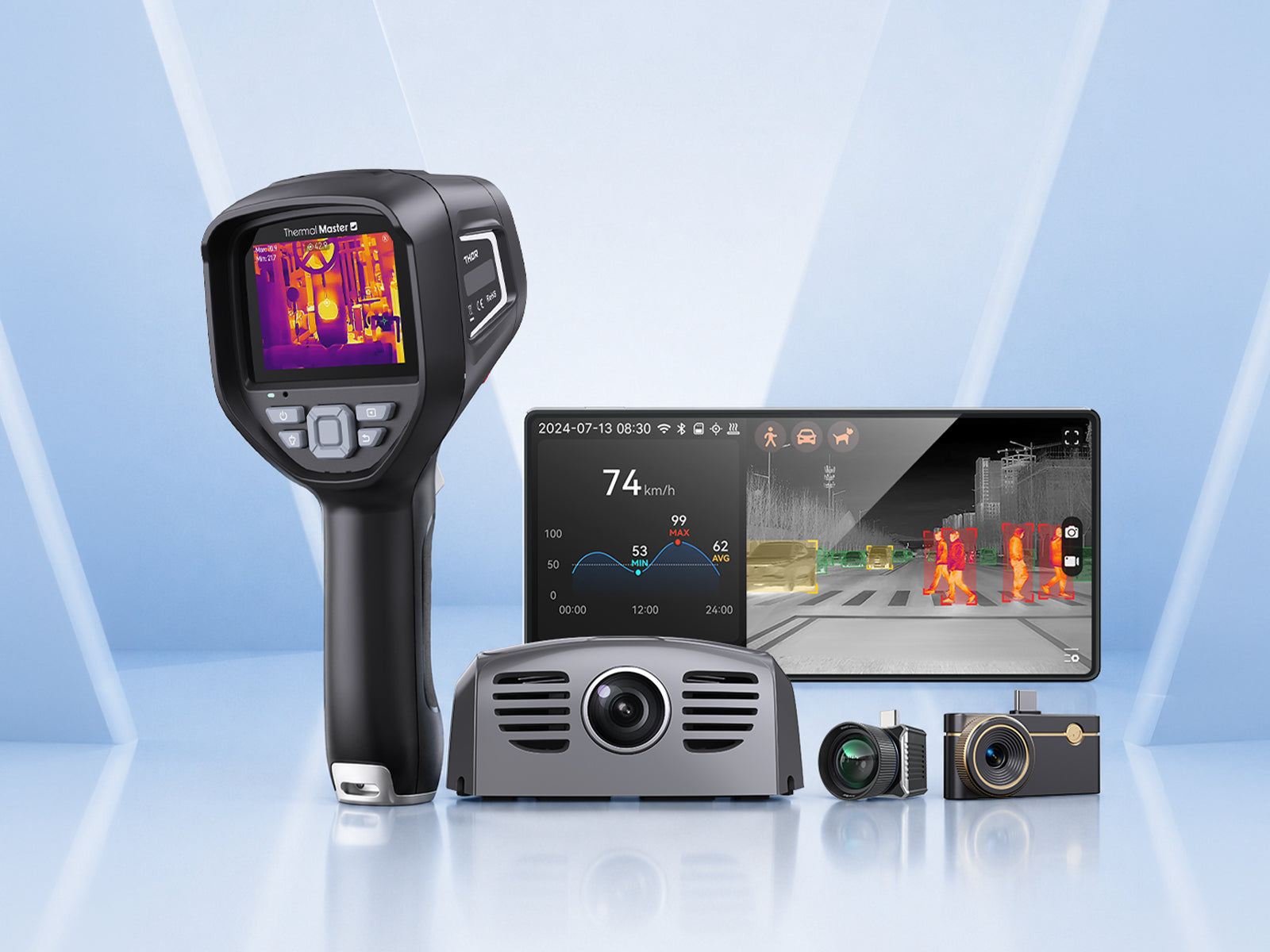
- Thermal Master: Offers smartphone thermal imagers, handheld thermal cameras, thermal scopes, and night vision devices. Models like the P2 Pro (9 g) focus on portability, while the P3 (8 mm manual focus) and NV500 AI night vision system support more advanced detection tasks.
- Fluke: Focuses primarily on professional handheld industrial thermal imagers. For example, the Ti series (such as TiS20+ and Ti480 PRO) is widely used in industrial inspections and is designed for demanding environments like power plants and construction sites, offering strong durability and reliability.
2. Resolution and Image Quality
- Thermal Master: Thermal Master’s portable devices deliver powerful imaging performance. For instance, the P3 model features a thermal sensitivity (NETD) of ≤40 mK and employs X³IR super-resolution technology to enhance its native 256×192 resolution to 512×384, thereby generating clear and highly detailed thermal images suitable for tasks such as electronic device diagnostics and thermal distribution analysis.
- Fluke: Places significant emphasis on enhancing image interpretability through advanced image processing technologies. Many of their models are equipped with IR-Fusion® technology, which overlays and fuses infrared images with visible-light images, thereby enabling technicians to more easily pinpoint heat sources within complex electrical or mechanical systems.
3. Portability and Ease of Use
- Thermal Master: The smartphone thermal imagers are highly portable and easy to use. Devices like the P2 series weigh around 10 grams, making them compact enough to carry in a pocket. They draw power directly from the smartphone with minimal energy consumption, while models such as the P3 add manual focus and a durable metal housing for more precise inspections.
- Fluke: Designed for reliability in industrial environments. Most devices feature an ergonomic pistol-grip design for one-handed operation and rugged construction for harsh conditions. Some models also pass 2-meter drop tests and include high-brightness displays for outdoor inspections.
4. Software and Connectivity Features
- Thermal Master: Provides a mobile application that supports point, line, and area temperature analysis, along with quick PDF report generation and sharing. The desktop software enables deeper analysis, including color palette adjustments and detailed thermal data processing.
- Fluke: Deeply integrated into the Fluke Connect® ecosystem, allowing inspection data to be synchronized with other Fluke tools via the cloud. This makes it highly suitable for large-scale organizations requiring centralized device monitoring and asset management.
5. Price Comparison
- Thermal Master: Some of its devices are priced between $200 and $500, offering exceptional thermal sensitivity and imaging performance within a highly accessible price range.
- Fluke: Fluke thermal imagers typically carry price tags reaching into the thousands of dollars; this pricing reflects the brand's market positioning, as well as its commitment to industrial-grade reliability, calibration services, and long-term enterprise support.
What Applications Are Thermal Master and Fluke Best For?
Applications for Thermal Master
- Electronics & PCB Repair: Pinpointing micro-leakage (down to 1mA) and inspecting SMD components.
- Building Inspections: Finding underfloor heating blockages and hidden water leaks.
- HVAC Diagnostics: Checking air duct seals, refrigerant leaks, and insulation gaps.
- Automotive Safety: Night vision driving assistance and long-range (500m) living object detection.
- Professional Night Vision: Wildlife observation and search and rescue.
- Home Energy Audits: Detecting heat loss around windows, doors, and electrical panels.

Applications for Fluke
- Power Grid Maintenance: Inspecting high-voltage transformers, switchgear, and transmission lines.
- Industrial Plant Management: Monitoring motor bearings, gearboxes, and conveyor belts for friction heat.
- Preventive Maintenance: Tracking long-term heat trends for heavy machinery.
- Commercial Building Compliance: Large-scale electrical auditing and ISO-certified inspections.
- Firefighting & Rescue: Identifying hot spots behind walls and navigating smoke-filled environments.
- Process Manufacturing: Real-time monitoring of steam traps and industrial furnace refractory linings.
Best Thermal Cameras from Thermal Master and Fluke
Both Thermal Master and Fluke offer thermal cameras designed for different types of users. Below are some representative models from each brand.
Thermal Master
-
Thermal Master P3: A compact smartphone thermal camera with a 256×192 infrared sensor enhanced to 512×384 resolution using X³IR technology. It also features manual focus and high thermal sensitivity, making it suitable for electronics diagnostics and electrical inspections.
- Thermal Master Thor 001: A handheld thermal camera with a 256×192 infrared sensor enhanced to 512×384 resolution using X³IR technology. It also features <35 mK thermal sensitivity and precise temperature measurement, making it suitable for electrical inspection, HVAC diagnostics, and industrial equipment maintenance.
Fluke
-
Fluke TiS20+: An entry-level industrial thermal imager with 120×90 infrared resolution and a 9 Hz frame rate. Designed for routine electrical and mechanical inspections, it provides reliable performance with a rugged design suitable for industrial environments.
- Fluke Ti480 PRO: A professional thermal camera featuring 640×480 infrared resolution with SuperResolution up to 1280×960. Technologies such as MultiSharp™ focus and IR-Fusion® help technicians capture detailed thermal images for complex industrial diagnostics.
Which Thermal Camera Is Right for You?
If you need a portable, lightweight, and affordable thermal camera for everyday inspections, electronics repair, or home diagnostics, Thermal Master is the better choice. Its smartphone-compatible devices let you quickly capture and analyze thermal images on-site without carrying bulky equipment.
If you work in industrial environments or need rugged, high-resolution cameras for professional inspections, power plants, or manufacturing facilities, Fluke is more suitable. Its handheld devices provide advanced imaging, durability, and enterprise-level tools for precise, long-term monitoring.
Conclusion
In summary, both Thermal Master and Fluke offer high-quality thermal imagers, yet their respective areas of application differ. Thermal Master is an ideal choice for portability, affordability, routine inspections, and electronic diagnostics.
whereas Fluke, distinguished by its durability, high resolution, and advanced analytical capabilities, excels in industrial-grade applications. Ultimately, your final decision will depend on whether you prioritize portability and convenience or professional-grade reliability and performance.
FAQs
1. What resolution should you look for in a thermal camera?
Thermal resolution determines how detailed the thermal image will be. Entry-level devices may offer resolutions such as 120×90, while more advanced models can reach 256×192, 640×480, or even higher with super-resolution technology. If you plan to inspect small components such as PCBs or electrical connectors, a higher resolution camera will provide clearer and more accurate temperature analysis.
2. Which thermal camera brand is better for beginners?
For beginners or users looking for a convenient entry point into thermal imaging, Thermal Master is often easier to start with because of its smartphone integration and affordable price range. For technicians working in industrial environments who require long-term reliability and advanced analysis tools, Fluke may be the better choice.
3. Are Thermal Master thermal cameras accurate enough for professional inspections?
Yes. Many Thermal Master devices provide strong thermal sensitivity and high-resolution imaging suitable for professional diagnostics. Models like the P3 use advanced sensors and super-resolution technology to produce detailed thermal images, making them effective for tasks such as electronics repair, building inspection, and HVAC diagnostics. While they are more compact than traditional handheld imagers, their performance is sufficient for many technical applications.

Leave a comment
All comments are moderated before being published.
This site is protected by hCaptcha and the hCaptcha Privacy Policy and Terms of Service apply.