



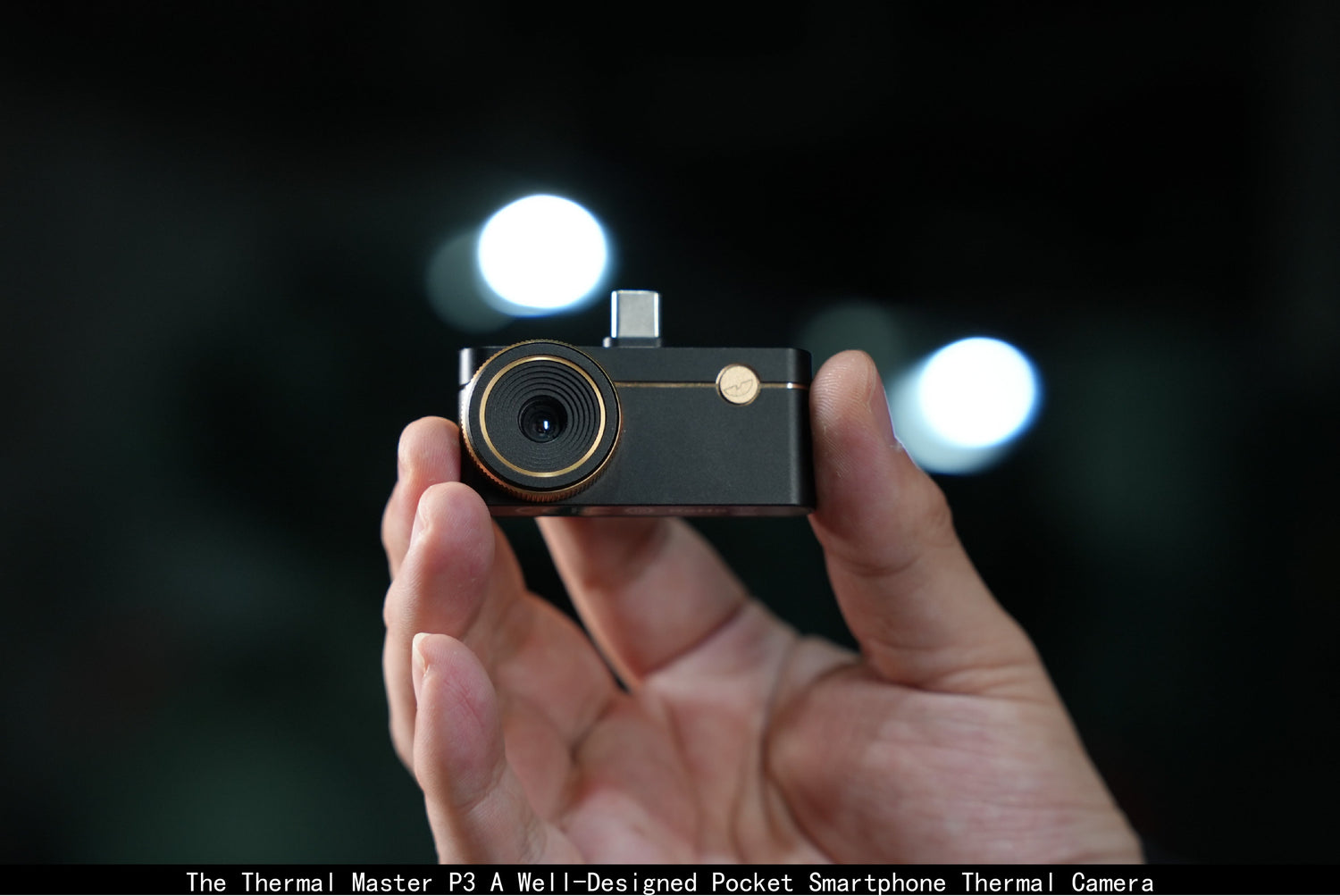
BFMTV Comparateur put the Thermal Master P3 Pocket Smartphone Thermal Camera through a week of real-world testing, evaluating its ability to locate hotspots, maintain sharp focus, and work seamlessly across both mobile and PC platforms. Testing covered circuit boards, home heating environments, electrical panels, a car engine bay, and the desktop software itself.
- BFMTV's week-long test covered five real-world scenarios, confirming the P3's consistent performance across everyday inspections.
- Manual focus, a native 256 × 192 sensor with X³IR enhancement, and <35 mK thermal sensitivity delivered clear hotspot detection in complex scenes.
- Desktop software completed the workflow with offline analysis, image annotation, and professional report generation.
Next, we'll walk through how the P3 performed across five distinct parts of BFMTV's testing.
What Is This BFMTV Reviews?
BFMTV's shopping team put this test together themselves, no outside agency involved. They kept the pocket smartphone thermal camera P3 for a full week, running it on actual jobs: a couple of circuit boards that needed troubleshooting, a heating system with some questionable pipe runs, an electrical panel, and a car in for repair. Not a lab setup, just whatever came through the door that week. What kinds of faults can the P3 help you resolve?
Why Was the P3 Highlighted in the Review?

1. Imaging Performance
With X³IR image enhancement, the P3 upgrades its native 256 × 192 sensor output to a clearer 512 × 384 thermal image. In testing, the improvement was noticeable in more complex scenes with multiple heat sources, where the image kept different hot areas easier to distinguish and helped pinpoint potential problems. The adjustable focus ring kept details clear at different distances, making inspections more flexible.
2. Thermal Performance
On paper, the specs look solid: thermal sensitivity below 35 mK, a 25 Hz refresh rate, and a temperature range of -20°C to 600°C. In practice, that's enough headroom to cover electronics work, electrical maintenance, HVAC checks, and automotive diagnostics without switching devices. Scanning stayed smooth throughout, and the measurement tools made suspicious hotspots much easier to verify.
3. Compact Design
At 26 g, the pocket smartphone thermal camera P3 was easy to carry around all day without noticing the weight. The slim metal body also got into tight spots that bulkier handheld cameras probably couldn't reach, which came in handy more than once during testing.
4. Desktop Software
The work didn't stop once the scan was done. Thermal images could be pulled onto a PC afterward for offline analysis, editing, temperature annotation, and report writing. With the desktop software backing it up, the P3 covers the whole process, from the field to the final paperwork, which made organizing inspection records and generating reports much easier.
What Are the Five Parts of BFMTV's Testing?
Circuit Boards and Micro Heat Sources
At an electronics repair shop in Lyon, Lucas works on motherboards, power modules, and all kinds of embedded devices every day. For him, catching a weird hotspot that's only a few millimeters wide is often what actually solves the fault.
Using the Thermal Master P3 pocket smartphone thermal camera, he checks circuit boards, USB chargers, Raspberry Pis, motherboards, and other electronics every day. The lens locks in close range and picks out solder points, voltage regulator modules, and tiny hotspots clearly, better than several fixed focus phone thermal cameras he's tried. The 25Hz frame rate also keeps things smooth with no blur while he's scanning by hand, so hotspot hunting goes faster.
Home and Heating Checks

The P3 shows temperature shifts across a surface clearly, so spotting thermal bridges, bad seals, and off pipe temperatures doesn't take long.
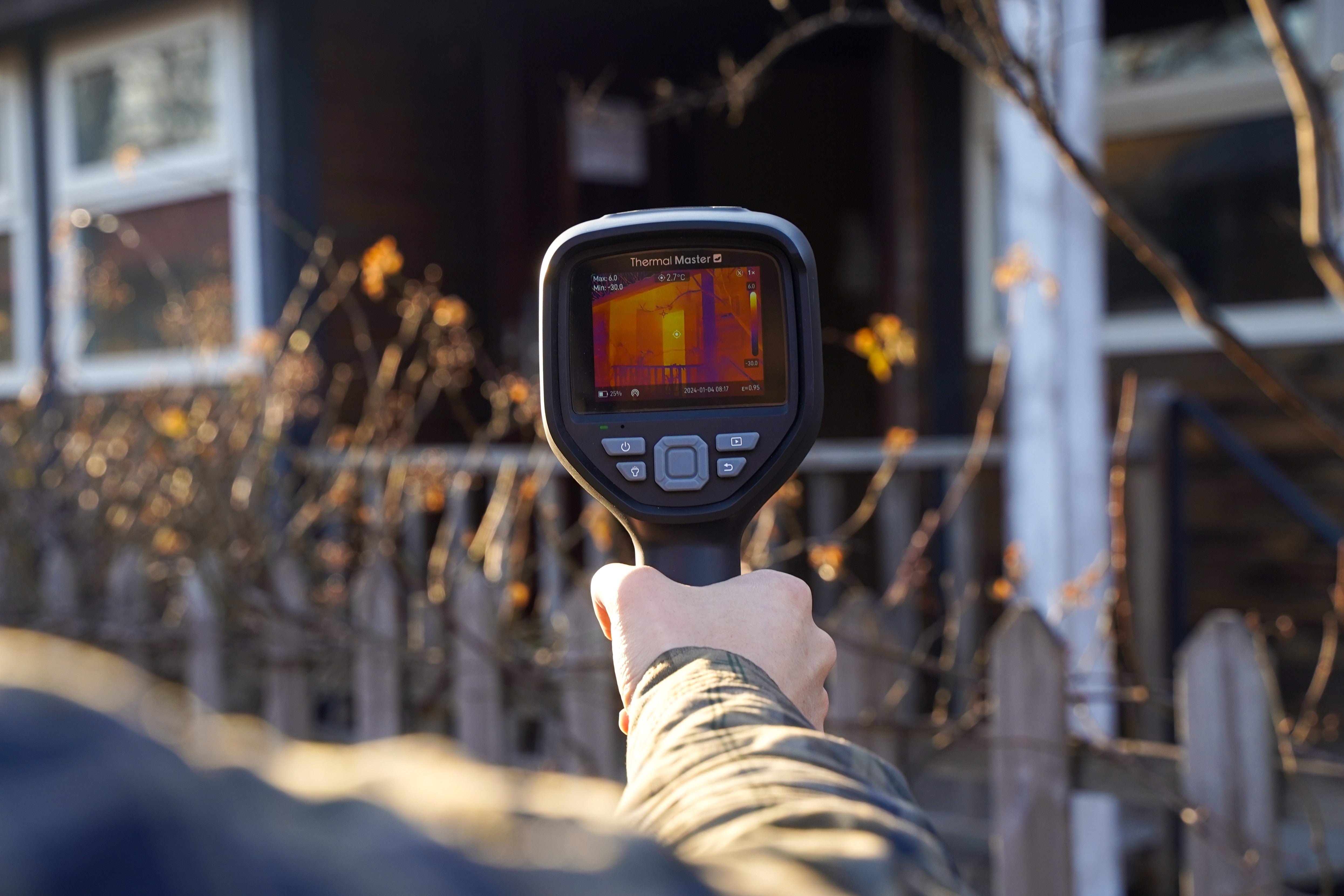
Camille does heating system maintenance around Nantes, mostly checking radiators, heating pipes, exterior wall baseboards, and window and door seals. The P3's 4.3mm lens gives her a decent balance between wide coverage and fine detail. She can see the overall heat spread and still zero in on the exact problem spot.
Electrical Panel Inspection
A building electrical maintenance engineer checks panels and wiring every day. During testing, the P3 proved more useful than just checking individual temperature points. It could highlight abnormal hotspots on specific terminals while also providing point, line, and area measurement tools for deeper analysis. Line measurement helped track temperature changes along wiring paths, while area measurement provided a quick overview of heat distribution across the entire panel. This made it easier to document findings and organize inspection data during routine electrical maintenance.
Automotive Diagnostics
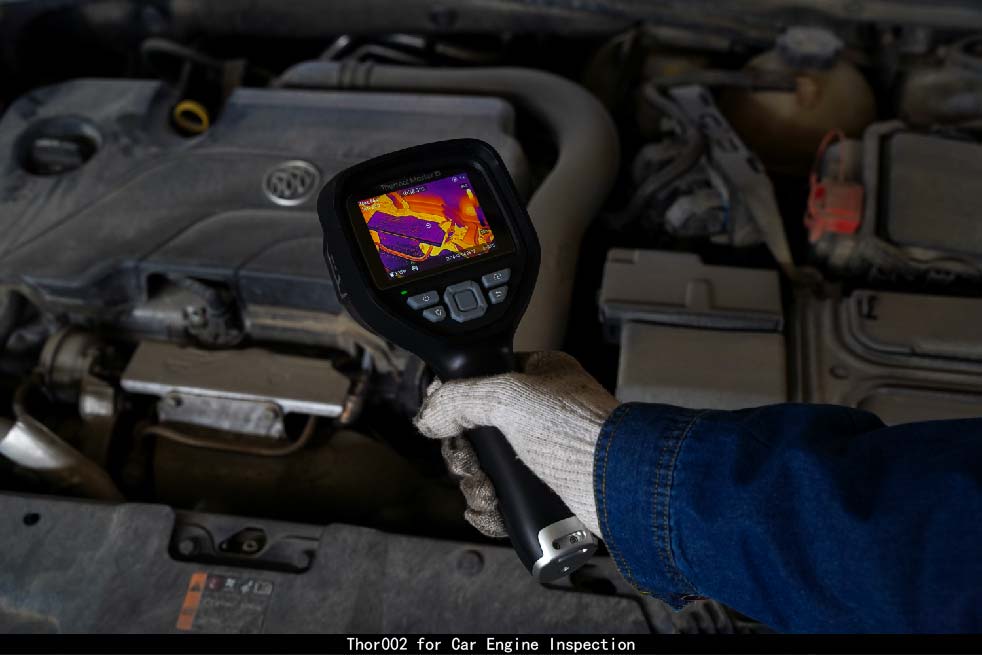
The P3 goes up to 600°C, plenty for most car diagnostic work, and the manual focus makes it quick to zero in on a target even in a cramped engine bay.
"When I'm checking under the hood, I don't need to get right up on the parts. One frame covers the radiator, hoses, and everything around them, so I get a clear read on where the heat is really coming from," Karim said. He runs an independent repair shop near Toulouse and uses the Thermal Master P3 pocket smartphone thermal camera for everyday diagnostics.
Desktop Software and Reports

Most of Karim's clients are long term business accounts, so every inspection needs a proper report on file.
After he finishes an on site check, he pulls the thermal images into the desktop software for a closer look. It handles offline analysis, 2D/3D image editing, temperature annotation, and full report generation, so the P3 ends up working as a complete inspection setup, not just a camera.
Conclusion
Across circuit boards, home heating checks, electrical panels, an engine bay, and the desktop software itself, BFMTV's week of testing kept landing on the same throughline: the pocket smartphone thermal camera P3he checks circuit boards, USB chargers, Raspberry Pis, motherboards, and other electronics every day.P3 holds up under close, repeated, real-world use. If a fixed-focus thermal camera or a device with no real reporting tools has left you wanting more, that's the specific gap this test found the P3 closing.
FAQ
Q1: Can the P3 be used for birdwatching?
A: Yes. The P3 can still be useful for locating birds in low-light conditions or dense foliage. Its bird-watching mode helps highlight heat signatures, making it easier to spot and track birds when visibility is limited.
Q2: Can the P3 be used to troubleshoot electrical and electronic board faults?
A: Yes. During testing, the adjustable focus ring was especially useful for PCB inspections, allowing the P3 to stay sharp when moving between tiny components and larger areas. Temperature readings also stayed close to a calibrated reference meter, providing reliable data for routine maintenance and troubleshooting.
Q3: Does the improved resolution on the P3 deliver a visible improvement in image quality?
A: Yes. On a crowded electrical panel, the enhanced resolution helped keep nearby terminals separated instead of blending into one large heat spot, making it easier to identify individual problem areas.

Hinterlasse einen Kommentar
Alle Kommentare werden vor der Veröffentlichung geprüft.
Diese Website ist durch hCaptcha geschützt und es gelten die allgemeinen Geschäftsbedingungen und Datenschutzbestimmungen von hCaptcha.