



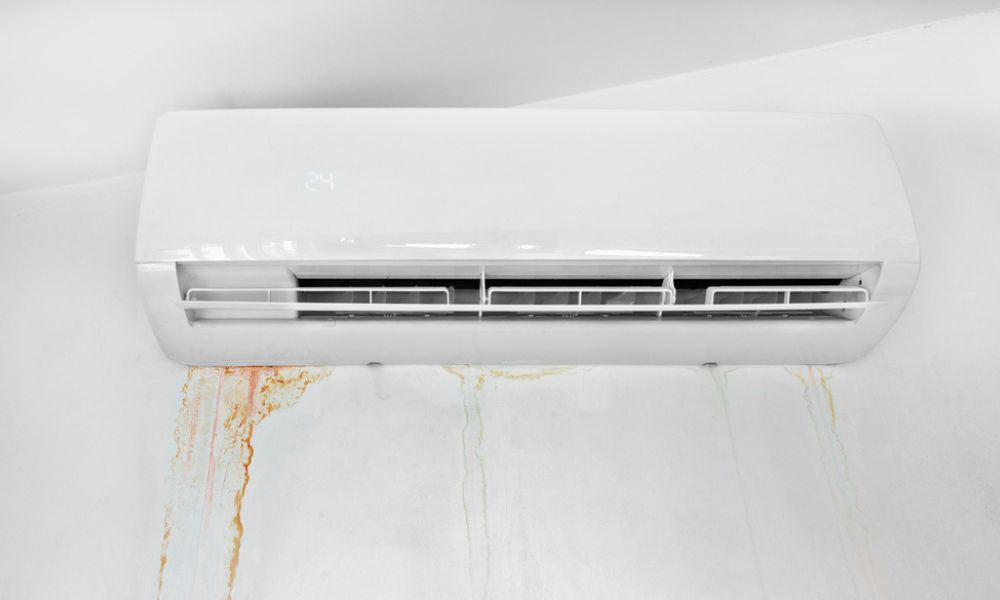
During the sweltering summer months, if your air conditioner begins leaking indoors—leaving unsightly water stains throughout your home—a thermal imaging camera can help. It enables you to quickly pinpoint hidden areas of moisture and identify drainage system malfunctions, facilitating timely repairs and helping you avoid costly service fees. Read on to learn how thermal imaging detection works and discover how it can help you precisely identify the root cause of your AC leak before the problem escalates.
Why Is Your Air Conditioner Leaking Water Inside?
Air conditioner leaks are primarily caused by obstructed condensate drainage or compromised airflow and cooling performance. During normal cooling operation, the moisture generated should be safely discharged outdoors through the condensate drainage system.
The following common issues can lead to water stains indoors:
- Clogged condensate drain line
- Dirty evaporator coils
- Frozen evaporator coils
- Damaged drain pan
- Improper air conditioner installation
- Low refrigerant levels
- Clogged air filter
- Poor insulation on refrigerant lines, leading to condensate accumulation

How Do You Inspect an Air Conditioner Leak with a Thermal Camera?
Step 1: Scan the Indoor Unit While the AC Is Running
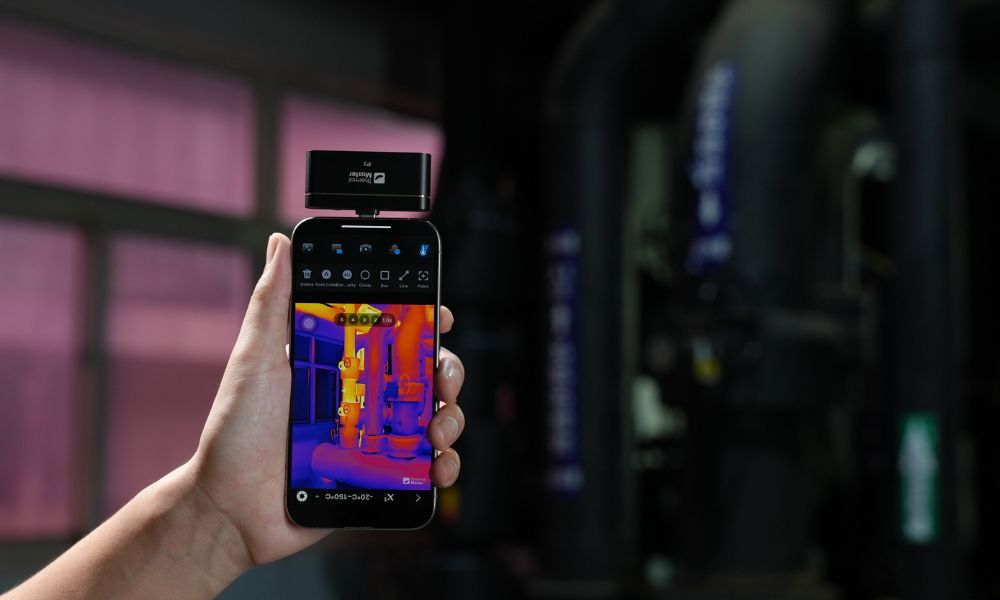
Allow the air conditioner to run for 10 to 15 minutes; at this point, temperature differences will be more pronounced. Then, use a thermal imager to scan the evaporator area, the drip tray, the condensate drain line, and the surrounding walls. This allows you to observe thermal contrasts while the AC is operating and identify hidden moisture distribution patterns. Consequently, leak points become much easier to distinguish from the building's normal ambient temperature.
Step 2: Check for Moisture Patterns Around Walls and Ceilings
Next, inspect the nearby ceilings, walls, and floors for abnormally cold spots. Moisture trapped within building materials creates irregular thermal signatures that stand in stark contrast to the thermal characteristics of the surrounding dry areas. This enables you to conduct a comprehensive assessment of the problem's severity and scope before commencing any repair work.
Step 3: Inspect the Condensate Drain Line
The condensate drain line is one of the most common culprits behind indoor AC leaks. Scan along the drain line and its surrounding surfaces to identify any temperature anomalies that may indicate water accumulation or leakage. A clogged drain line will result in cold spots near the blockage, as moisture is unable to drain properly and instead pools at that specific location.
Step 4: Examine the Evaporator Coil Area
The freezing and subsequent thawing of the evaporator coil can lead to the generation of excessive condensate. Use a thermal imager to check the evaporator housing for any areas exhibiting abnormally low temperatures. These typically indicate restricted airflow, dust accumulation on the coils, or refrigerant-related faults—factors that are often the root causes of water leaks.
Step 5: Verify Repairs with a Second Scan
After cleaning the drain line or completing repairs on the HVAC system, perform a thermal imaging scan once more. By comparing the thermal images taken before and after the repairs, you can confirm whether the source of the moisture has been completely eliminated, thereby instantly verifying the effectiveness of your repair work.

What Problems Can a Thermal Camera Reveal During AC Leak Inspections?
Thermal cameras can identify not only visible water damage but also reveal concealed system malfunctions; consequently, thermal imaging technology is highly effective for diagnosing underlying HVAC issues that lead to leaks.
Common findings include:
- Clogged Condensate Drain Lines: Accumulated water creates abnormal cooling patterns around the drainage assembly; thermal imaging technology enables the precise localization of potential blockage points.
- Frozen Evaporator Coils: The buildup of ice manifests as distinct areas of extremely low temperature in thermal images. Early detection of coil freezing issues can prevent more severe water leakage incidents that might occur once the ice thaws.
- Concealed Moisture Within Walls: Moisture can permeate through insulation layers and wall cavities, accumulating to a degree that eventually becomes visible to the naked eye. Thermal imaging assists in pinpointing these damp areas, thereby avoiding the need for extensive demolition work.
- Insulation Failure: Poor insulation on refrigerant lines makes them highly susceptible to excessive condensation. Thermal imagers can quickly identify specific sections of piping where the insulation may be damaged or missing.
- Restricted Airflow: Clogged air filters and obstructed ductwork lead to uneven temperature distribution, which in turn triggers issues such as coil freezing and water accumulation.

What Mistakes Should You Avoid During Thermal Camera Inspections?
- Scanning immediately after the AC starts up: The optimal time for thermal imaging inspection is after the air conditioner has been running long enough for the temperature differential to stabilize. Scanning too early may make it difficult to identify the specific temperature distribution patterns characteristic of damp areas.
- Assuming all cold spots indicate a water leak: not all cold areas are caused by moisture. Supply air vents, air leakage points, and normal cooling airflow can also generate cold thermal signals that mimic the signs of a water leak.
- Overlooking temperature anomalies caused by airflow variations: Restricted airflow—resulting from dust-clogged filters, blocked ducts, or obstructed vents—can create abnormal temperature distribution patterns. These cold spots are often misidentified as moisture-related issues.
- Focusing solely on visible signs of water damage: Visible water stains or dripping points are often not the actual source of a leak. Moisture can permeate and spread within ceilings, walls, and insulation layers before finally manifesting on the surface.
- Misinterpreting thermal signals from reflective surfaces: Metal drip pans, refrigerant lines, and other reflective materials can skew thermal imaging readings. Generally, scanning the adjacent building materials yields more reliable results.
- Skipping the verification step: A thermal imager can only identify temperature differences; it cannot directly detect moisture itself. Therefore, any suspicious areas must be conclusively verified through methods such as visual inspection, drain line checks, or moisture testing.
- Inspecting only localized areas: AC leaks often affect multiple components of the HVAC system. A comprehensive inspection should cover the indoor unit, drain lines, surrounding walls, ceilings, and ductwork to ensure that no potential issues are overlooked.

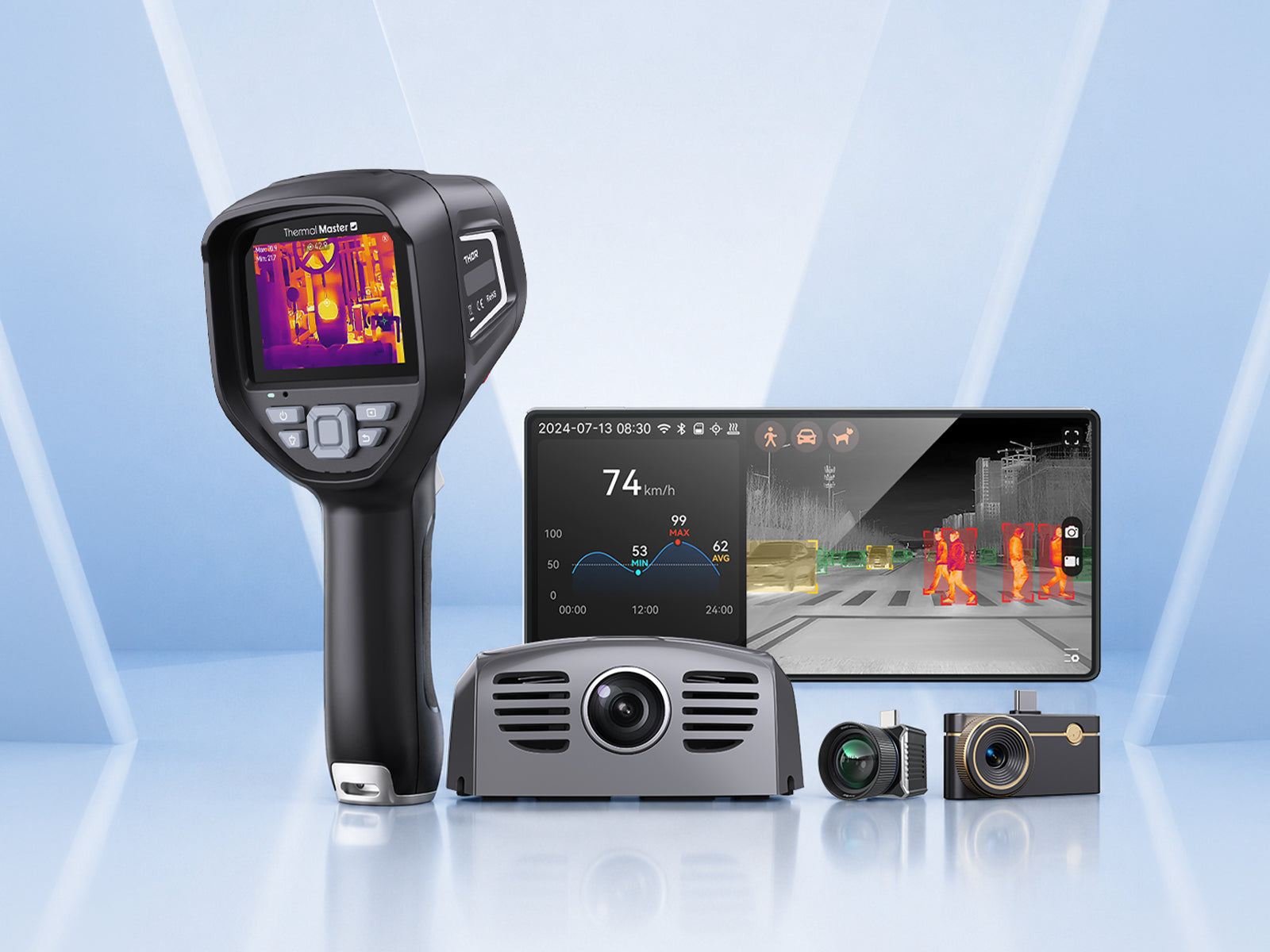
Thermal Cameras for AC Leak Detection
Thermal Master P3
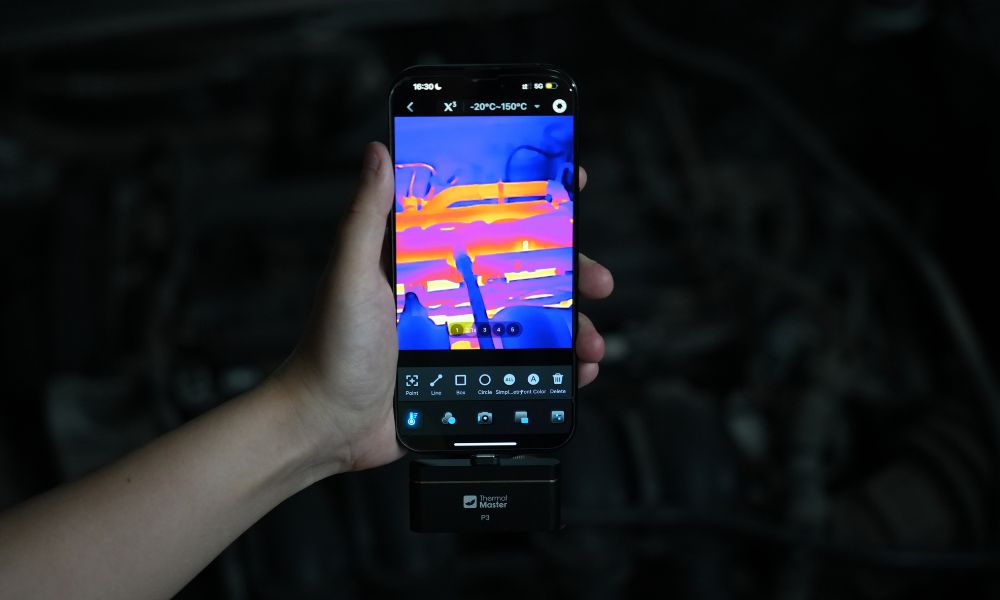
The Thermal Master P3 is a portable thermal camera designed for HVAC technicians, maintenance professionals, and homeowners performing AC leak inspections. Its 256×192 infrared detector, enhanced 512×384 X³IR™ Resolution thermal image clarity, TruePix ±2°C temperature accuracy, and <35mK thermal sensitivity help identify hidden moisture behind walls, ceilings, insulation, and condensate drain systems. This means that you can locate potential leak sources faster and verify repairs more efficiently during HVAC troubleshooting.
Key Features:
- ±2°C Temperature Accuracy: Provides reliable temperature measurements during HVAC inspections.
- 512×384 X³IR™ Resolution: Improves visibility of hidden moisture patterns.
- <35mK NETD: Detects subtle temperature differences more easily.
- 15× Digital Zoom: Helps inspect ceilings, drain lines, and distant targets.
- 8mm Macro Lens: Supports both HVAC and detailed component inspections.

Thermal Master Thor001
The Thermal Master Thor001 is a handheld thermal imaging camera built for professional HVAC diagnostics, building inspections, and water leak detection. Featuring 512×384 X³IR™ Resolution, TruePix ±1.5°C accuracy, and <35mK thermal sensitivity, it provides detailed thermal analysis when inspecting air conditioners, condensate systems, insulation defects, and hidden moisture intrusion. Its standalone design and large display make it ideal for technicians who need reliable performance during extended inspections.
Key Features:
- ±1.5°C Accuracy: Delivers more precise temperature measurements.
- 512×384 X³IR™ Resolution: Produces sharper thermal images.
- <35mK NETD: Reveals small temperature variations.
- 3.5-Inch IPS Display: Makes field thermal analysis easier.
- 8-Hour Battery Life: Supports all-day inspections.
- Multiple Imaging Modes: IR, Visual, Fusion, and PIP.

Summary
A thermal camera is one of the most effective tools for diagnosing an air conditioner that is leaking water inside because it helps reveal hidden moisture, blocked drain lines, frozen coils, and insulation problems without unnecessary demolition. By scanning the HVAC system while it is operating, you can identify abnormal temperature patterns, narrow down the source of the leak, and verify repairs more efficiently. Whether you are a homeowner dealing with ceiling stains or an HVAC technician troubleshooting a complex drainage issue, thermal imaging provides faster and more accurate diagnostics than visual inspection alone.
FAQ
Can a thermal camera see water leaks from an air conditioner?
The answer is yes, because a thermal camera can detect temperature differences caused by moisture accumulation and evaporative cooling, so you can identify suspicious leak areas even when water is hidden behind walls or ceilings.
Can a thermal camera detect a clogged AC drain line?
The answer is often yes, because standing water and restricted drainage can create abnormal thermal patterns around the condensate system, so you can narrow down the location of a blockage more quickly.
Will a thermal camera show a frozen evaporator coil?
The answer is yes, because frozen coils usually create unusually cold thermal signatures that stand out from surrounding HVAC components, so you can identify airflow or refrigerant-related issues before major water damage occurs.
Do HVAC technicians use thermal imaging cameras?
The answer is yes, because thermal imaging helps technicians diagnose hidden moisture, airflow problems, insulation failures, and overheating electrical components, so they can troubleshoot HVAC systems more efficiently.
Is thermal imaging better than visual inspection for AC leaks?
The answer is often yes, because thermal imaging can reveal hidden moisture that is not visible on the surface, so you can locate the source of a leak faster and reduce unnecessary wall or ceiling removal.
Related Reading:
How to Use a Thermal Camera for Home Inspection?
How to Use a Plumbing Thermal Imaging Camera for Plumbing Inspections?
Can a Thermal Imaging Camera for Water Leak Detection Really Find Leaks?

Hinterlasse einen Kommentar
Alle Kommentare werden vor der Veröffentlichung geprüft.
Diese Website ist durch hCaptcha geschützt und es gelten die allgemeinen Geschäftsbedingungen und Datenschutzbestimmungen von hCaptcha.